


Volume -
3 , - : 133-137 |
Back to browse issues page


Download citation:
BibTeX | RIS | EndNote | Medlars | ProCite | Reference Manager | RefWorks
Send citation to:


BibTeX | RIS | EndNote | Medlars | ProCite | Reference Manager | RefWorks
Send citation to:
Efficiency of Probiotics in Immobilized Rats through Involvement of the Antioxidant and Anti-Inflammatory Systems. 3 https://doi.org/10.58209/gmjm.3.4.133
URL: http://daneshafarand.org/article-1-235-en.html
URL: http://daneshafarand.org/article-1-235-en.html
| Abstract (HTML) (1761 Views)
Full-Text: (426 Views)
Introduction
Stress is known as a factor that causes negative effects on general physiology and leads to psychology [1] and heart and causes diabetes and loss of weight [2]. It also causes faulted working memory, anxiety, and depression [3]. Studies have accepted the role of stress in suppression of immunity [4] and intestinal microflora [5]. It also causes the production of free radicals and oxidative damage to macromolecules [6]. Stress also increases the production of pro-inflammatory cytokines such as transcription factor NF-κB-mediated pathways and other inflammatory mediators [7].
In addition, stress is related to increased oxidative stress that stimulates phosphorylation of mitogen-activated protein kinases in animal models [8, 9]. Immobilization is a type of physical stress that limits mobilization and increases aggression in the animal model [2]. It is also used to study stress-induced changes [10].
Experimental studies that have shown probiotics' possible effects on the host's psychological status are rare. The gastrointestinal tract is an active metabolic organ containing various microbial species. It has been accepted that decreased healthy microflora provides an opportunity for pathogenic bacteria and increases inflammation [11]. It is shown that specific probiotic strains reduce the production of pro-inflammatory cytokines by decreasing the integrity of the tight junctional complexes between epithelial cells [12, 13].
Probiotic lactobacilli and bifidobacteria's profitable role in inflammatory conditions has been reported [14]. A study has also shown that probiotics significantly decrease the basal levels of some oxidative stress markers and increase the power of antioxidant enzymes, showing the antioxidant properties of probiotics [15]. Immobilization is the type of stress that influences inflammation and oxidative stress. On the other hand, probiotics can positively affect oxidative stress and inflammation. So far, no study has been conducted to evaluate the effects of probiotics on immobility stress. This study was thus conducted to evaluate the effects of probiotics in immobilized rats through the involvement of antioxidant and anti-inflammatory systems.
Materials and Methods
Materials
Commercial kits of interleukin-10 (IL-10), tumor necrosis factor-α (TNF-α), nitric oxide (NO), corticosterone, transforming growth factor-beta (TGF-β), malondialdehyde (MDA), superoxide dismutase (SOD) and glutathione peroxidase (GPx) were purchased from Sigma Aldrich Company. Commercial strains of Lactobacillus plantarum and Bifidobacterium B94 were selected to test.
Animals
72 Albino Wistar rats (6 weeks-age, 170±10g) were adapted for one week before trial and kept based on the animal welfare laws. All the animals were maintained at an optimal temperature (25±1°C), and humidity (55±5%) and illumination period (12 h light and 12 h dark) were kept in the experimental period. Animals received ad libitum water and feed. Animals were exposed to stress to induce immobilization stress, as reported by others [16]. Animals were exposed to immobilization for 2h/d and two weeks by a restraining chamber [17]. On days 7 and 14 of the trial, animals were anesthetized, blood samples were collected, and sera were collected.
Groups
Animals were divided into three groups (n=24), each divided into four sub-groups. Groups were included: 1) Normal control group without stress (Control), 2) Immobilized rats without additive (Immobilized), 3) Immobilized rats given 104 CFU probiotics.
Inflammatory cytokines and antioxidant status
Inflammatory and pro-inflammatory cytokines, including IL-10, TNF-α, TGF-β, NO, and corticosterone, were measured on days 7 and 14. Commercial kits evaluated the MDA, SOD, and GPx concentrations in serum according to the manufacturers’ instructions on days 7 and 14.
Statistical Analysis
The obtained data were analyzed using Graph Pad Prism 7.0 (GraphPad Software, Inc., 7825 Fay Avenue, Suite 230, La Jolla, CA, USA) and reported as mean±standard deviation. Groups were compared by the Tukey test.
Findings
Corticostrone, MDA and NO concentrations
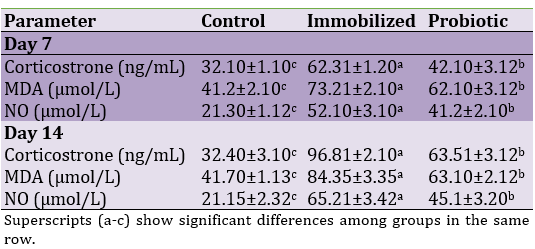
Immobilization could significantly increase corticosterone, MDA, and NO serum concentrations on days 7 and 14, as immobilized rats were compared with control rats (p<0.05). However, the administration of probiotics could significantly decrease corticosterone, MDA, and NO (p<0.05; Table 1).
Table 1. Effects of experimental treatments on serum concentrations of corticosterone, MDA, and NO in immobilized rats
Inflammatory factors
Our findings for inflammatory responses are presented in Figure 1. Results showed that exposure to immobilization increased levels of TNF-α and TGF-β and decreased levels of IL-10 in days 7 and 14 (p<0.05). Treatment with probiotics could significantly decrease TNF-α and TGF-β and increase levels of IL-10 in days 7 and 14 (p<0.05).
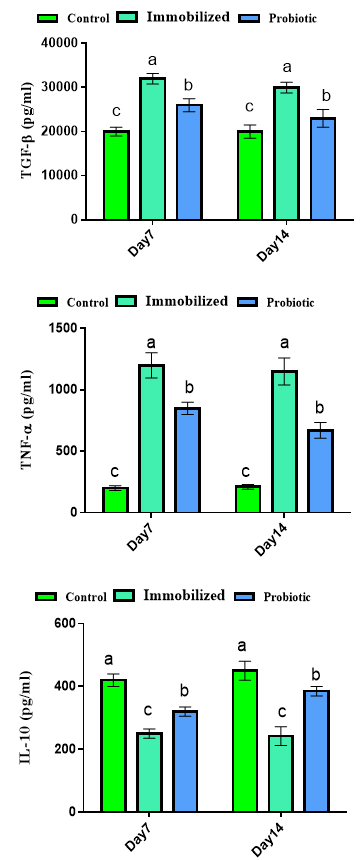
Figure 1. Effects of experimental treatments on inflammatory responses in immobilized rats. Superscripts (a-c) show significant differences among groups on the same day.
Antioxidant enzymes
Our findings for antioxidant status are shown in Figure 2. Results showed that the serum concentrations of SOD and GPx were decreased in immobilized rats, but treatment with probiotics could significantly improve antioxidant status in days 7 and 14 (p<0.05).
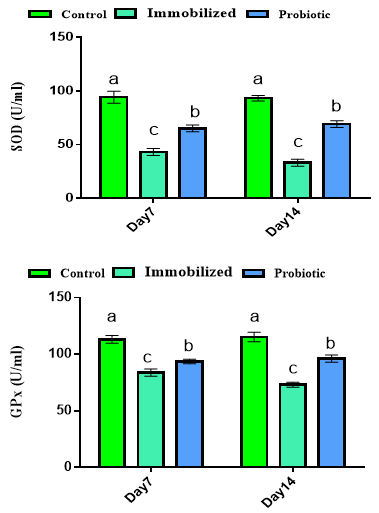
Figure 2. Effects of experimental treatments on antioxidant status in immobilized rats. Superscripts (a-c) show significant differences among groups on the same day.
Discussion
Immobility stress increased levels of MDA, NO, and corticosterone. It has been accepted that stress increases the production of reactive oxygen species by biological system ability [18] and increases MDA production as a marker for lipid peroxidation. MDA shows increased oxidative damage and reduced antioxidants. It has been reported that there is a relationship between stress, increased corticosterone, and intestinal injuries [19]. Stress changes the neuroendocrine system by activating the hypothalamic-pituitary-adrenal axis and increasing the production of corticosterone [20]. Stress increases corticostrone production and changes structural proteins [21]. It has been reported that MDA and NO are inflammatory biomarkers [22]. On the other hand, oxidative stress plays a major role in the pathogenesis of immobilized stress [23]. Improved MDA and NO were observed in probiotic groups. Improved MDA and NO could be attributed to antioxidant and anti-inflammatory responses, which will be discussed later. It has been reported that probiotic strains of L. rhamnosus [24], Enterococcus faecium [15], and L. acidophilus [25] improve antioxidant capacity, which could be attributed to microbial metabolic activity during fermentation [26]. Increased inflammatory responses were observed in rats exposed to stress. It has been reported that stress increases corticostrone, and increased corticostrone decreases mRNA expression of anti-inflammatory cytokines, i.e., IL-10 [27], as observed in the current study. IL-10 is known as one of the most important anti-inflammatory cytokines, which prevent the production of pro-inflammatory cytokines such as TNF-α [28]. IL-10 has been reported to have anti-inflammatory properties that are formed by both T-cells and monocytes/macrophages. The TNF-α has been known as an inflammatory cytokine that initiates inflammation. It means that immobilization stress increases inflammation, but probiotics decrease inflammation. Stress provides an opportunity for pathogens that increase inflammation. Previous studies have reported that L. fermentum could significantly decrease jejunal inflammation of the upper small intestine after 5-FU administration in rats [29]. Improved anti-inflammatory properties could be attributed to reduced pro-inflammatory cytokines, increased immature leukocyte production, and interferon production [30, 31]. Probiotics also decrease pathogen-induced inflammation that is caused to improve the intestinal ecosystem. It could be stated that probiotics improve inflammation conditions by the mentioned mechanisms. Stress also decreased levels of antioxidant enzymes. Stress stimulates and increases the metabolic rate, which causes high free radicals and oxidative damage [6]. Stress decreases antioxidant enzymes, but probiotics improve them. Antioxidant properties of probiotics have previously been reported [15], but the mechanism is unknown.
Conclusion
Similar to other stresses, immobilization increased inflammation and oxidation. Probiotics could improve inflammatory responses and have antioxidant properties. It could be recommended to use probiotics as a daily supplement in patients with stress-related conditions, such as depression.
Acknowledgments: None declared by the authors.
Ethical Permission: There were no ethical considerations in this research.
Conflicts of Interests: The authors declared no conflict of interest.
Funding/Support: This research did not receive a specific grant from funding agencies in the public, commercial, or not-for-profit sectors.
Stress is known as a factor that causes negative effects on general physiology and leads to psychology [1] and heart and causes diabetes and loss of weight [2]. It also causes faulted working memory, anxiety, and depression [3]. Studies have accepted the role of stress in suppression of immunity [4] and intestinal microflora [5]. It also causes the production of free radicals and oxidative damage to macromolecules [6]. Stress also increases the production of pro-inflammatory cytokines such as transcription factor NF-κB-mediated pathways and other inflammatory mediators [7].
In addition, stress is related to increased oxidative stress that stimulates phosphorylation of mitogen-activated protein kinases in animal models [8, 9]. Immobilization is a type of physical stress that limits mobilization and increases aggression in the animal model [2]. It is also used to study stress-induced changes [10].
Experimental studies that have shown probiotics' possible effects on the host's psychological status are rare. The gastrointestinal tract is an active metabolic organ containing various microbial species. It has been accepted that decreased healthy microflora provides an opportunity for pathogenic bacteria and increases inflammation [11]. It is shown that specific probiotic strains reduce the production of pro-inflammatory cytokines by decreasing the integrity of the tight junctional complexes between epithelial cells [12, 13].
Probiotic lactobacilli and bifidobacteria's profitable role in inflammatory conditions has been reported [14]. A study has also shown that probiotics significantly decrease the basal levels of some oxidative stress markers and increase the power of antioxidant enzymes, showing the antioxidant properties of probiotics [15]. Immobilization is the type of stress that influences inflammation and oxidative stress. On the other hand, probiotics can positively affect oxidative stress and inflammation. So far, no study has been conducted to evaluate the effects of probiotics on immobility stress. This study was thus conducted to evaluate the effects of probiotics in immobilized rats through the involvement of antioxidant and anti-inflammatory systems.
Materials and Methods
Materials
Commercial kits of interleukin-10 (IL-10), tumor necrosis factor-α (TNF-α), nitric oxide (NO), corticosterone, transforming growth factor-beta (TGF-β), malondialdehyde (MDA), superoxide dismutase (SOD) and glutathione peroxidase (GPx) were purchased from Sigma Aldrich Company. Commercial strains of Lactobacillus plantarum and Bifidobacterium B94 were selected to test.
Animals
72 Albino Wistar rats (6 weeks-age, 170±10g) were adapted for one week before trial and kept based on the animal welfare laws. All the animals were maintained at an optimal temperature (25±1°C), and humidity (55±5%) and illumination period (12 h light and 12 h dark) were kept in the experimental period. Animals received ad libitum water and feed. Animals were exposed to stress to induce immobilization stress, as reported by others [16]. Animals were exposed to immobilization for 2h/d and two weeks by a restraining chamber [17]. On days 7 and 14 of the trial, animals were anesthetized, blood samples were collected, and sera were collected.
Groups
Animals were divided into three groups (n=24), each divided into four sub-groups. Groups were included: 1) Normal control group without stress (Control), 2) Immobilized rats without additive (Immobilized), 3) Immobilized rats given 104 CFU probiotics.
Inflammatory cytokines and antioxidant status
Inflammatory and pro-inflammatory cytokines, including IL-10, TNF-α, TGF-β, NO, and corticosterone, were measured on days 7 and 14. Commercial kits evaluated the MDA, SOD, and GPx concentrations in serum according to the manufacturers’ instructions on days 7 and 14.
Statistical Analysis
The obtained data were analyzed using Graph Pad Prism 7.0 (GraphPad Software, Inc., 7825 Fay Avenue, Suite 230, La Jolla, CA, USA) and reported as mean±standard deviation. Groups were compared by the Tukey test.
Findings
Corticostrone, MDA and NO concentrations
Immobilization could significantly increase corticosterone, MDA, and NO serum concentrations on days 7 and 14, as immobilized rats were compared with control rats (p<0.05). However, the administration of probiotics could significantly decrease corticosterone, MDA, and NO (p<0.05; Table 1).
Table 1. Effects of experimental treatments on serum concentrations of corticosterone, MDA, and NO in immobilized rats
Inflammatory factors
Our findings for inflammatory responses are presented in Figure 1. Results showed that exposure to immobilization increased levels of TNF-α and TGF-β and decreased levels of IL-10 in days 7 and 14 (p<0.05). Treatment with probiotics could significantly decrease TNF-α and TGF-β and increase levels of IL-10 in days 7 and 14 (p<0.05).
Figure 1. Effects of experimental treatments on inflammatory responses in immobilized rats. Superscripts (a-c) show significant differences among groups on the same day.
Antioxidant enzymes
Our findings for antioxidant status are shown in Figure 2. Results showed that the serum concentrations of SOD and GPx were decreased in immobilized rats, but treatment with probiotics could significantly improve antioxidant status in days 7 and 14 (p<0.05).
Figure 2. Effects of experimental treatments on antioxidant status in immobilized rats. Superscripts (a-c) show significant differences among groups on the same day.
Discussion
Immobility stress increased levels of MDA, NO, and corticosterone. It has been accepted that stress increases the production of reactive oxygen species by biological system ability [18] and increases MDA production as a marker for lipid peroxidation. MDA shows increased oxidative damage and reduced antioxidants. It has been reported that there is a relationship between stress, increased corticosterone, and intestinal injuries [19]. Stress changes the neuroendocrine system by activating the hypothalamic-pituitary-adrenal axis and increasing the production of corticosterone [20]. Stress increases corticostrone production and changes structural proteins [21]. It has been reported that MDA and NO are inflammatory biomarkers [22]. On the other hand, oxidative stress plays a major role in the pathogenesis of immobilized stress [23]. Improved MDA and NO were observed in probiotic groups. Improved MDA and NO could be attributed to antioxidant and anti-inflammatory responses, which will be discussed later. It has been reported that probiotic strains of L. rhamnosus [24], Enterococcus faecium [15], and L. acidophilus [25] improve antioxidant capacity, which could be attributed to microbial metabolic activity during fermentation [26]. Increased inflammatory responses were observed in rats exposed to stress. It has been reported that stress increases corticostrone, and increased corticostrone decreases mRNA expression of anti-inflammatory cytokines, i.e., IL-10 [27], as observed in the current study. IL-10 is known as one of the most important anti-inflammatory cytokines, which prevent the production of pro-inflammatory cytokines such as TNF-α [28]. IL-10 has been reported to have anti-inflammatory properties that are formed by both T-cells and monocytes/macrophages. The TNF-α has been known as an inflammatory cytokine that initiates inflammation. It means that immobilization stress increases inflammation, but probiotics decrease inflammation. Stress provides an opportunity for pathogens that increase inflammation. Previous studies have reported that L. fermentum could significantly decrease jejunal inflammation of the upper small intestine after 5-FU administration in rats [29]. Improved anti-inflammatory properties could be attributed to reduced pro-inflammatory cytokines, increased immature leukocyte production, and interferon production [30, 31]. Probiotics also decrease pathogen-induced inflammation that is caused to improve the intestinal ecosystem. It could be stated that probiotics improve inflammation conditions by the mentioned mechanisms. Stress also decreased levels of antioxidant enzymes. Stress stimulates and increases the metabolic rate, which causes high free radicals and oxidative damage [6]. Stress decreases antioxidant enzymes, but probiotics improve them. Antioxidant properties of probiotics have previously been reported [15], but the mechanism is unknown.
Conclusion
Similar to other stresses, immobilization increased inflammation and oxidation. Probiotics could improve inflammatory responses and have antioxidant properties. It could be recommended to use probiotics as a daily supplement in patients with stress-related conditions, such as depression.
Acknowledgments: None declared by the authors.
Ethical Permission: There were no ethical considerations in this research.
Conflicts of Interests: The authors declared no conflict of interest.
Funding/Support: This research did not receive a specific grant from funding agencies in the public, commercial, or not-for-profit sectors.
Subject:
Biotechnology
| Rights and permissions | |
 |
This work is licensed under a Creative Commons Attribution-NonCommercial 4.0 International License. |