


Volume -
3 , - : 625-635 |
Back to browse issues page



Download citation:
BibTeX | RIS | EndNote | Medlars | ProCite | Reference Manager | RefWorks
Send citation to:


BibTeX | RIS | EndNote | Medlars | ProCite | Reference Manager | RefWorks
Send citation to:
Malaysian Lifesaving Professional’s View about Drowning Prevention through the Lens of Quintuple Helix Model. 3 https://doi.org/10.58209/hehp.13.4.625
URL: http://daneshafarand.org/article-1-82922-en.html
URL: http://daneshafarand.org/article-1-82922-en.html
| Abstract (HTML) (712 Views)
Full-Text: (33 Views)
Introduction
Drowning is a serious public health problem worldwide. It involves breathing impairment caused by immersion or submersion in liquid [1]. The “Global Report on Drowning,” published by the World Health Organization (WHO) [2], has successfully drawn attention to this long-neglected public health issue. Globally, drowning accounts for 236,000 lives lost, representing 8% of fatal deaths worldwide, and ranks as the third leading cause of unintentional injury death [3]. When someone is drowning, they often experience panic and become more active, which raises their pulse rate and causes them to run out of oxygen, making it harder for them to breathe while submerged [4]. There are six phases that occur during drowning, beginning with exertion to keep the airway clear of water, followed by initial submersion and retention of breath, aspiration of water, comatose state, cardio-respiratory arrest, and finally, the irreversible cycle of death [5]. The segmentation of drowning was previously based on distinct characteristics, such as the victim’s lung condition—dry or wet drowning [6, 7]—the victim’s drowning spot—saltwater or freshwater drowning [8]—the victim’s motion during drowning—active or passive drowning [9, 10]—the direct or indirect factors that cause drowning—primary or secondary drowning [11]—the proximity of the drowning—near drowning [12]—and the reticent aspect of drowning—silent drowning [13]. However, all the aforementioned terms are no longer used, as researchers and medical professionals have come to a consensus that drowning should instead be classified based on the outcome, namely death, no morbidity, and morbidity, which can be further detailed into moderate, severe, coma, and brain death [14].
Over 90% of drowning incidents occur in low- and middle-income countries (LMICs), which is three times the rate of occurrence in high-income countries (HICs) [15]. Due to incomplete data collection in LMICs, the estimated drowning rate is four to five times higher than the actual reported statistics [2]. In particular, the Western Pacific Region (WPR) has the highest fatal drowning rate, not only for children (13.9 deaths per 100,000) but overall, with more than 78,000 lives lost yearly, meaning that one person dies every six minutes due to drowning [15, 16]. Malaysia is one of the LMICs located in the WPR. The country has a diverse open water and inland water environment. It is predominantly a maritime nation with a coastline that stretches over 4,600 kilometers, crosses more than 19 degrees of longitude, and is surrounded by four major bodies of water (the Straits of Malacca, South China Sea, Sulu Sea, and Sulawesi Sea) [17]. Furthermore, Malaysia is rich in its inland water landscape, featuring 189 river basins—89 in West Malaysia and 100 in East Malaysia [18]—90 lakes [19], 104 dams [20], and more than a hundred waterfalls [21]. The country often experiences consistently high temperatures and elevated relative humidity due to its equatorial environment. The northeastern and southwestern monsoons impact the climate, leading to heavy and prolonged rainfall that often results in floods [22, 23]. Approximately 5.67 million people are affected by floods, which occur in 10.1% of the nation’s total territory [24]. Since 2000, floods have accounted for 85% of all natural disasters in Malaysia, making them the most frequent type of calamity. Malaysia ranks 12th globally in terms of the frequency of incidents, making it one of the world’s most vulnerable countries to flood-related natural catastrophes [25].
On average, it is reported that 268 drowning deaths occur in Malaysia each year [26]. Drowning is ranked as the 2nd leading cause of mortality for boys aged 14 years and younger [27]. Based on recent data, there were 820 drowning deaths (0.49% of all deaths) in Malaysia, with an age-adjusted mortality rate of 2.63 per 100,000 people, positioning the country at 83rd globally [28]. However, there have been relatively few studies on drowning in Malaysia, and the lack of information about this issue may be attributed to the extremely limited data on drowning incidents, insufficient understanding of the causal factors underlying these incidents, and people’s perceptions of the risk of drowning [29]. Additionally, the availability of instructional resources regarding water safety and drowning prevention, as well as awareness messaging for the general public in Malaysia, remains limited and inadequate [30, 31].
Beginning as the triple helix (TH) model, proposed by Leydesdorff and Etzkowitz [32], it emphasizes the relationship between government, business, and academia, viewing these elements as crucial for enhancing the environment that supports innovative projects [33]. It was later extended into the quintuple helix model (QHM) with the addition of the media and culture-based public [34]. Schütz et al. [35] proposed that the four fundamental elements of an innovation system (government, industry, university, and society) engage in multi-layered, dynamic, bi-directional interactions rather than a unidirectional push-pull relationship. Although the triple helix concept was created in the 1990s as a theoretical response to the burgeoning knowledge-based economy, the QHC was introduced to rethink society in the twenty-first century [36]. QHCs claim to enhance the ability to solve problems, particularly when addressing complex societal issues [37].
The QHM combines both the TH model and QHM while incorporating a fifth helix—the natural environment. By integrating environmental sustainability into the creative process, this paradigm addresses global issues such as climate change and highlights the necessity of a socio-ecological shift [38]. The QHM can be applied both theoretically and practically, with its most crucial component being the “knowledge” feature, which encompasses the entire system to support society’s sustainable growth [39]. In this model, the potential of the economic system to generate innovation, including innovations aimed at achieving the sustainable development goals (SDGs), is determined by the transfer of knowledge among its participants [40]. The QHM may provide recommendations for enhancing the anticipatory profiles of communities and organizations from a social standpoint, assisting in quickly determining the effects of current actions [41]. Therefore, the researchers of the current study intend to understand the roles of stakeholders in drowning prevention by utilizing the QHM.
Participants and Methods
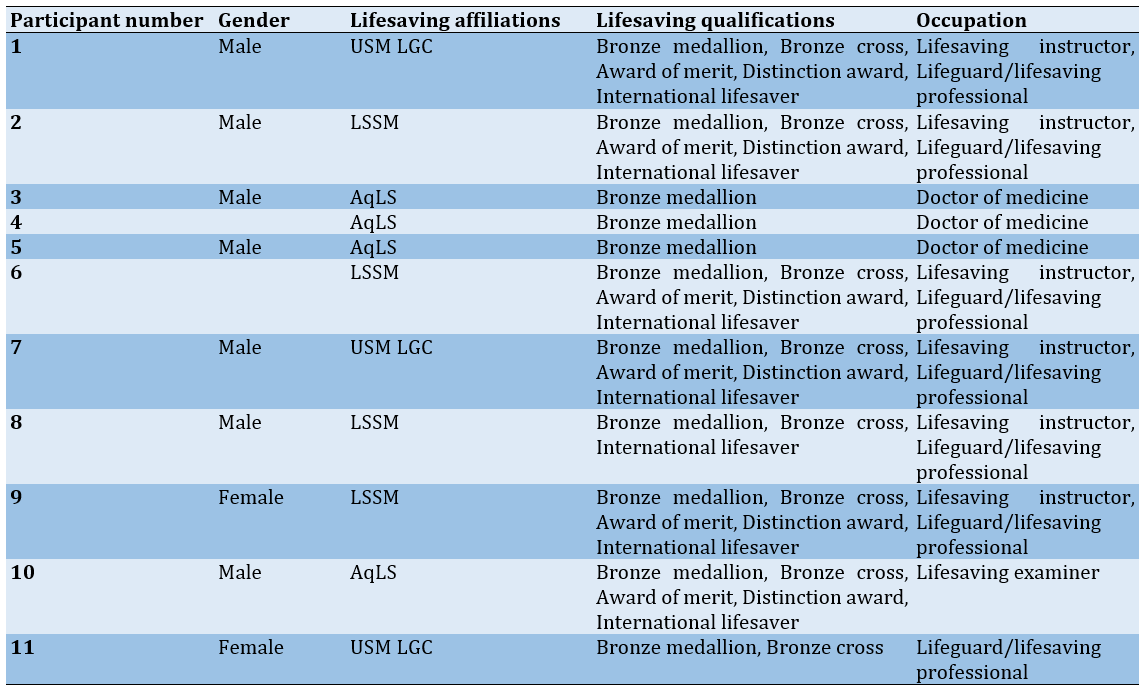
The current qualitative study was done in 2024 on 11 lifeguards and/or lifesaving professionals from three distinct lifesaving associations selected by the purposive sampling method, which is a form of non-probability sampling used when intending to study a particular cultural subject with informed experts [42]. According to Hennink and Kaiser [43], data saturation in qualitative research can be achieved with between 9 to 17 interviews conducted. Code saturation was reached after interviewing 11 participants, during which recurring codes or themes were identified, but no new details or connections between them emerged [44]. Therefore, lifeguards and/or lifesaving professionals from three respective non-government organizations—namely Life Saving Society Malaysia (LSSM), Aquatic Life Support Society (AqLS), and USM Lifeguard Corp (USM-LGC)—were selected based on the established criteria (Table 1).
Table 1. Participant’s characteristics
As suggested by Yeong et al. [45], a four-step procedure known as interview protocol refinement (Figure 1), serves as a guideline for researchers when developing interview questions. As a result, 13 open-ended questions were constructed, aligning with the research questions and validated by experts in the respective field. This validation process included one LSSM examiner to evaluate the content of the questions, one university lecturer to ensure alignment between the interview questions and research objectives, and one freelance translator to validate the language of the interview questions to avoid any ambiguity or grammatical errors. The study was initially piloted with four lifeguards from the USM Lifeguard Corps. The feedback received from the participants highlighted the need to clarify the definitions of water safety, to provide a list of bodies of water for participants to choose from, and to revise some wording in the interview questions (e.g., changing “risky actions” to “risky behavior”).
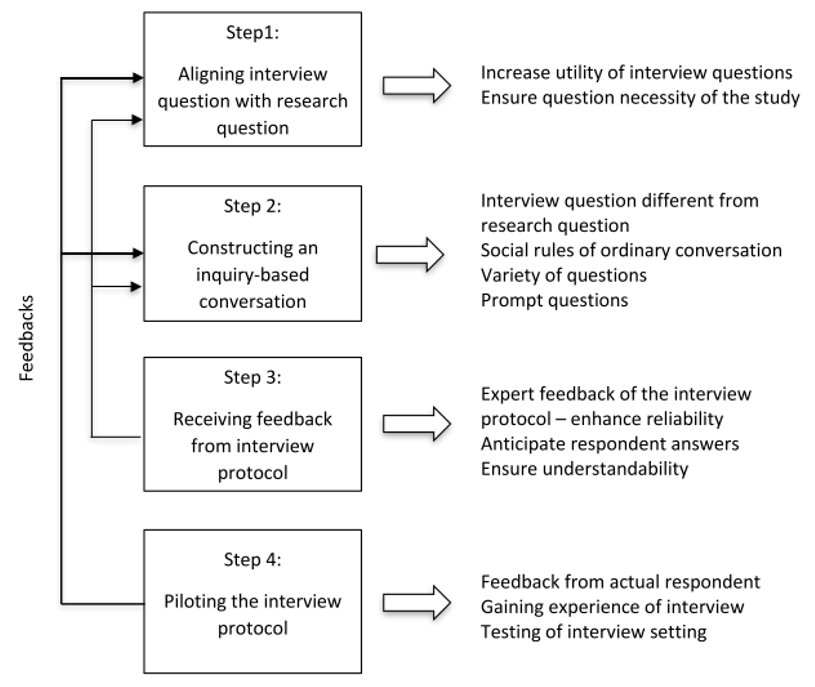
Figure 1. Interview development protocol
A semi-structured in-depth interview was conducted either face-to-face or via an online platform (ZOOM) with all the participants. The interviews were recorded and carried out one-on-one to prevent participants from influencing each other’s opinions, with each interview session lasting approximately 15 to 25 minutes. The recordings were then transcribed into textual form for further analysis. Patterns of significance, or themes, within the data set can be methodically identified, organized, and revealed through thematic analysis. Thematic analysis was conducted using a deductive approach. Deductive coding is a top-down method in which data analysis is guided by pre-existing ideas, models, or codes [46]. Fife and Gossner [47] propose five components for deductive qualitative research, including the development of research questions and selection of a guiding theory, operationalization of the theory, purposive sampling, coding and analyzing the data, and finally theorizing.
The operationalization of the theory was carried out by using its prior themes to guide the research, namely the political system, economic system, education system, natural environment, and civil society. Two coders were first familiarized with the data through repeated readings of the interview transcripts. The researchers then created a codebook, listing distinct codes along with their definitions and applications. Next, the researchers organized the coded data while intentionally looking for evidence that supports, contradicts, refines, or expands upon the findings, as suggested by Fife and Gossner [47]. Initially, 56 codes were identified. After reaching a consensus among the coders, repetitive and irrelevant codes that could not be formed into any patterns were removed. A total of 38 codes were included that fit into the prior themes. The analyses were performed using NVivo 12.
Findings
The pre-existing five themes (political system, economic system, education system, natural environment, and civil society) of the QHM were confirmed, with six sub-themes emerging to support and refine the model. To protect the subjects’ identities, numbers were assigned for tracing back to their sources. In-vivo quotes were also extracted directly from participants to avoid research bias.
Funding and policies
This sub-theme branched from the main theme of the political system. Participants revealed that funding is crucially needed for the promotion of water safety in Malaysia. The emphasis by the respective authorities on allocating funds could help overcome the hindrance to the development of necessary educational resources and the lack of required swimming facilities.
“Is quite less or it's quite few the funding to really like develop the education work, education on water safety and our government do not prioritize this and not even like recognize this as the important issue to be solved.” (P1)
“The government need to acknowledge the importance of the water safety first, and then they willing to pay or subsidized or give the allowance … to build a swimming pool …” (P2)
Additionally, participants pointed out that the absence of lifeguards in inland and open water environments raised concerns, potentially endangering patrons who engage in water activities without supervision.
“In Malaysia, beaches are unmanned there. And you swim at your own risk. That's really at your own risk. And a lot of drowning happened especially in open water.” (P10)
Technology support and commercialized water safety courses
This sub-theme explores what the economic system could contribute to the promotion of water safety. Two participants revealed that water safety courses have been commercialized and are quite costly, making them less accessible to the general public.
“I have noticed that there is quite expensive but the courses. Uh, provided by. Like organizations. Like it can be up to like RM700 or RM800 … say you want the people to learn about it. But then there's this. The course it costs so much to learn.” (P9)
As an alternative, several participants mentioned that modern technology (e.g., immersive technology) could be utilized as a tool to educate on the topic of water safety.
“This might be a good opportunity to introduce them the water safety practice by using the immersive technology. So, I think it’s easier to do things when we have their attention into something” (P2)
Educational structural formation
The majority of the participants agreed that education plays a vital role and that water safety education should be taught to students from a young age. Participants suggested that it could be integrated into the current physical education curriculum. Furthermore, participants discussed that water safety courses should be properly structured into distinct levels and made available to all according to their levels of education.
“I think this is this is relevant and if possible, this kind of water educational courses should be instilled in all levels of education, maybe we maybe we can categorize these courses into different level.” (P3)
Geographical and climatic differences
Given Malaysia’s rich aquatic landscape and climate, the educational resources might need to focus on issues such as disasters like flash floods, red tides, and landslides, which occur more frequently in the local context. Knowledge of such issues should be distributed, especially during the monsoon season.
“Geographic situation or in Malaysia is quite different from the overseas. We do have monsoon so I think it's quite different from how the other countries deal with this kind of situation …” (P1)
Public exposure and information spreading
This sub-theme delves into the importance of public exposure and information dissemination regarding water safety. Participants stated that while non-government organizations have been disseminating information and knowledge, it still does not capture the attention of the general public. Three participants suggested using social media and short videos to promote water safety knowledge and skills.
“The campaign or the event needs to have a good publicity to have a more exposure to the general public.” (P8)
Moreover, there is a need for collaboration among NGOs, swimming academies, and relevant parties. Participants also mentioned that this collaboration could help raise awareness and unite isolated NGOs to achieve a common goal.
“Now a lot of these are they have a lot of NGOs doing this, but they are very isolated, they don't have a standard … standard type of the principles are the same, they can teach all things. But a regulated body and enforcement, and make sure that it is done for the good of the general public.” (P10)
Cultural differences and superstitious belief
Lastly, several participants highlighted concerns about the willingness to approach victims of the opposite sex, as well as the appropriateness of clothing during water activities due to their conservative Muslim backgrounds. Superstitions involving supernatural phenomena were also shared by two participants.
“Like maybe doing Hungry Ghost Festival. They believe that you shouldn't go to near bodies of water during that. Period of time because they have this taboo, like maybe something misfortune can happen.” (P9; Table 2)
Table 2. Participant quotes linked to themes and the quintuple helix model (QHM)
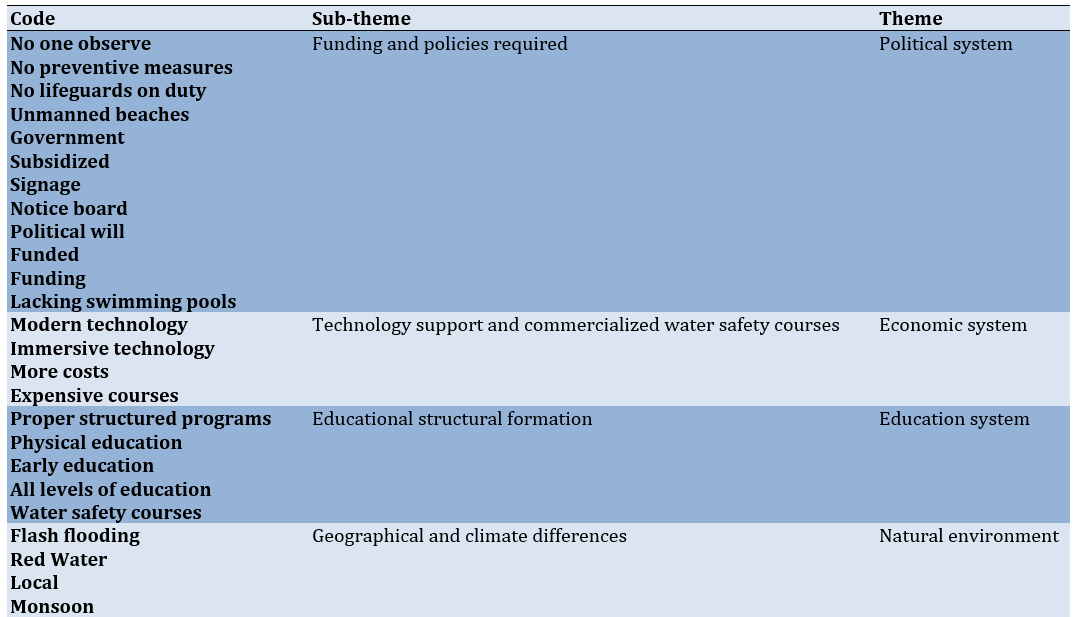
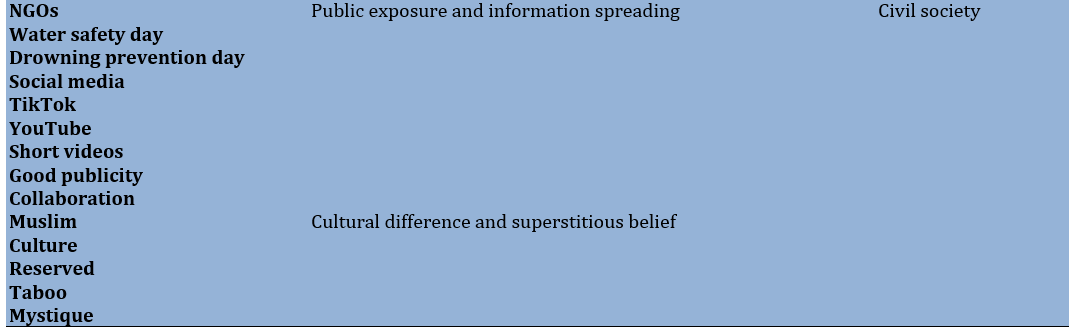
The thematic framework was constructed based on the qualitative findings (Figure 2).
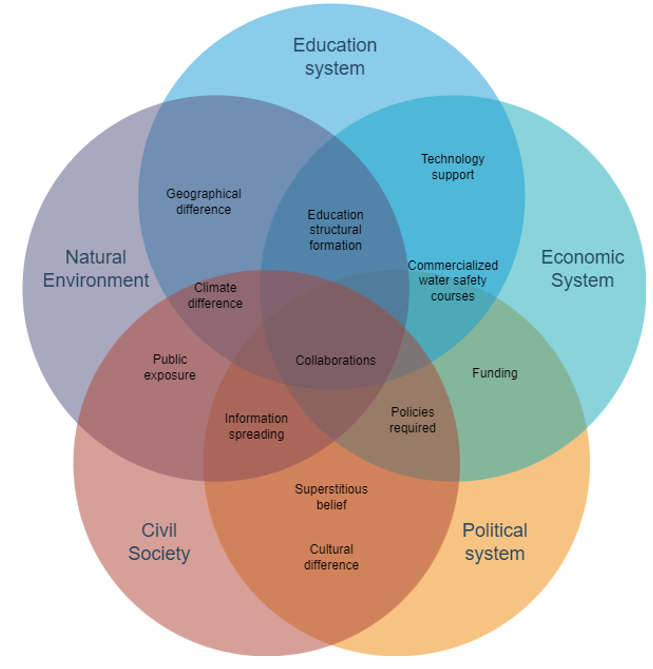
Figure 2. The thematic framework.
Discussion
The current study intend to understand the roles of stakeholders in drowning prevention by utilizing the QHM. According to Peden et al. [48], getting the government to prioritize drowning prevention and show interest in the problem is one of the most challenging initiatives (30.8%). One of the reasons water safety culture is not widely promoted lies in the commitment of the relevant authorities. A strong water safety culture is shaped and reinforced largely by leadership [49]. However, there are no laws in Malaysia that mandate the presence of lifeguards at beaches or swimming pools [50]. As a result, drowning cases continue to occur at hotels and theme parks. In addition to warning signs, increased patrols in those high-risk areas are certainly needed [51]. Singh [52] urges that safety standards should be met, rather than relying solely on posting signs at hotels reminding visitors to use the swimming pool at their own risk. Furthermore, a previous study showed that when the number of patrons exceeds 75, the percentage of victims who cannot be spotted by lifeguards increases by 50% [53]. Thus, even with the presence of lifeguards, an imbalanced ratio between the supervisor (also referred to as the guardian) and the supervisee will still expose patrons to drowning risks.
Additionally, water safety skills encompass swimming skills, water safety awareness, the ability to spot distressed swimmers, rescue skills, and CPR [54]. Most of the skills mentioned require a safe environment (e.g., a swimming pool) to be practiced; hence, the lack of facilities makes it challenging to implement water safety courses. Furthermore, financial resources for drowning prevention measures and safety training must be gathered and made easily accessible [55]. Unfortunately, the lack of funding for drowning prevention measures in Malaysia significantly hinders their promotion.
To address drowning in Malaysia, there is a need for a lead agency on the topic and proposals for intervention initiatives [56]. The formation of the National Water Activity Safety Council in 2013 is often cited as the leading agency; however, it has been reported to have limited power, and no specific department is assigned to supervise drowning cases [57, 58]. The WHO [59] also disclosed that there are currently no national water safety strategies available in Malaysia. Therefore, the government should play a role in enforcing laws and regulations regarding the lack of lifesavers, the construction of necessary facilities, and the subsidization of related water safety programs.
In this context, water safety education ought to be an ongoing, multi-temporal effort for all maritime nations. Resources for teaching water safety must be accessible in all of the nation’s educational institutions for this to occur [60]. However, water safety educational initiatives are often resource-intensive [61, 62]. As noted by one of the participants, instructors frequently charged participants a high price for water safety programs to cover development costs. Consequently, the courses were often unaffordable and inaccessible to the majority. Local communities in LMICs may need low-cost prevention techniques that utilize available resources [63, 64]. Several participants mentioned the use of “modern technology” or “immersive technology” in the context of drowning prevention. This aligns with what Crawford et al. [65] stating that research on drowning prevention is rapidly expanding to include technology-based interventions. The business sector should commercialize water safety courses, making them more easily accessible to the general public at an affordable price range. Moreover, technological support should be provided to relevant parties by corporations for the development of new drowning prevention methods.
Classroom-based education, testimonial videos, and social marketing, as proposed by Ahmad [66], should be considered for implementation. This is supported by Koon et al. [67], who note that education is one of the most common prevention strategies. Given the high drowning statistics worldwide, water safety education ought to be included in all national curricula [68]. The ability of education to reach a variety of people with comparatively low expenditure and produce a lasting impact makes it cost-effective [69]. However, despite the severity of the drowning issue, water safety education has been given low priority in Malaysia, and there is still little data supporting the teaching of necessary drowning prevention skills to Malaysian school students [54, 70]. The current findings suggest that the improperly structured and non-standardized programs in Malaysia have been inadequately implemented.
It is argued that effective educational interventions should be age-appropriate, content-specific, and customized for the intended audience [71]. A one-size-fits-all approach might not be ideal, as the causes of drowning differ according to age [72], gender [73], ethnicity [62], and more. Nonetheless, the community approach using the “knowledge deficit model”—the assumption that experts’ information will raise public awareness and influence behavior—is often criticized [73]. Instead, persuasion techniques should be utilized to alter users’ attitudes and behaviors in a specific way, with goals and design intentions in mind [74]. Van Duijn et al. [75] also point out that there is a particularly wide disparity between drowning prevention research and practice, which also lacks evidence-based studies. Therefore, it is advised that academia should focus research not only on designing and developing instructional materials that are pedagogically suitable but also on considering personalized approaches and integrating persuasive strategies based on ample scientific evidence.
By incorporating the natural environment as a new subsystem for knowledge and innovation models, the Quintuple Helix seeks to establish “nature” as a crucial and comparable component of knowledge generation and innovation [76]. Malaysia’s water landscape is rich and diverse. Over the years, 12 drowning hotspots have been identified [77]. According to the Fire and Rescue Department, between January and October 2019, there were 109 cases of drowning in rivers, 41 cases at the beach, 27 cases at lakes, and 11 cases at waterfalls [78]. To maximize skill transfer, water safety instruction should be conducted in representative settings [79]. Thus, as stated by Peden et al. [80], the suitability of river drowning prevention scenarios for LMICs needs to be critically evaluated. Furthermore, the issues highlighted by participants differ from those in other nations, with terms such as “Flood” and “Red Water” being mentioned, as well as Malaysia’s climate, like “Monsoon.” Hence, appropriate educational materials should be introduced based on the unique Malaysian context. For instance, the Health Belief Model-Based Intervention (HEBI) module for flood preparedness could be integrated into water safety courses offered by institutions and organizations [80, 81].
Lifesaving professionals also consider that the lack of exposure and publicity creates a challenging situation for spreading water safety awareness. It is imperative that LMICs support increased reporting of assessed public health initiatives [65]. The Malaysian media are not fully utilized to convey the importance of water safety and the availability of courses. Participant L1 claimed that the general public has a misconception about the drowning issue, viewing it as irrelevant and believing that the probability of it happening to them is low. Even those who are interested in learning water safety are unaware of the available courses due to the lack of publicity.
As stated by several participants, publicity should leverage social media, short videos, and platforms such as TikTok or YouTube not only to attract the general public’s attention but also to educate and persuade them. Passive interventions, such as broadcasting through local and national television and radio or implementing public health educational campaigns, are crucial for informing the public about the importance of acquiring water safety education [48, 82].
Additionally, partnership roles among NGOs, swimming academies, schools, and other organizations are essential. The mobilization of lifesaving NGOs, the use of professional expertise to promote drowning prevention, and the importance of charitable organizations in overcoming a lack of government support are crucial [83]. Furthermore, participants also mentioned the commencement of the annual awareness day program. With May 15th designated as International Water Safety Day and July 25th as World Drowning Prevention Day, NGOs and educational institutions are encouraged to seize the opportunity to spread water safety awareness.
Malaysia is a highly multicultural country with diverse racial populations. People from multicultural societies are more likely to drown because water-related activities may be valued and perceived differently across cultures [84]. Thus, peripheral, evidential, linguistic, constituent-involving, and sociocultural approaches should be employed in the production and delivery of water safety education messages to enhance their effectiveness when targeting racial and ethnic minority communities [85]. For example, in New Zealand, Phillips and Jackson [86] approach water safety from an indigenous Māori perspective. The authors of the current study revealed that superstitious beliefs or fear appeals are present in Malay and Chinese cultures to discourage individuals from approaching bodies of water. Similarly, a recent study found that stories involving monsters and demons are passed down through generations to instill dread and reverence for water [87]. Further studies could provide new insights for Malaysian researchers and water safety practitioners. Additionally, considering Malaysia’s status as a Muslim country, the findings raised some concerns about the participants’ swimming attire and the implications of saving individuals of the opposite gender, which should be taken into consideration.
Due to the methodology of the current study, the major limitations include the potential for incorporating the authors’ views into the data analysis. Additionally, the current study involves only a small sample size, focusing solely on the perspective of lifesaving professionals. Therefore, future studies need to be conducted with distinct interventions involving a larger sample size that represents a broader demographic across the nation to fully understand and tailor the courses, programs, and resources to the local Malaysian context. In short, further research is required on this topic to ensure the safety of all participants in water-related activities.
Conclusion
This research highlights how lifesaving professionals perceive drowning prevention approaches in Malaysia, emphasizing the need for collaboration among relevant stakeholders to enhance these strategies.
Acknowledgments: Heartfelt gratitude is extended to the members of the Life Saving Society Malaysia, Aquatic Life Support Society, USM Lifeguard Corp, and TAD Sports Lab for making this study possible. This research is not funded.
Ethical Permissions: The study was conducted under the ethical guidelines of JEPeM-USM.
Conflicts of Interests: The authors reported no competing interests associated with the material presented in this paper. Nothing to be reported.
Authors' Contribution: Lim DY (First Author), Introduction Writer/Main Researcher/Discussion Writer/Statistical Analyst (50%); Sanmugam M (Second Author), Assistant Researcher/Discussion Writer (20%); Yahaya WAJ (Third Author), Methodologist/Assistant Researcher (20%); Khlaif ZN (Fourth Author), Methodologist/Assistant Researcher/Statistical Analyst (10%)
Funding/Support: This research is not funded. Nothing to be reported.
Drowning is a serious public health problem worldwide. It involves breathing impairment caused by immersion or submersion in liquid [1]. The “Global Report on Drowning,” published by the World Health Organization (WHO) [2], has successfully drawn attention to this long-neglected public health issue. Globally, drowning accounts for 236,000 lives lost, representing 8% of fatal deaths worldwide, and ranks as the third leading cause of unintentional injury death [3]. When someone is drowning, they often experience panic and become more active, which raises their pulse rate and causes them to run out of oxygen, making it harder for them to breathe while submerged [4]. There are six phases that occur during drowning, beginning with exertion to keep the airway clear of water, followed by initial submersion and retention of breath, aspiration of water, comatose state, cardio-respiratory arrest, and finally, the irreversible cycle of death [5]. The segmentation of drowning was previously based on distinct characteristics, such as the victim’s lung condition—dry or wet drowning [6, 7]—the victim’s drowning spot—saltwater or freshwater drowning [8]—the victim’s motion during drowning—active or passive drowning [9, 10]—the direct or indirect factors that cause drowning—primary or secondary drowning [11]—the proximity of the drowning—near drowning [12]—and the reticent aspect of drowning—silent drowning [13]. However, all the aforementioned terms are no longer used, as researchers and medical professionals have come to a consensus that drowning should instead be classified based on the outcome, namely death, no morbidity, and morbidity, which can be further detailed into moderate, severe, coma, and brain death [14].
Over 90% of drowning incidents occur in low- and middle-income countries (LMICs), which is three times the rate of occurrence in high-income countries (HICs) [15]. Due to incomplete data collection in LMICs, the estimated drowning rate is four to five times higher than the actual reported statistics [2]. In particular, the Western Pacific Region (WPR) has the highest fatal drowning rate, not only for children (13.9 deaths per 100,000) but overall, with more than 78,000 lives lost yearly, meaning that one person dies every six minutes due to drowning [15, 16]. Malaysia is one of the LMICs located in the WPR. The country has a diverse open water and inland water environment. It is predominantly a maritime nation with a coastline that stretches over 4,600 kilometers, crosses more than 19 degrees of longitude, and is surrounded by four major bodies of water (the Straits of Malacca, South China Sea, Sulu Sea, and Sulawesi Sea) [17]. Furthermore, Malaysia is rich in its inland water landscape, featuring 189 river basins—89 in West Malaysia and 100 in East Malaysia [18]—90 lakes [19], 104 dams [20], and more than a hundred waterfalls [21]. The country often experiences consistently high temperatures and elevated relative humidity due to its equatorial environment. The northeastern and southwestern monsoons impact the climate, leading to heavy and prolonged rainfall that often results in floods [22, 23]. Approximately 5.67 million people are affected by floods, which occur in 10.1% of the nation’s total territory [24]. Since 2000, floods have accounted for 85% of all natural disasters in Malaysia, making them the most frequent type of calamity. Malaysia ranks 12th globally in terms of the frequency of incidents, making it one of the world’s most vulnerable countries to flood-related natural catastrophes [25].
On average, it is reported that 268 drowning deaths occur in Malaysia each year [26]. Drowning is ranked as the 2nd leading cause of mortality for boys aged 14 years and younger [27]. Based on recent data, there were 820 drowning deaths (0.49% of all deaths) in Malaysia, with an age-adjusted mortality rate of 2.63 per 100,000 people, positioning the country at 83rd globally [28]. However, there have been relatively few studies on drowning in Malaysia, and the lack of information about this issue may be attributed to the extremely limited data on drowning incidents, insufficient understanding of the causal factors underlying these incidents, and people’s perceptions of the risk of drowning [29]. Additionally, the availability of instructional resources regarding water safety and drowning prevention, as well as awareness messaging for the general public in Malaysia, remains limited and inadequate [30, 31].
Beginning as the triple helix (TH) model, proposed by Leydesdorff and Etzkowitz [32], it emphasizes the relationship between government, business, and academia, viewing these elements as crucial for enhancing the environment that supports innovative projects [33]. It was later extended into the quintuple helix model (QHM) with the addition of the media and culture-based public [34]. Schütz et al. [35] proposed that the four fundamental elements of an innovation system (government, industry, university, and society) engage in multi-layered, dynamic, bi-directional interactions rather than a unidirectional push-pull relationship. Although the triple helix concept was created in the 1990s as a theoretical response to the burgeoning knowledge-based economy, the QHC was introduced to rethink society in the twenty-first century [36]. QHCs claim to enhance the ability to solve problems, particularly when addressing complex societal issues [37].
The QHM combines both the TH model and QHM while incorporating a fifth helix—the natural environment. By integrating environmental sustainability into the creative process, this paradigm addresses global issues such as climate change and highlights the necessity of a socio-ecological shift [38]. The QHM can be applied both theoretically and practically, with its most crucial component being the “knowledge” feature, which encompasses the entire system to support society’s sustainable growth [39]. In this model, the potential of the economic system to generate innovation, including innovations aimed at achieving the sustainable development goals (SDGs), is determined by the transfer of knowledge among its participants [40]. The QHM may provide recommendations for enhancing the anticipatory profiles of communities and organizations from a social standpoint, assisting in quickly determining the effects of current actions [41]. Therefore, the researchers of the current study intend to understand the roles of stakeholders in drowning prevention by utilizing the QHM.
Participants and Methods
The current qualitative study was done in 2024 on 11 lifeguards and/or lifesaving professionals from three distinct lifesaving associations selected by the purposive sampling method, which is a form of non-probability sampling used when intending to study a particular cultural subject with informed experts [42]. According to Hennink and Kaiser [43], data saturation in qualitative research can be achieved with between 9 to 17 interviews conducted. Code saturation was reached after interviewing 11 participants, during which recurring codes or themes were identified, but no new details or connections between them emerged [44]. Therefore, lifeguards and/or lifesaving professionals from three respective non-government organizations—namely Life Saving Society Malaysia (LSSM), Aquatic Life Support Society (AqLS), and USM Lifeguard Corp (USM-LGC)—were selected based on the established criteria (Table 1).
Table 1. Participant’s characteristics
As suggested by Yeong et al. [45], a four-step procedure known as interview protocol refinement (Figure 1), serves as a guideline for researchers when developing interview questions. As a result, 13 open-ended questions were constructed, aligning with the research questions and validated by experts in the respective field. This validation process included one LSSM examiner to evaluate the content of the questions, one university lecturer to ensure alignment between the interview questions and research objectives, and one freelance translator to validate the language of the interview questions to avoid any ambiguity or grammatical errors. The study was initially piloted with four lifeguards from the USM Lifeguard Corps. The feedback received from the participants highlighted the need to clarify the definitions of water safety, to provide a list of bodies of water for participants to choose from, and to revise some wording in the interview questions (e.g., changing “risky actions” to “risky behavior”).
Figure 1. Interview development protocol
A semi-structured in-depth interview was conducted either face-to-face or via an online platform (ZOOM) with all the participants. The interviews were recorded and carried out one-on-one to prevent participants from influencing each other’s opinions, with each interview session lasting approximately 15 to 25 minutes. The recordings were then transcribed into textual form for further analysis. Patterns of significance, or themes, within the data set can be methodically identified, organized, and revealed through thematic analysis. Thematic analysis was conducted using a deductive approach. Deductive coding is a top-down method in which data analysis is guided by pre-existing ideas, models, or codes [46]. Fife and Gossner [47] propose five components for deductive qualitative research, including the development of research questions and selection of a guiding theory, operationalization of the theory, purposive sampling, coding and analyzing the data, and finally theorizing.
The operationalization of the theory was carried out by using its prior themes to guide the research, namely the political system, economic system, education system, natural environment, and civil society. Two coders were first familiarized with the data through repeated readings of the interview transcripts. The researchers then created a codebook, listing distinct codes along with their definitions and applications. Next, the researchers organized the coded data while intentionally looking for evidence that supports, contradicts, refines, or expands upon the findings, as suggested by Fife and Gossner [47]. Initially, 56 codes were identified. After reaching a consensus among the coders, repetitive and irrelevant codes that could not be formed into any patterns were removed. A total of 38 codes were included that fit into the prior themes. The analyses were performed using NVivo 12.
Findings
The pre-existing five themes (political system, economic system, education system, natural environment, and civil society) of the QHM were confirmed, with six sub-themes emerging to support and refine the model. To protect the subjects’ identities, numbers were assigned for tracing back to their sources. In-vivo quotes were also extracted directly from participants to avoid research bias.
Funding and policies
This sub-theme branched from the main theme of the political system. Participants revealed that funding is crucially needed for the promotion of water safety in Malaysia. The emphasis by the respective authorities on allocating funds could help overcome the hindrance to the development of necessary educational resources and the lack of required swimming facilities.
“Is quite less or it's quite few the funding to really like develop the education work, education on water safety and our government do not prioritize this and not even like recognize this as the important issue to be solved.” (P1)
“The government need to acknowledge the importance of the water safety first, and then they willing to pay or subsidized or give the allowance … to build a swimming pool …” (P2)
Additionally, participants pointed out that the absence of lifeguards in inland and open water environments raised concerns, potentially endangering patrons who engage in water activities without supervision.
“In Malaysia, beaches are unmanned there. And you swim at your own risk. That's really at your own risk. And a lot of drowning happened especially in open water.” (P10)
Technology support and commercialized water safety courses
This sub-theme explores what the economic system could contribute to the promotion of water safety. Two participants revealed that water safety courses have been commercialized and are quite costly, making them less accessible to the general public.
“I have noticed that there is quite expensive but the courses. Uh, provided by. Like organizations. Like it can be up to like RM700 or RM800 … say you want the people to learn about it. But then there's this. The course it costs so much to learn.” (P9)
As an alternative, several participants mentioned that modern technology (e.g., immersive technology) could be utilized as a tool to educate on the topic of water safety.
“This might be a good opportunity to introduce them the water safety practice by using the immersive technology. So, I think it’s easier to do things when we have their attention into something” (P2)
Educational structural formation
The majority of the participants agreed that education plays a vital role and that water safety education should be taught to students from a young age. Participants suggested that it could be integrated into the current physical education curriculum. Furthermore, participants discussed that water safety courses should be properly structured into distinct levels and made available to all according to their levels of education.
“I think this is this is relevant and if possible, this kind of water educational courses should be instilled in all levels of education, maybe we maybe we can categorize these courses into different level.” (P3)
Geographical and climatic differences
Given Malaysia’s rich aquatic landscape and climate, the educational resources might need to focus on issues such as disasters like flash floods, red tides, and landslides, which occur more frequently in the local context. Knowledge of such issues should be distributed, especially during the monsoon season.
“Geographic situation or in Malaysia is quite different from the overseas. We do have monsoon so I think it's quite different from how the other countries deal with this kind of situation …” (P1)
Public exposure and information spreading
This sub-theme delves into the importance of public exposure and information dissemination regarding water safety. Participants stated that while non-government organizations have been disseminating information and knowledge, it still does not capture the attention of the general public. Three participants suggested using social media and short videos to promote water safety knowledge and skills.
“The campaign or the event needs to have a good publicity to have a more exposure to the general public.” (P8)
Moreover, there is a need for collaboration among NGOs, swimming academies, and relevant parties. Participants also mentioned that this collaboration could help raise awareness and unite isolated NGOs to achieve a common goal.
“Now a lot of these are they have a lot of NGOs doing this, but they are very isolated, they don't have a standard … standard type of the principles are the same, they can teach all things. But a regulated body and enforcement, and make sure that it is done for the good of the general public.” (P10)
Cultural differences and superstitious belief
Lastly, several participants highlighted concerns about the willingness to approach victims of the opposite sex, as well as the appropriateness of clothing during water activities due to their conservative Muslim backgrounds. Superstitions involving supernatural phenomena were also shared by two participants.
“Like maybe doing Hungry Ghost Festival. They believe that you shouldn't go to near bodies of water during that. Period of time because they have this taboo, like maybe something misfortune can happen.” (P9; Table 2)
Table 2. Participant quotes linked to themes and the quintuple helix model (QHM)
The thematic framework was constructed based on the qualitative findings (Figure 2).
Figure 2. The thematic framework.
Discussion
The current study intend to understand the roles of stakeholders in drowning prevention by utilizing the QHM. According to Peden et al. [48], getting the government to prioritize drowning prevention and show interest in the problem is one of the most challenging initiatives (30.8%). One of the reasons water safety culture is not widely promoted lies in the commitment of the relevant authorities. A strong water safety culture is shaped and reinforced largely by leadership [49]. However, there are no laws in Malaysia that mandate the presence of lifeguards at beaches or swimming pools [50]. As a result, drowning cases continue to occur at hotels and theme parks. In addition to warning signs, increased patrols in those high-risk areas are certainly needed [51]. Singh [52] urges that safety standards should be met, rather than relying solely on posting signs at hotels reminding visitors to use the swimming pool at their own risk. Furthermore, a previous study showed that when the number of patrons exceeds 75, the percentage of victims who cannot be spotted by lifeguards increases by 50% [53]. Thus, even with the presence of lifeguards, an imbalanced ratio between the supervisor (also referred to as the guardian) and the supervisee will still expose patrons to drowning risks.
Additionally, water safety skills encompass swimming skills, water safety awareness, the ability to spot distressed swimmers, rescue skills, and CPR [54]. Most of the skills mentioned require a safe environment (e.g., a swimming pool) to be practiced; hence, the lack of facilities makes it challenging to implement water safety courses. Furthermore, financial resources for drowning prevention measures and safety training must be gathered and made easily accessible [55]. Unfortunately, the lack of funding for drowning prevention measures in Malaysia significantly hinders their promotion.
To address drowning in Malaysia, there is a need for a lead agency on the topic and proposals for intervention initiatives [56]. The formation of the National Water Activity Safety Council in 2013 is often cited as the leading agency; however, it has been reported to have limited power, and no specific department is assigned to supervise drowning cases [57, 58]. The WHO [59] also disclosed that there are currently no national water safety strategies available in Malaysia. Therefore, the government should play a role in enforcing laws and regulations regarding the lack of lifesavers, the construction of necessary facilities, and the subsidization of related water safety programs.
In this context, water safety education ought to be an ongoing, multi-temporal effort for all maritime nations. Resources for teaching water safety must be accessible in all of the nation’s educational institutions for this to occur [60]. However, water safety educational initiatives are often resource-intensive [61, 62]. As noted by one of the participants, instructors frequently charged participants a high price for water safety programs to cover development costs. Consequently, the courses were often unaffordable and inaccessible to the majority. Local communities in LMICs may need low-cost prevention techniques that utilize available resources [63, 64]. Several participants mentioned the use of “modern technology” or “immersive technology” in the context of drowning prevention. This aligns with what Crawford et al. [65] stating that research on drowning prevention is rapidly expanding to include technology-based interventions. The business sector should commercialize water safety courses, making them more easily accessible to the general public at an affordable price range. Moreover, technological support should be provided to relevant parties by corporations for the development of new drowning prevention methods.
Classroom-based education, testimonial videos, and social marketing, as proposed by Ahmad [66], should be considered for implementation. This is supported by Koon et al. [67], who note that education is one of the most common prevention strategies. Given the high drowning statistics worldwide, water safety education ought to be included in all national curricula [68]. The ability of education to reach a variety of people with comparatively low expenditure and produce a lasting impact makes it cost-effective [69]. However, despite the severity of the drowning issue, water safety education has been given low priority in Malaysia, and there is still little data supporting the teaching of necessary drowning prevention skills to Malaysian school students [54, 70]. The current findings suggest that the improperly structured and non-standardized programs in Malaysia have been inadequately implemented.
It is argued that effective educational interventions should be age-appropriate, content-specific, and customized for the intended audience [71]. A one-size-fits-all approach might not be ideal, as the causes of drowning differ according to age [72], gender [73], ethnicity [62], and more. Nonetheless, the community approach using the “knowledge deficit model”—the assumption that experts’ information will raise public awareness and influence behavior—is often criticized [73]. Instead, persuasion techniques should be utilized to alter users’ attitudes and behaviors in a specific way, with goals and design intentions in mind [74]. Van Duijn et al. [75] also point out that there is a particularly wide disparity between drowning prevention research and practice, which also lacks evidence-based studies. Therefore, it is advised that academia should focus research not only on designing and developing instructional materials that are pedagogically suitable but also on considering personalized approaches and integrating persuasive strategies based on ample scientific evidence.
By incorporating the natural environment as a new subsystem for knowledge and innovation models, the Quintuple Helix seeks to establish “nature” as a crucial and comparable component of knowledge generation and innovation [76]. Malaysia’s water landscape is rich and diverse. Over the years, 12 drowning hotspots have been identified [77]. According to the Fire and Rescue Department, between January and October 2019, there were 109 cases of drowning in rivers, 41 cases at the beach, 27 cases at lakes, and 11 cases at waterfalls [78]. To maximize skill transfer, water safety instruction should be conducted in representative settings [79]. Thus, as stated by Peden et al. [80], the suitability of river drowning prevention scenarios for LMICs needs to be critically evaluated. Furthermore, the issues highlighted by participants differ from those in other nations, with terms such as “Flood” and “Red Water” being mentioned, as well as Malaysia’s climate, like “Monsoon.” Hence, appropriate educational materials should be introduced based on the unique Malaysian context. For instance, the Health Belief Model-Based Intervention (HEBI) module for flood preparedness could be integrated into water safety courses offered by institutions and organizations [80, 81].
Lifesaving professionals also consider that the lack of exposure and publicity creates a challenging situation for spreading water safety awareness. It is imperative that LMICs support increased reporting of assessed public health initiatives [65]. The Malaysian media are not fully utilized to convey the importance of water safety and the availability of courses. Participant L1 claimed that the general public has a misconception about the drowning issue, viewing it as irrelevant and believing that the probability of it happening to them is low. Even those who are interested in learning water safety are unaware of the available courses due to the lack of publicity.
As stated by several participants, publicity should leverage social media, short videos, and platforms such as TikTok or YouTube not only to attract the general public’s attention but also to educate and persuade them. Passive interventions, such as broadcasting through local and national television and radio or implementing public health educational campaigns, are crucial for informing the public about the importance of acquiring water safety education [48, 82].
Additionally, partnership roles among NGOs, swimming academies, schools, and other organizations are essential. The mobilization of lifesaving NGOs, the use of professional expertise to promote drowning prevention, and the importance of charitable organizations in overcoming a lack of government support are crucial [83]. Furthermore, participants also mentioned the commencement of the annual awareness day program. With May 15th designated as International Water Safety Day and July 25th as World Drowning Prevention Day, NGOs and educational institutions are encouraged to seize the opportunity to spread water safety awareness.
Malaysia is a highly multicultural country with diverse racial populations. People from multicultural societies are more likely to drown because water-related activities may be valued and perceived differently across cultures [84]. Thus, peripheral, evidential, linguistic, constituent-involving, and sociocultural approaches should be employed in the production and delivery of water safety education messages to enhance their effectiveness when targeting racial and ethnic minority communities [85]. For example, in New Zealand, Phillips and Jackson [86] approach water safety from an indigenous Māori perspective. The authors of the current study revealed that superstitious beliefs or fear appeals are present in Malay and Chinese cultures to discourage individuals from approaching bodies of water. Similarly, a recent study found that stories involving monsters and demons are passed down through generations to instill dread and reverence for water [87]. Further studies could provide new insights for Malaysian researchers and water safety practitioners. Additionally, considering Malaysia’s status as a Muslim country, the findings raised some concerns about the participants’ swimming attire and the implications of saving individuals of the opposite gender, which should be taken into consideration.
Due to the methodology of the current study, the major limitations include the potential for incorporating the authors’ views into the data analysis. Additionally, the current study involves only a small sample size, focusing solely on the perspective of lifesaving professionals. Therefore, future studies need to be conducted with distinct interventions involving a larger sample size that represents a broader demographic across the nation to fully understand and tailor the courses, programs, and resources to the local Malaysian context. In short, further research is required on this topic to ensure the safety of all participants in water-related activities.
Conclusion
This research highlights how lifesaving professionals perceive drowning prevention approaches in Malaysia, emphasizing the need for collaboration among relevant stakeholders to enhance these strategies.
Acknowledgments: Heartfelt gratitude is extended to the members of the Life Saving Society Malaysia, Aquatic Life Support Society, USM Lifeguard Corp, and TAD Sports Lab for making this study possible. This research is not funded.
Ethical Permissions: The study was conducted under the ethical guidelines of JEPeM-USM.
Conflicts of Interests: The authors reported no competing interests associated with the material presented in this paper. Nothing to be reported.
Authors' Contribution: Lim DY (First Author), Introduction Writer/Main Researcher/Discussion Writer/Statistical Analyst (50%); Sanmugam M (Second Author), Assistant Researcher/Discussion Writer (20%); Yahaya WAJ (Third Author), Methodologist/Assistant Researcher (20%); Khlaif ZN (Fourth Author), Methodologist/Assistant Researcher/Statistical Analyst (10%)
Funding/Support: This research is not funded. Nothing to be reported.
Article Type: Short Communication |
| Rights and permissions | |
 |
This work is licensed under a Creative Commons Attribution-NonCommercial 4.0 International License. |