


Volume -
3 , - : 735-741 |
Back to browse issues page



Download citation:
BibTeX | RIS | EndNote | Medlars | ProCite | Reference Manager | RefWorks
Send citation to:


BibTeX | RIS | EndNote | Medlars | ProCite | Reference Manager | RefWorks
Send citation to:
A Review of Cardiovascular Curricula in Iran and Selected Developed Countries. 3 https://doi.org/10.58209/hehp.13.4.735
URL: http://daneshafarand.org/article-1-82978-en.html
URL: http://daneshafarand.org/article-1-82978-en.html
| Abstract (HTML) (501 Views)
Full-Text: (21 Views)
Introduction
Sustainable development in higher education requires balanced growth in both quantitative and qualitative dimensions. Neglecting qualitative aspects may lead to issues, such as scientific dependency, lack of creativity, and academic weaknesses. To ensure quality, universities must adapt to environmental changes and compete in international assessments. In medical education, universities not only deliver healthcare services but also train specialists with the knowledge and skills required to improve public health. To achieve this, effective teaching and assessment methods must be applied [1].
Cardiovascular diseases (CVDs) remain the leading cause of mortality worldwide, accounting for approximately 17.9 million deaths annually, with a disproportionate burden in low- and middle-income countries [2]. Effective prevention, diagnosis, and management require well-trained cardiologists capable of integrating clinical expertise, research, and innovation. Curriculum planning is a cornerstone of education, serving as a roadmap that identifies needs and objectives, organizes content, selects teaching methods, and prepares assessment materials. Well-designed curricula improve educational quality and outcomes, while poorly designed ones can lead to undesirable consequences [3, 4].
Comparative studies of curricula help identify similarities and differences among educational programs, providing solutions to address educational challenges and uncovering factors contributing to the success or failure of education systems [1, 5, 6]. Such analyses are particularly valuable in cardiology, where training must adapt to evolving technologies (e.g., advanced imaging, interventional techniques), epidemiological shifts, and healthcare system demands [7, 8].
In developed countries, like the USA [9], Canada [10], and the UK [11], cardiology training programs are designed to meet high scientific standards, integrating clinical excellence, research, and lifelong learning to address diverse CVD conditions. These programs often emphasize competency-based progression, protected research time, and work-life balance considerations [12].
In contrast, Iran’s cardiology curriculum addresses domestic needs within resource constraints, aiming to train competent specialists efficiently [13]. Iran’s healthcare system faces high CVD prevalence, rapid urbanization, and a need for increased specialist numbers, making shorter, intensive programs practical [14]. However, concerns exist regarding long working hours, limited research integration, and potential impacts on trainee well-being and innovation [15].
Given the impact of educational approaches on the competence and skills of cardiologists, a comparative analysis of cardiology curricula can provide innovative solutions for aligning training programs with societal needs and advancing academic standards. A 2021 study by Czerwińska-Jelonkiewicz et al. on 614 young cardiologists in ESC countries, there are gaps in technical and non-technical skills, program variability, and gender-related differences. The study highlights the need for standardized training [16].
Recent international surveys highlight ongoing challenges, including variability in skills training, gender disparities, and calls for standardization [16–18]. For instance, European studies show persistent gaps in congenital heart disease and interventional training, advocating harmonized curricula [19, 20]. In the post-pandemic era, virtual learning and reduced procedural volumes have further underscored the need for adaptive, resilient training models [21, 22].
Given these factors and the scarcity of direct comparative studies between Iran and developed nations, this analysis provides insights into strengths, weaknesses, and global alignment opportunities. The study aimed to conduct a comparative analysis of cardiology specialty curricula in Iran and selected developed countries using Beredy’s model.
Instrument and Methods
Design
This applied comparative study compared the cardiology residency curricula in Iran with those of selected developed countries, including the USA, Canada, and the UK. Data on the curricula were gathered by accessing the respective countries’ official reference websites [10, 13].
Instrument
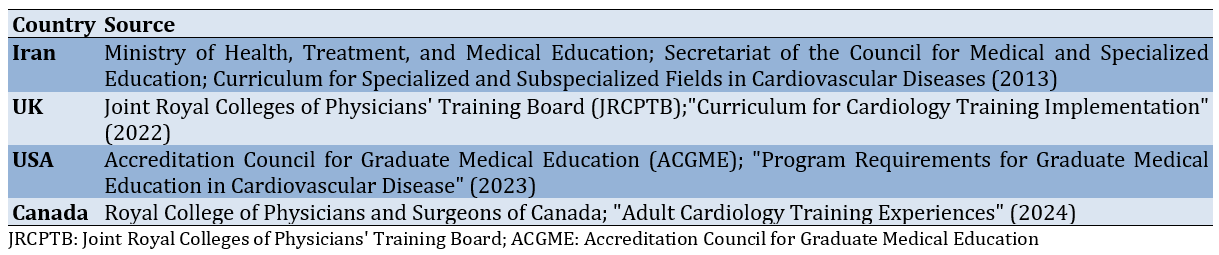
A pre-designed checklist was utilized to collect key information about the educational curricula, including country name, admission capacity, weekly working hours, educational environments, educational resources, and program duration. These details were extracted from the countries’ curricula (Table 1).
Table 1. Educational curricula of Iran, the United Kingdom, the United States, and Canada
Data collection
The study was conducted following ethical approval from Shahid Beheshti University of Medical Sciences. The research adopted the well-known Beredy model for comparative studies, which includes four stages, namely description, interpretation, juxtaposition, and comparison. Accordingly, the cardiology curricula of the selected countries were described and examined, focusing on the most recent programs available during the study period. The relevant data were noted and systematically entered into the checklist for further analysis. Data from the descriptive phase were reviewed and analyzed to extract meaningful insights. In the Juxtaposition stage, the information gathered during the description and interpretation phases was classified into tables to create a framework for comparing similarities and differences. The curricula were compared in detail, focusing on similarities and differences and addressing the research questions. Based on these findings, practical recommendations for improving the components of Iran’s cardiology curriculum were then developed and presented.
Data analysis
The collected data were analyzed using the Beredy method. The categorized data were compared in tabular form, and similarities and differences were identified. These insights were further analyzed to determine the distinctive features of the curricula.
Findings
In the description phase, the following results were obtained. In the USA, the acceptance rate for cardiology fellowship programs was about 66%, with approximately 1,045 positions across 200 universities. Fellows typically worked 60-80 hours per week. Braunwald’s Heart Disease was the primary educational resource, and training was conducted in teaching hospitals and research centers. The cardiology specialty program lasted six years and was evenly divided between internal medicine and cardiology. In the UK, the acceptance rate was about 30%, with approximately 130 positions across 15 universities. Work hours were regulated by the European Working Time Directive (EWTD), ranging from 48 to 56 hours per week and limited to an average of 48. The ESC Textbook of Cardiovascular Medicine was the primary resource, and training occurred in NHS-affiliated hospitals. The program lasted 8-9 years, including 3-4 years of internal medicine training and 5 years of cardiology specialization. In Canada, the acceptance rate averaged 40-55%, with 120-160 positions across 12 universities. Fellows typically worked 60-80 hours per week. Braunwald’s Heart Disease and Hurst’s The Heart were primary resources, and training was conducted in teaching hospitals and university-affiliated research centers. The six-year program was evenly split between internal medicine and cardiology. In Iran, there was a relatively high acceptance rate with 272 positions across 26 universities. Fellows in Iran worked approximately 100 hours per week, significantly higher than in other countries. Braunwald’s Heart Disease and Hurst’s The Heart were the primary resources, and training was conducted in teaching hospitals. The four-year program comprised one year of internal medicine and three years of cardiology specialization. This comparison revealed significant differences in fellowship structures across countries regarding acceptance rates, program duration, work hours, and educational resources. The USA and Canada featured six-year programs with long work hours, while the UK adhered to the EWTD with shorter work hours but a longer program. Iran stood out with significantly higher work hours and a shorter program duration.
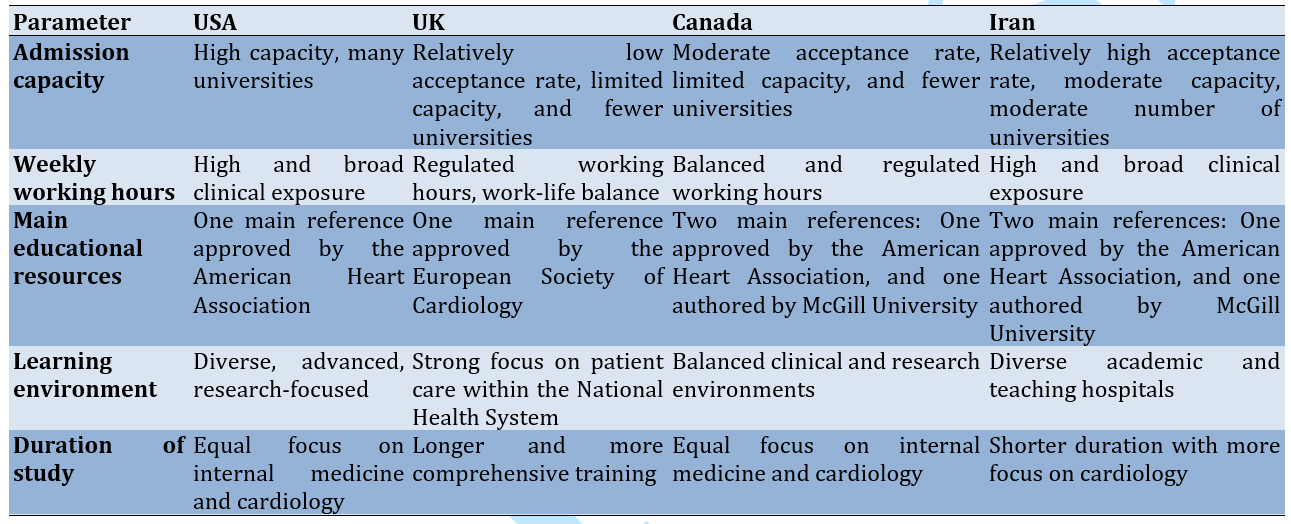
In the interpretation stage, structural and content differences in cardiology fellowship programs across countries were as follows. In the United States, the high acceptance capacity reflected the large number of institutions offering cardiology fellowship programs. Fellows experienced long work hours (60-80 hours per week) and utilized a reputable and focused educational resource (Braunwald’s Heart Disease). The six-year program equally emphasized internal medicine and cardiology, ensuring balanced exposure to both fields and comprehensive cardiology training. In the United Kingdom, the lower acceptance rate and limited training positions created a competitive environment that emphasized quality over quantity. Structured work hours (48-56 hours per week) complied with EWTD guidelines and supported work-life balance. The longer 8-9-year program, with an extensive focus on both internal medicine and cardiology, reflected a thorough and detailed approach to specialty training. In Canada, the training program combined characteristics of both the USA and UK systems. Acceptance rates and work hours fell within an intermediate range, and fellows benefited from diverse educational resources (Braunwald’s Heart Disease and Hurst’s The Heart). The six-year duration mirrored the USA’s balanced approach, providing comprehensive internal medicine and cardiology training. In Iran, there was a relatively high acceptance rate with 272 positions across 26 universities. Fellows in Iran worked approximately 100 hours per week, significantly higher than in other countries. Braunwald’s Heart Disease and Hurst’s The Heart were the primary resources, and training was conducted in teaching hospitals. The four-year program comprised one year of internal medicine and three years of cardiology specialization. This comparison revealed significant differences in fellowship structures across countries regarding acceptance rates, program duration, work hours, and educational resources. The USA and Canada featured six-year programs with long work hours, while the UK adhered to the EWTD with shorter work hours but a longer program. Iran stood out with significantly higher work hours and a shorter program duration, aligning with global educational resource standards (Table 2).
Table 2. Comparison of the cardiovascular curriculum in selected countries (interpretation phase)
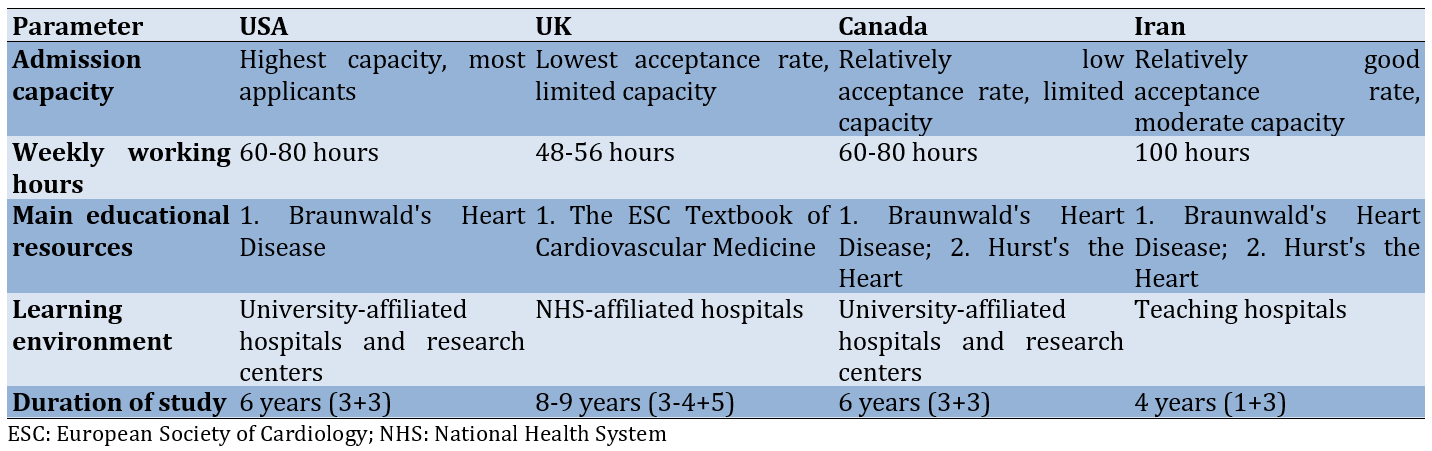
In the Juxtaposition stage, the key similarities and differences in cardiology fellowship training programs across the USA, the UK, Canada, and Iran were highlighted. In the USA there was the highest number of training positions, with an acceptance rate of 66%, reflecting a large number of active educational institutions in the field. In Iran there was the highest acceptance rate, emphasizing the training of a larger number of cardiologists, albeit through a relatively more intensive program. In the UK and Canada, both countries offered fewer training positions, but the UK was the most competitive, with an acceptance rate of approximately 30%. For working hours, Iran had the highest workload among the studied countries, with around 100 working hours per week. The UK had the shortest working hours, ranging from 48 to 56 hours per week, due to its compliance with the EWTD. The USA and Canada maintained an average of 60-80 working hours per week, achieving a relative balance between workload and sufficient time for training. Regarding educational resources, the USA, Canada, and Iran relied on American resources such as Braunwald’s Heart Disease and occasionally Hurst’s The Heart, which were recognized by international educational standards. The UK used the ESC Textbook of Cardiovascular Medicine, authored by the European Society of Cardiology, reflecting its reliance on European texts and alignment with the region’s medical systems and educational approaches. In terms of training environments, the USA and Canada emphasized research and clinical exposure, providing fellows with opportunities to gain a deeper practical and investigative understanding of cardiovascular diseases; the UK training primarily focused on clinical experience in NHS hospitals; Iran’s teaching hospitals served as the primary training ground, offering a concentrated clinical education environment. For program duration, the UK featured the longest training duration (8-9 years), allowing ample time for in-depth and comprehensive learning. The USA and Canada had six-year programs with a balanced approach to internal medicine and cardiology, helping ensure adequate preparation for fellows. Iran offered a shorter four-year program, providing a faster track to specialization, though it may have limited relative experience in internal medicine. All countries offered highly competitive programs, but key differences in working hours, educational resources, training environments, and program durations reflected each system’s unique approaches. These structures testified to each country’s policies, needs, and educational cultures, demonstrating how each system tailored its training to develop cardiology specialists suited to national conditions and priorities (Table 3).
Table 3. Comparison of the cardiovascular curriculum in selected countries (alignment phase)
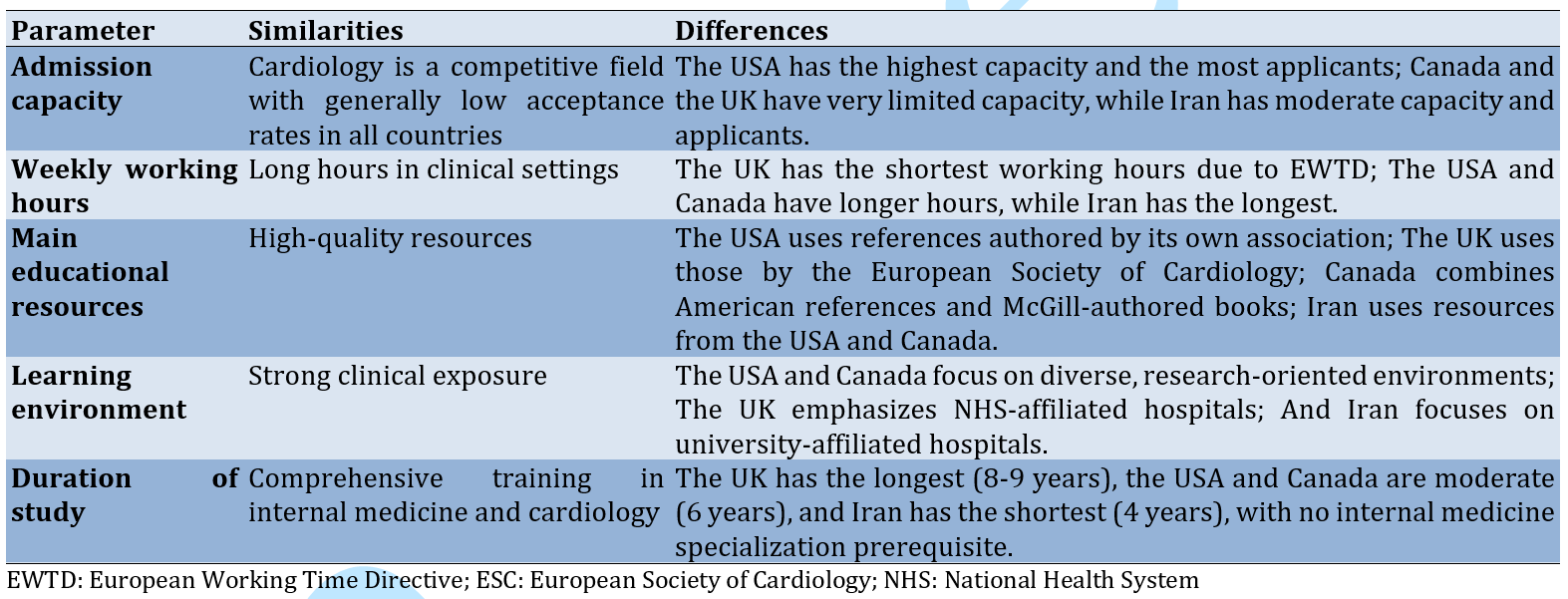
The comparison stage highlighted the similarities among cardiology training programs in these countries and the importance of global competition and high educational standards; despite structural differences, all programs remained committed to training skilled and competent specialists, while the differences reflected each country’s specific approach to adapting the programs to national needs and available capacities. The emphasis on research in the USA and Canada showed that both countries focused on research, aiming for a dual combination of innovation and clinical excellence, which prepared physicians for clinical practice, scientific advancement, and research, and the use of reputable American educational resources strengthened these objectives. The UK emphasized structure and training duration with fewer working hours and a longer training duration aligned with European structures and the EWTD, prioritizing work-life balance and providing comprehensive, in-depth education, allowing specialists more time to develop extensive knowledge and practical skills. Iran’s intensive schedule, shorter training duration, and lack of emphasis on research reflected its focus on rapid specialization and broad clinical exposure, indicating a priority on quickly increasing the number of specialists to meet clinical demands, and using American and Canadian educational resources demonstrated alignment with international standards without prioritizing research as a core part of training. This comparison provided a detailed perspective on how healthcare systems balanced acceptance rates, working hours, educational resources, and training durations, with the USA and Canada focusing on innovation and clinical-scientific excellence, the UK emphasizing comprehensive quality and work-life balance, and Iran adopting a clinically immersive structure to address the urgent need for specialists. Differences in acceptance rates and training durations highlighted national priorities and resources, which influenced the quality and orientation of medical education, and these approaches reflected the adaptability of educational systems to local and international conditions, directly impacting the expertise and efficiency of future cardiology specialists (Table 4).
Table 4. Comparison of the cardiovascular curriculum in selected countries (comparison phase)
Discussion
This study compared cardiology training programs in Iran, the USA, Canada, and the UK to identify differences in educational approaches and highlight areas for improvement. These insights can contribute to enhancing cardiology training quality worldwide. Despite high standards and competition, programs differ significantly in acceptance rates, working hours, resources, and duration—reflecting unique healthcare priorities, economic contexts, and policies.
The USA and Canada have emphasized research-integrated clinical excellence, with balanced 3-year cardiology fellowships (post-internal medicine) supported by advanced resources and environments [9]. This fosters innovation and prepares specialists for complex cases and academic roles [12, 23]. The UK has prioritized comprehensive training and work-life balance via regulated hours (EWTD compliance) and longer programs (typically 5 years of cardiology after internal medicine), promoting thorough skill development in NHS settings [24]. Systematic reviews of cardiovascular guidelines from 2013 to 2024 reveal persistent differences in methodological rigor between European (ESC) and American (ACC/AHA) societies, which may contribute to variations in training emphases and the need for more harmonized international educational standards [25].
Iran has adopted an intensive, shorter 4-year model focused on rapid clinical immersion to meet urgent specialist needs amid high CVD burden and resource limitations [13, 14]. While utilizing high-quality international texts, the approach limits research emphasis and internal medicine exposure, potentially affecting breadth. High weekly hours (~100) raise concerns about burnout, well-being, and long-term competence, consistent with prior Iranian residency studies [15].
Comparative literature reinforces these patterns. In Brazil, shorter programs with less research mirror Iran’s focus on clinical demands [26]. European variability persists, with calls for standardized curricula to address gaps in interventional and congenital training [16–19]. Recent global analyses highlight how training paradigms adapt to local contexts, with North American models favoring research and European ones emphasizing structure and balance [7, 8, 20]. Post-2020 innovations (e.g., virtual curricula) offer opportunities for resource-constrained settings like Iran [21, 22].
These differences underscore the need for context-specific policies while pursuing international collaboration. Harmonized elements—such as competency-based assessments, standardized core skills, and protected research time—could elevate global standards without ignoring local realities [27]. Strengths of this study include the systematic use of Beredy’s model and official sources. Limitations involve reliance on publicly available data (potentially missing recent unpublished updates) and focus on four countries. Future research should include more nations, trainee perspectives, and longitudinal outcomes. Recent successful twinning initiatives between international pediatric cardiology fellowship programs have demonstrated transformative educational benefits through shared case discussions and exposure to diverse clinical practices, highlighting the potential for broader global adoption of collaborative training models [28].
Conclusion
Regarding cardiology training, Iran emphasizes rapid clinical specialization with limited research, the US and Canada combine clinical excellence with substantial research, and the UK favors longer, structured training with regulated hours.
Acknowledgments: We would like to thank all the people who collaborated with us in conducting this study. During the preparation of this manuscript, an artificial intelligence tool was used to assist with language refinement and text clarity. All content was fully reviewed and edited by the authors, who take complete responsibility.
Ethical Permissions: The study protocol was approved by the Ethics Board of Shahid Beheshti University of Medical Sciences (IR.SBMU.SME.REC.1402.082).
Conflicts of Interests: The authors declared no potential conflicts of interests.
Authors' Contribution: Mousavi Majd A (First Author), Methodologist/Main Researcher (30%); Tahmasebi Ghorabi S (Second Author), Introduction Writer/Discussion Writer (30%); Khoshgoftar Z (Third Author), Methodologist/Assistant Researcher/Discussion Writer/Statistical Analyst (40%)
Funding/Support: This study did not receive any financial support.
Sustainable development in higher education requires balanced growth in both quantitative and qualitative dimensions. Neglecting qualitative aspects may lead to issues, such as scientific dependency, lack of creativity, and academic weaknesses. To ensure quality, universities must adapt to environmental changes and compete in international assessments. In medical education, universities not only deliver healthcare services but also train specialists with the knowledge and skills required to improve public health. To achieve this, effective teaching and assessment methods must be applied [1].
Cardiovascular diseases (CVDs) remain the leading cause of mortality worldwide, accounting for approximately 17.9 million deaths annually, with a disproportionate burden in low- and middle-income countries [2]. Effective prevention, diagnosis, and management require well-trained cardiologists capable of integrating clinical expertise, research, and innovation. Curriculum planning is a cornerstone of education, serving as a roadmap that identifies needs and objectives, organizes content, selects teaching methods, and prepares assessment materials. Well-designed curricula improve educational quality and outcomes, while poorly designed ones can lead to undesirable consequences [3, 4].
Comparative studies of curricula help identify similarities and differences among educational programs, providing solutions to address educational challenges and uncovering factors contributing to the success or failure of education systems [1, 5, 6]. Such analyses are particularly valuable in cardiology, where training must adapt to evolving technologies (e.g., advanced imaging, interventional techniques), epidemiological shifts, and healthcare system demands [7, 8].
In developed countries, like the USA [9], Canada [10], and the UK [11], cardiology training programs are designed to meet high scientific standards, integrating clinical excellence, research, and lifelong learning to address diverse CVD conditions. These programs often emphasize competency-based progression, protected research time, and work-life balance considerations [12].
In contrast, Iran’s cardiology curriculum addresses domestic needs within resource constraints, aiming to train competent specialists efficiently [13]. Iran’s healthcare system faces high CVD prevalence, rapid urbanization, and a need for increased specialist numbers, making shorter, intensive programs practical [14]. However, concerns exist regarding long working hours, limited research integration, and potential impacts on trainee well-being and innovation [15].
Given the impact of educational approaches on the competence and skills of cardiologists, a comparative analysis of cardiology curricula can provide innovative solutions for aligning training programs with societal needs and advancing academic standards. A 2021 study by Czerwińska-Jelonkiewicz et al. on 614 young cardiologists in ESC countries, there are gaps in technical and non-technical skills, program variability, and gender-related differences. The study highlights the need for standardized training [16].
Recent international surveys highlight ongoing challenges, including variability in skills training, gender disparities, and calls for standardization [16–18]. For instance, European studies show persistent gaps in congenital heart disease and interventional training, advocating harmonized curricula [19, 20]. In the post-pandemic era, virtual learning and reduced procedural volumes have further underscored the need for adaptive, resilient training models [21, 22].
Given these factors and the scarcity of direct comparative studies between Iran and developed nations, this analysis provides insights into strengths, weaknesses, and global alignment opportunities. The study aimed to conduct a comparative analysis of cardiology specialty curricula in Iran and selected developed countries using Beredy’s model.
Instrument and Methods
Design
This applied comparative study compared the cardiology residency curricula in Iran with those of selected developed countries, including the USA, Canada, and the UK. Data on the curricula were gathered by accessing the respective countries’ official reference websites [10, 13].
Instrument
A pre-designed checklist was utilized to collect key information about the educational curricula, including country name, admission capacity, weekly working hours, educational environments, educational resources, and program duration. These details were extracted from the countries’ curricula (Table 1).
Table 1. Educational curricula of Iran, the United Kingdom, the United States, and Canada
Data collection
The study was conducted following ethical approval from Shahid Beheshti University of Medical Sciences. The research adopted the well-known Beredy model for comparative studies, which includes four stages, namely description, interpretation, juxtaposition, and comparison. Accordingly, the cardiology curricula of the selected countries were described and examined, focusing on the most recent programs available during the study period. The relevant data were noted and systematically entered into the checklist for further analysis. Data from the descriptive phase were reviewed and analyzed to extract meaningful insights. In the Juxtaposition stage, the information gathered during the description and interpretation phases was classified into tables to create a framework for comparing similarities and differences. The curricula were compared in detail, focusing on similarities and differences and addressing the research questions. Based on these findings, practical recommendations for improving the components of Iran’s cardiology curriculum were then developed and presented.
Data analysis
The collected data were analyzed using the Beredy method. The categorized data were compared in tabular form, and similarities and differences were identified. These insights were further analyzed to determine the distinctive features of the curricula.
Findings
In the description phase, the following results were obtained. In the USA, the acceptance rate for cardiology fellowship programs was about 66%, with approximately 1,045 positions across 200 universities. Fellows typically worked 60-80 hours per week. Braunwald’s Heart Disease was the primary educational resource, and training was conducted in teaching hospitals and research centers. The cardiology specialty program lasted six years and was evenly divided between internal medicine and cardiology. In the UK, the acceptance rate was about 30%, with approximately 130 positions across 15 universities. Work hours were regulated by the European Working Time Directive (EWTD), ranging from 48 to 56 hours per week and limited to an average of 48. The ESC Textbook of Cardiovascular Medicine was the primary resource, and training occurred in NHS-affiliated hospitals. The program lasted 8-9 years, including 3-4 years of internal medicine training and 5 years of cardiology specialization. In Canada, the acceptance rate averaged 40-55%, with 120-160 positions across 12 universities. Fellows typically worked 60-80 hours per week. Braunwald’s Heart Disease and Hurst’s The Heart were primary resources, and training was conducted in teaching hospitals and university-affiliated research centers. The six-year program was evenly split between internal medicine and cardiology. In Iran, there was a relatively high acceptance rate with 272 positions across 26 universities. Fellows in Iran worked approximately 100 hours per week, significantly higher than in other countries. Braunwald’s Heart Disease and Hurst’s The Heart were the primary resources, and training was conducted in teaching hospitals. The four-year program comprised one year of internal medicine and three years of cardiology specialization. This comparison revealed significant differences in fellowship structures across countries regarding acceptance rates, program duration, work hours, and educational resources. The USA and Canada featured six-year programs with long work hours, while the UK adhered to the EWTD with shorter work hours but a longer program. Iran stood out with significantly higher work hours and a shorter program duration.
In the interpretation stage, structural and content differences in cardiology fellowship programs across countries were as follows. In the United States, the high acceptance capacity reflected the large number of institutions offering cardiology fellowship programs. Fellows experienced long work hours (60-80 hours per week) and utilized a reputable and focused educational resource (Braunwald’s Heart Disease). The six-year program equally emphasized internal medicine and cardiology, ensuring balanced exposure to both fields and comprehensive cardiology training. In the United Kingdom, the lower acceptance rate and limited training positions created a competitive environment that emphasized quality over quantity. Structured work hours (48-56 hours per week) complied with EWTD guidelines and supported work-life balance. The longer 8-9-year program, with an extensive focus on both internal medicine and cardiology, reflected a thorough and detailed approach to specialty training. In Canada, the training program combined characteristics of both the USA and UK systems. Acceptance rates and work hours fell within an intermediate range, and fellows benefited from diverse educational resources (Braunwald’s Heart Disease and Hurst’s The Heart). The six-year duration mirrored the USA’s balanced approach, providing comprehensive internal medicine and cardiology training. In Iran, there was a relatively high acceptance rate with 272 positions across 26 universities. Fellows in Iran worked approximately 100 hours per week, significantly higher than in other countries. Braunwald’s Heart Disease and Hurst’s The Heart were the primary resources, and training was conducted in teaching hospitals. The four-year program comprised one year of internal medicine and three years of cardiology specialization. This comparison revealed significant differences in fellowship structures across countries regarding acceptance rates, program duration, work hours, and educational resources. The USA and Canada featured six-year programs with long work hours, while the UK adhered to the EWTD with shorter work hours but a longer program. Iran stood out with significantly higher work hours and a shorter program duration, aligning with global educational resource standards (Table 2).
Table 2. Comparison of the cardiovascular curriculum in selected countries (interpretation phase)
In the Juxtaposition stage, the key similarities and differences in cardiology fellowship training programs across the USA, the UK, Canada, and Iran were highlighted. In the USA there was the highest number of training positions, with an acceptance rate of 66%, reflecting a large number of active educational institutions in the field. In Iran there was the highest acceptance rate, emphasizing the training of a larger number of cardiologists, albeit through a relatively more intensive program. In the UK and Canada, both countries offered fewer training positions, but the UK was the most competitive, with an acceptance rate of approximately 30%. For working hours, Iran had the highest workload among the studied countries, with around 100 working hours per week. The UK had the shortest working hours, ranging from 48 to 56 hours per week, due to its compliance with the EWTD. The USA and Canada maintained an average of 60-80 working hours per week, achieving a relative balance between workload and sufficient time for training. Regarding educational resources, the USA, Canada, and Iran relied on American resources such as Braunwald’s Heart Disease and occasionally Hurst’s The Heart, which were recognized by international educational standards. The UK used the ESC Textbook of Cardiovascular Medicine, authored by the European Society of Cardiology, reflecting its reliance on European texts and alignment with the region’s medical systems and educational approaches. In terms of training environments, the USA and Canada emphasized research and clinical exposure, providing fellows with opportunities to gain a deeper practical and investigative understanding of cardiovascular diseases; the UK training primarily focused on clinical experience in NHS hospitals; Iran’s teaching hospitals served as the primary training ground, offering a concentrated clinical education environment. For program duration, the UK featured the longest training duration (8-9 years), allowing ample time for in-depth and comprehensive learning. The USA and Canada had six-year programs with a balanced approach to internal medicine and cardiology, helping ensure adequate preparation for fellows. Iran offered a shorter four-year program, providing a faster track to specialization, though it may have limited relative experience in internal medicine. All countries offered highly competitive programs, but key differences in working hours, educational resources, training environments, and program durations reflected each system’s unique approaches. These structures testified to each country’s policies, needs, and educational cultures, demonstrating how each system tailored its training to develop cardiology specialists suited to national conditions and priorities (Table 3).
Table 3. Comparison of the cardiovascular curriculum in selected countries (alignment phase)
The comparison stage highlighted the similarities among cardiology training programs in these countries and the importance of global competition and high educational standards; despite structural differences, all programs remained committed to training skilled and competent specialists, while the differences reflected each country’s specific approach to adapting the programs to national needs and available capacities. The emphasis on research in the USA and Canada showed that both countries focused on research, aiming for a dual combination of innovation and clinical excellence, which prepared physicians for clinical practice, scientific advancement, and research, and the use of reputable American educational resources strengthened these objectives. The UK emphasized structure and training duration with fewer working hours and a longer training duration aligned with European structures and the EWTD, prioritizing work-life balance and providing comprehensive, in-depth education, allowing specialists more time to develop extensive knowledge and practical skills. Iran’s intensive schedule, shorter training duration, and lack of emphasis on research reflected its focus on rapid specialization and broad clinical exposure, indicating a priority on quickly increasing the number of specialists to meet clinical demands, and using American and Canadian educational resources demonstrated alignment with international standards without prioritizing research as a core part of training. This comparison provided a detailed perspective on how healthcare systems balanced acceptance rates, working hours, educational resources, and training durations, with the USA and Canada focusing on innovation and clinical-scientific excellence, the UK emphasizing comprehensive quality and work-life balance, and Iran adopting a clinically immersive structure to address the urgent need for specialists. Differences in acceptance rates and training durations highlighted national priorities and resources, which influenced the quality and orientation of medical education, and these approaches reflected the adaptability of educational systems to local and international conditions, directly impacting the expertise and efficiency of future cardiology specialists (Table 4).
Table 4. Comparison of the cardiovascular curriculum in selected countries (comparison phase)
Discussion
This study compared cardiology training programs in Iran, the USA, Canada, and the UK to identify differences in educational approaches and highlight areas for improvement. These insights can contribute to enhancing cardiology training quality worldwide. Despite high standards and competition, programs differ significantly in acceptance rates, working hours, resources, and duration—reflecting unique healthcare priorities, economic contexts, and policies.
The USA and Canada have emphasized research-integrated clinical excellence, with balanced 3-year cardiology fellowships (post-internal medicine) supported by advanced resources and environments [9]. This fosters innovation and prepares specialists for complex cases and academic roles [12, 23]. The UK has prioritized comprehensive training and work-life balance via regulated hours (EWTD compliance) and longer programs (typically 5 years of cardiology after internal medicine), promoting thorough skill development in NHS settings [24]. Systematic reviews of cardiovascular guidelines from 2013 to 2024 reveal persistent differences in methodological rigor between European (ESC) and American (ACC/AHA) societies, which may contribute to variations in training emphases and the need for more harmonized international educational standards [25].
Iran has adopted an intensive, shorter 4-year model focused on rapid clinical immersion to meet urgent specialist needs amid high CVD burden and resource limitations [13, 14]. While utilizing high-quality international texts, the approach limits research emphasis and internal medicine exposure, potentially affecting breadth. High weekly hours (~100) raise concerns about burnout, well-being, and long-term competence, consistent with prior Iranian residency studies [15].
Comparative literature reinforces these patterns. In Brazil, shorter programs with less research mirror Iran’s focus on clinical demands [26]. European variability persists, with calls for standardized curricula to address gaps in interventional and congenital training [16–19]. Recent global analyses highlight how training paradigms adapt to local contexts, with North American models favoring research and European ones emphasizing structure and balance [7, 8, 20]. Post-2020 innovations (e.g., virtual curricula) offer opportunities for resource-constrained settings like Iran [21, 22].
These differences underscore the need for context-specific policies while pursuing international collaboration. Harmonized elements—such as competency-based assessments, standardized core skills, and protected research time—could elevate global standards without ignoring local realities [27]. Strengths of this study include the systematic use of Beredy’s model and official sources. Limitations involve reliance on publicly available data (potentially missing recent unpublished updates) and focus on four countries. Future research should include more nations, trainee perspectives, and longitudinal outcomes. Recent successful twinning initiatives between international pediatric cardiology fellowship programs have demonstrated transformative educational benefits through shared case discussions and exposure to diverse clinical practices, highlighting the potential for broader global adoption of collaborative training models [28].
Conclusion
Regarding cardiology training, Iran emphasizes rapid clinical specialization with limited research, the US and Canada combine clinical excellence with substantial research, and the UK favors longer, structured training with regulated hours.
Acknowledgments: We would like to thank all the people who collaborated with us in conducting this study. During the preparation of this manuscript, an artificial intelligence tool was used to assist with language refinement and text clarity. All content was fully reviewed and edited by the authors, who take complete responsibility.
Ethical Permissions: The study protocol was approved by the Ethics Board of Shahid Beheshti University of Medical Sciences (IR.SBMU.SME.REC.1402.082).
Conflicts of Interests: The authors declared no potential conflicts of interests.
Authors' Contribution: Mousavi Majd A (First Author), Methodologist/Main Researcher (30%); Tahmasebi Ghorabi S (Second Author), Introduction Writer/Discussion Writer (30%); Khoshgoftar Z (Third Author), Methodologist/Assistant Researcher/Discussion Writer/Statistical Analyst (40%)
Funding/Support: This study did not receive any financial support.
Article Type: Qualitative Study |
| Rights and permissions | |
 |
This work is licensed under a Creative Commons Attribution-NonCommercial 4.0 International License. |