


Volume -
3 , - : 9-18 |
Back to browse issues page


Download citation:
BibTeX | RIS | EndNote | Medlars | ProCite | Reference Manager | RefWorks
Send citation to:


BibTeX | RIS | EndNote | Medlars | ProCite | Reference Manager | RefWorks
Send citation to:
Knowledge, Attitudes, and Practices of Nurturing Care in Indonesian Mothers of Acutely Ill Children Under Five Years Old. 3 https://doi.org/10.58209/hehp.14.1.9
URL: http://daneshafarand.org/article-1-82979-en.html
URL: http://daneshafarand.org/article-1-82979-en.html
| Abstract (HTML) (881 Views)
Full-Text: (29 Views)
Introduction
Early childhood is a golden period of life when growth and development occur, significantly influencing the future course of life, with the first five years particularly important for laying the foundation for lifelong health and well-being [1]. At this stage of development, children undergo significant physical growth and cognitive and emotional maturation, which are particularly sensitive to environmental factors and health [2]. This process of development can be disrupted or influenced by a number of factors, and one of the greatest threats to young children, for example, is acute illness as a result of an immature immune system. A recent national data from the Indonesian Central Bureau of Statistics (Indonesian CBOS; 2023) illustrates the scale of this challenge, reporting that 45.21% of children aged 0-4 years experienced health complaints that warranted outpatient treatment in the year 2023, indicative of a high burden of acute illness morbidity in this population group [3].
Acute illness and child development: A complex relationship. In the context of acute illness, children's ability to perform normal daily activities is frequently diminished, leading to disturbances in physical growth, cognitive stimulation, and social interaction patterns [4]. It has been established that multiple episodes of illness during childhood, especially in the first two years of life, can impact growth and development by causing growth stunting, delayed milestones, and changes in parent-child interactions that have implications beyond early childhood. These effects are likely to be even more marked in settings where available resources for medical and generalist services may be limited [5, 6].
In response to these challenges, the WHO and other partners have proposed a nurturing care framework as a holistic approach that promotes optimal child development. This structure consists of five components: Health, nutrition, safety and security, responsive caregiving, and opportunities for early learning [7]. Nurturing care is a new way of thinking about early childhood that goes beyond established principles of good health and nutrition to address the urgent need to promote nurturing, responsive caregiving. The BWD framework also applies in more severe illness, when children may need support across a wide range of care areas to maintain their expected developmental trajectory.
Parental KAP toward nurturing care greatly influences the quality and effectiveness of care that is given to their children during episodes of acute illness. Research across many settings has shown that carers' knowledge of developmental needs and their application of appropriate caring practices strongly affect children's functioning. Little is known about the specific role of holistic nurturing care practices in child outcomes during acute illness, especially in Indonesia, where cultural, social, and health system contexts can influence care practices differently [8, 9].
The promotion of nurturing care practices in Indonesia, though considered critical for child development, is encountering multiple obstacles, including during episodes of acute illness. These issues are further compounded by caregiver education levels, the availability of health services, and cultural beliefs about child care. A very small number of studies have reported on the application of nurturing care during acute illness episodes, which represents a significant knowledge gap in high child-mortality areas such as Bantul District, Yogyakarta. Based on the latest available surveillance data from the Yogyakarta Family Health online, there were concerning local figures. One of the Public Health Centres (PHCs), Banguntapan II PHC, alone had received 4624 visits for sick under-5 children in 2023, of which 4390 cases required IMCI assessment. Not only do these numbers emphasize the high burden of acute illness among children in KHDSS, but they also illustrate the urgency to understand how the practice of nurturing care is operationalized and whether it has been effective during episodes of illness.
The convergence between nurturing care practices and acute childhood illness raises distinct challenges and opportunities for intervention. In the context of acute illnesses, caregivers must balance concurrent health care with continued developmental support and may need to alter their typical practices [10]. It is important to understand how caregivers experience these issues and how their caring knowledge, attitudes, and practices impact child outcomes for several reasons. First, it can guide the design and implementation of specialized interventions to support caregivers during children's illness episodes, thereby improving immediate and longer-term health outcomes. Second, it could guide where additional education or support is required to improve care during illness. Third, it can provide further insight into how the nurturing care principles can be successfully modified and implemented across different health settings, particularly during acute illness episodes.
Finally, the study fills an important gap in the literature on the operationalization of nurturing care principles during acute illness in Indonesia. Existing research has predominantly focused on care practices for nurturing health in healthy children; little is known about how these practices are adapted and applied during acute illness, let alone how such adaptations affect child outcomes. This knowledge gap is especially substantial given the high burden of acute illness in childhood and the potential benefit that an appropriate care-seeking behaviour could have on both child health and developmental outcomes in Indonesia.
Hence, the intention of this study is to provide a description of mothers' knowledge, attitudes, and practices regarding nurturing care for children under five years who experienced an acute illness in Bantul District. This study also aimed to explore whether gaps exist among mothers' knowledge, attitudes, and practices regarding nurturing care in the context of acute childhood illness. Data collected from this cross-sectional descriptive study will be critical as a baseline for health care providers, policy-makers, and program implementers in designing targeted interventions to promote nurturing care practices during episodes of acute illness, with the goal of improving health outcomes among children in similar settings.
Instrument and Methods
Study design and setting
This cross-sectional study was conducted in November 2024 at the Banguntapan II Public Health Center, Bantul District, Special Region of Yogyakarta, Indonesia. The Strengthening the Reporting of Observational Studies in Epidemiology (STROBE) guideline has been used to enhance transparency of study methods and findings [11]. Banguntapan II Public Health Center was chosen because it had a large number of pediatric visits: 4,624 children <5 years visited in 2023, of whom 4,390 required IMCI assessment.
Participants and sampling
The study population was mothers with acutely ill children aged <5 years living in Bantul, Ludmila. The eligible population comprised mothers who brought their children to Banguntapan II Public Health Center during the study period. Sample size was determined using the LEMESHOW formula for cross-sectional studies with a 95% confidence level, a 5% margin of error, and an assumed population proportion of 50% (maximum variability) [12]. The estimate itself was 94 participants. One hundred and four mother-child pairs were systematically sampled during data collection to compensate for possible incomplete reporting. The mothers who accompanied their children during the IMCI assessment at Banguntapan II primary health care, had no sensory impairments that could interfere with questionnaire completion, and lived with the child in the same household were included. Mothers with a known history of mental health issues, and children with diagnosed disabilities that would impact developmental assessment.
Measurement instrument
Knowledge, attitudes, and practices on nurturing care questionnaire, measured using three standardized questionnaires based on existing tools from the World Health Organization & UNICEF [7] and Gaikwad et al. [13].
Knowledge questionnaire: based on a 20-item questionnaire (17 positive items and 3 negative items), was modified from Hasanah et al., with true-or-false responses in the Guttmans model [14]. Using the structured interview module, a 20-item questionnaire was employed, which assessed knowledge on the five domains of nurturing care, including good health (4 items), adequate nutrition (1 item), responsive caregiving (3 items), security and safety (3 items), and early learning opportunities (9 items). Right answers were scored 1 point, and wrong answers were scored 0 points for a total possible score between 0 and 20. Higher scores indicated greater knowledge. The scale's validity and reliability were found to be satisfactory in a previous survey [14].
Attitude questionnaire: which was also adapted by Hasanah et al., included 34 closed-ended (32 positive and 2 negative) statements using a 5-point Likert scale. Item responses were coded on a 5-point scale from "Strongly Disagree" (0 points) to "Strongly Agree" (4 points), with reverse-scoring for negatively framed items. The tool comprised 5 sub-scales: Good health (7 items), adequate nutrition (6 items), responsive caregiving (9 items), security and safety (5 items), and early learning opportunities (7 items). The total score ranged from 0 to 136; scores closer to 136 indicated a more favorable caregiving attitude. The instrument had good validity and reliability in previous uses [14].
Practice questionnaire: modified by Amiatun et al., consisted of 27 items to assess actual nurturing care practice, which comprises five areas: Maintenance of health (6 items), nutrition (2 items), caregiving response (11 items), early learning opportunities (6 items), and security and safety (2 items). The level of response in the questionnaire was obtained using three types of items: 1) yes/no questions (scored 1 if answered correctly, 0 if incorrectly), 2) frequency scales with answer options "Never", "Sometimes", "Often" and "Always" using Likert ratings, and 3) multiple-choice questions (scored 1 for correct answer, 0 for incorrect answer). The scores obtained from the final responses were interpreted using the mean and standard deviation: good (>56) and poor (≤55.5), respectively. The instrument's validity and reliability were acceptable [15].
Data collection procedures
All research adhered to the Declaration of Helsinki and Indonesian national guidelines for human subject research. No undue participant risks were expected from participation in the study. The participants were not reimbursed monetarily, but they received health interpretation materials on nurturing care practices after the survey as an incentive to participate and to encourage better care during episodes of acute illness.
We collected data for 1 month in November 2024. The PI and trained RAs established standardized protocols for participant recruitment and data collection. Eligible mothers were first recruited at the waiting room of the public health center once their children had undergone IMCI assessment. The study staff informed participants about the goals, methods, and potential risks and benefits associated with the survey. After signing written informed consent, the women completed knowledge, attitudes, and practices questionnaires using Google Forms on tablets provided by the study's research assistants. Research assistants were present to address inquiries and provide technical support, while protecting participants' privacy as they responded to questionnaire items. The research team checked for complete data immediately after acquisition to avoid missing data and maintain quality control. The entire data collection process would take about 20~30 minutes per subject.
Data analysis
The data were analyzed using SPSS 25 software. This descriptive study sought to profile maternal knowledge, attitudes, and practices regarding nurturing care during acute illnesses in children under 5 years old. All variables were summarized using descriptive statistics. Demographic characteristics (age category, occupational status, education level, family income) and individual questionnaire items were described using frequency distributions and percentages. Descriptive statistics were calculated for continuous variables of total knowledge, attitude, and practice scores (mean, standard deviation, min-max range, and range).
Distribution of responses according to 5 nurturing care domains (good health, adequate nutrition, responsive caregiving, security and safety, and early learning opportunities) was analysed for patterns and gaps in knowledge, attitudes, and practices of mothers. Results were reported in tables and in a narrative format to provide a full description of the findings.
Findings
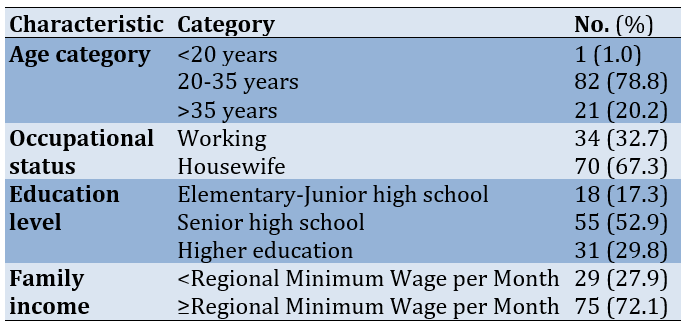
Most of the mothers were aged 20-35 years (78.8%) and 35 years or older (20.2%). 67.3% were housewives and 32.7% were working women. 72.1% had a monthly per capita income at or above the regional minimum wage, whereas 27.9% had income below it (Table 1).
Table 1. Demographic characteristics of study participants (n=104)
Overall, the mothers' knowledge scores were 18.35±1.83 (range 12-20). It suggested that mothers had fair knowledge on nurturing care practices during episodes of acute illnesses (Table 2).
The total maternal attitude was 95.64±3.36 (ranging from 83 to 108). This indicated that mothers had a positive attitude towards nurturing care in all the domains (Table 3).
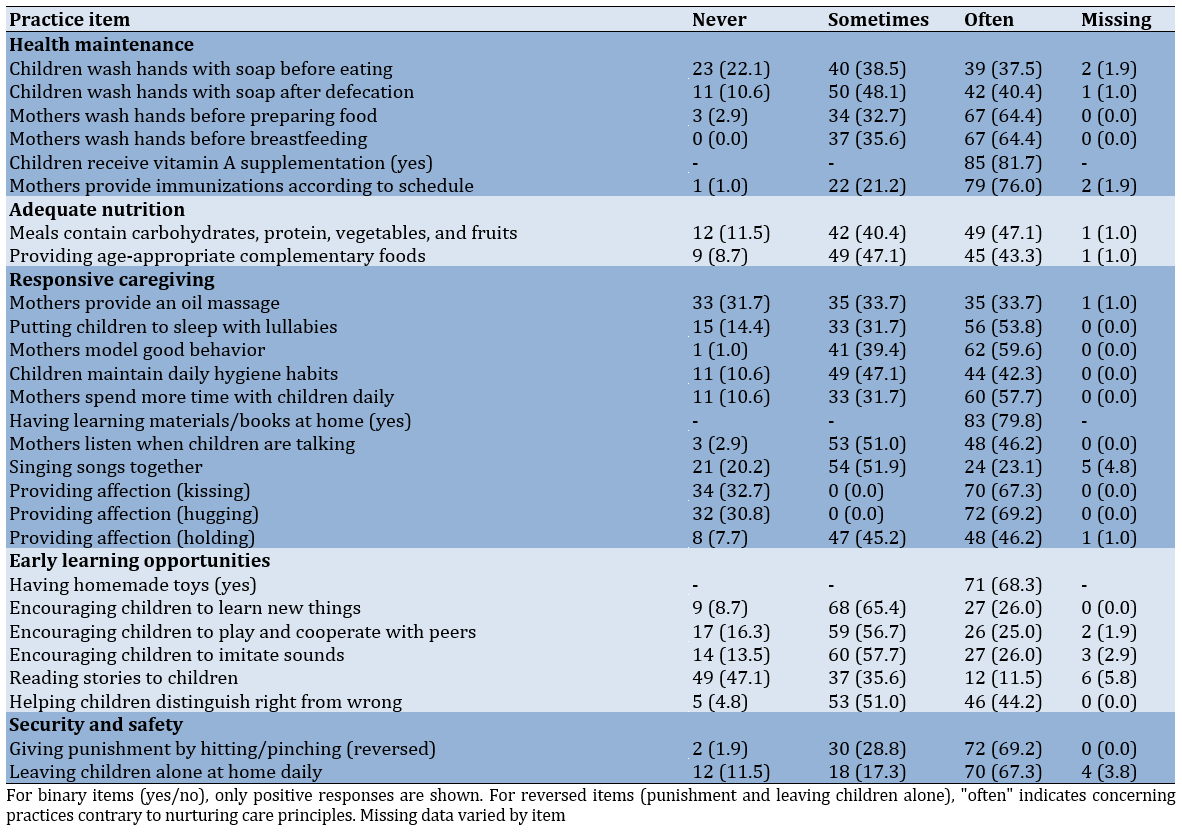
The total maternal practice score was 58.56±7.19 (range 43-73). This indicated substantial heterogeneity in how the practice was applied and underscored the gap between knowledge levels and actual practices, in which high levels of knowledge and positive attitudes did not automatically translate into nurturing care practices (Table 4).
Table 2. Distribution of maternal knowledge regarding nurturing care (n=104)
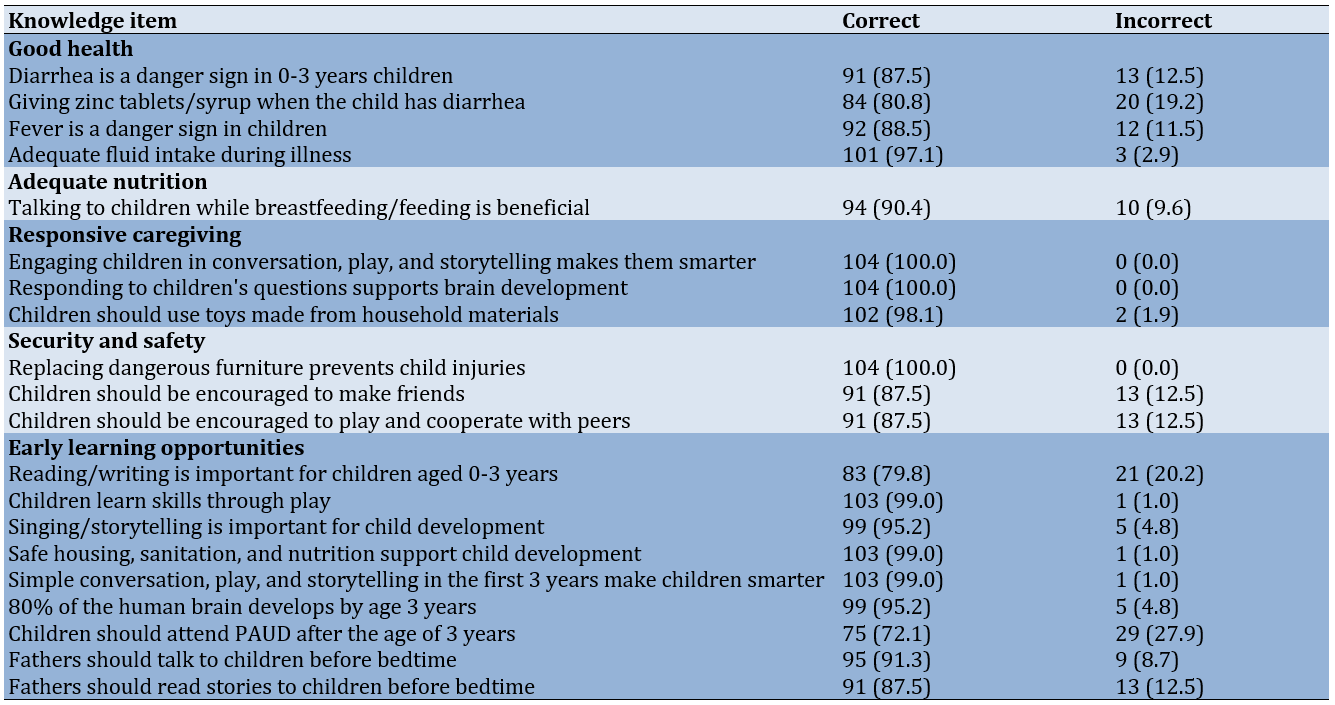
Table 3. Distribution of maternal attitudes regarding nurturing care (n=104)
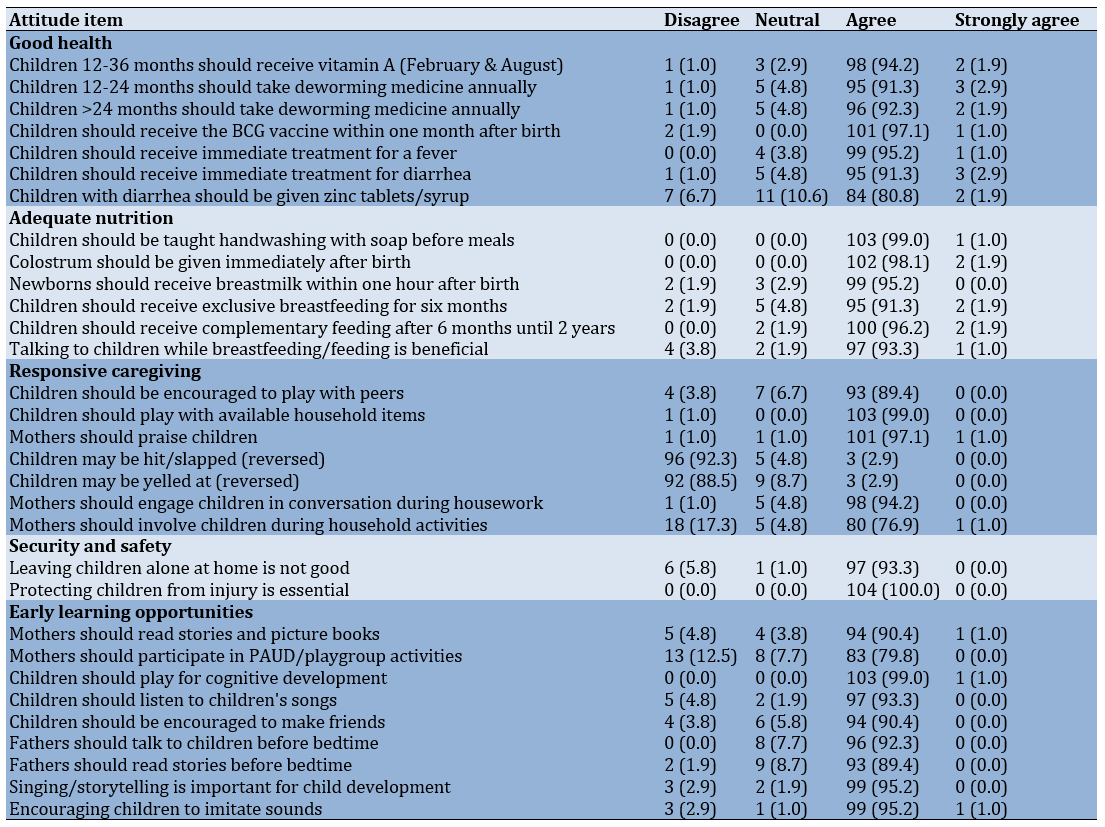
Table 4. Distribution of maternal practices regarding nurturing care (n=104)
There was a statistically significant positive correlation (r=0.557, p<0.01) between maternal knowledge and attitudes. The correlations between knowledge and practices (r=-0.034) and between attitudes and practices (r=0.025) were not statistically significant (Table 5).
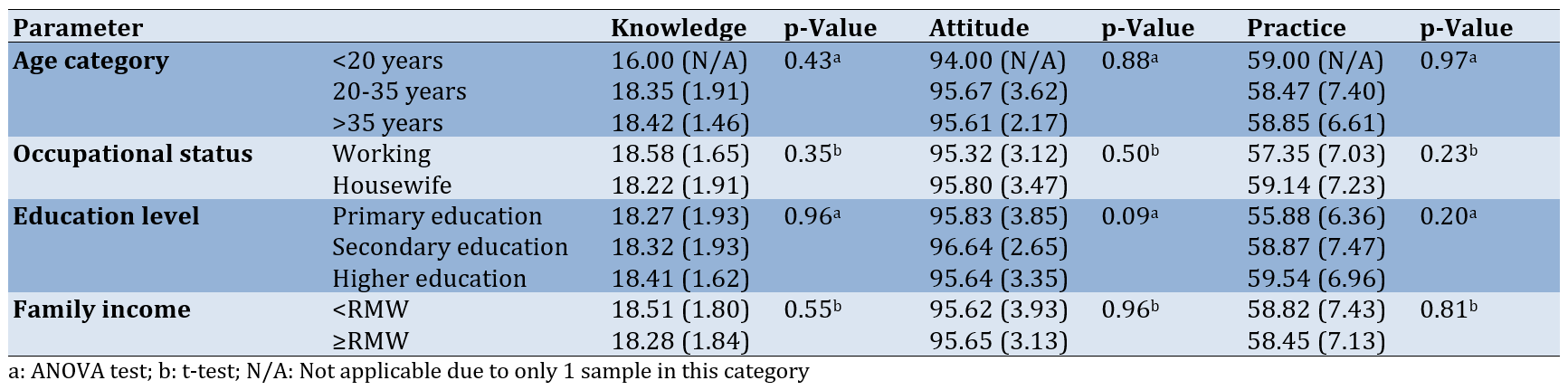
There were no statistically significant differences across multiple demographic characteristics in knowledge, attitudes, and practices (Table 6).
Table 5. Correlation between knowledge, attitudes, and practices of mothers
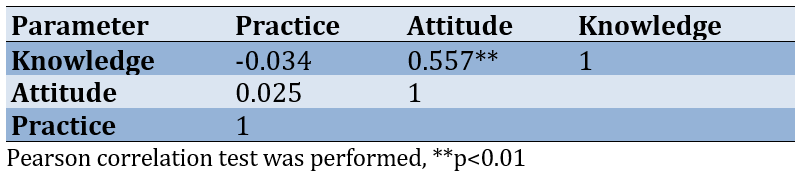
Table 6. Influencing factors on the knowledge, attitudes, and practices of mothers
Discussion
One paradox emerging from this study is consistent with what has been increasingly observed in settings of low-middle-income countries, that mothers of acutely ill children under five in Bantul have very high levels of knowledge (mean 18.35/20) and attitudes (mean 95.64/108) toward Nurturing Care principles, yet in practice demonstrate moderate scores (mean 58.56/73). The results are consistent with patterns across Southeast Asia, where knowledge-practice gaps of 10-40 percentage points persist despite extensive public health efforts [16]. Of greatest concern are deficits in domain-specific knowledge of need for childcare, where only 11.5% of mothers frequently read with their children, 47.1% never do, and 69.2% use physical punishment—behaviours that challenge the findings from this analysis on what constitutes nurturing care 4.
The maternal knowledge and practice gap in Bantul is reflected in the literature, as a worldwide phenomenon described in well-studied maternal-child health writings. An Indian study of MNCH services noted a discrepancy of 16.1-37.7 percentage points in the various domains such as immunization, skilled birth attendance, and postnatal care [16]. In Kenya, nurses scored only 62% on newborn care knowledge, and 31% of maternity clients received care with nursing knowledge below the acceptable range of performance [17]. The Bantul study is also in the region’s “top tier” for knowledge. Indonesian healthcare workers scored 33% correct on maternal care assessments and 26% correct on stork delivery room factoids, indicating that community health education programs here have been remarkably effective.
Theoretical models account for this discrepancy through various postsynaptic mechanisms. The Health Belief Model predicts that knowledge is not all that behavior requires; also required is a belief in personal susceptibility, a perception of the severity of a given risk, a belief in the effectiveness of actions taken to reduce risk, and, crucially, a belief in one’s ability to navigate barriers [18]. When mothers are dealing with an acutely sick child, the immediate crisis of responding to fever, diarrhea, or respiratory symptoms overshadows developmental activities such as reading or structured play. A qualitative study conducted in Ecuador had explicit quotes from health workers, who perceived that mothers “generally only bring a child if it is sick and for vaccination. They never attend to see whether or not their children are growing up right” [19]. This trend indicates that during episodes of sickness (and this is exactly when Bantul mothers were sampled), naturally, standards of nurturing care practices decline as households move into crisis management. The theory of planned behaviour extends this lens to incorporate subjective norms and perceived behavioural control [20]. Within a culture such as Indonesia, where 91.4% of mothers still apply pregnancy myths despite formal health knowledge [21], traditional beliefs and multigenerational practice is influential. A study in Bandung found that parents differentiate between "discipline" and "abuse" based on intent and the extent of injury, rather than the action type. This would reason why 69.2% still used physical punishment whilst already familiar with the principles of positive discipline [22]. This is less ignorance and more a hard-wired cultural norm in which physical punishment of the body is socially acceptable and normal across Southeast Asia, with prevalence rates ranging from 44 to 95% in regional studies [23].
That only 11.5% of mothers frequently read to children, and as many as 47.1% never read to them under their care, here is the most glaring knowledge-practice gap, but not limited to Bantul by any means, nor mainly due to lack of understanding. In 2013, UNESCO released a stat that only 0.001% (1 in one thousand) of Indonesians have a proper reading habit, and in 2016, the Ministry’s own survey showed more than 47% of grade four students could not read numbers, that suggest there is a crisis across the country beyond just maternal practice [24]. The J-PAL review of early childhood stimulation programs in 11 low-middle-income countries found that physical care activities were universally more important than cognitive stimulation activities to mothers (immunization 66.84%, breastfeeding 63.74%, physician visits 60.41% vs. creative activity 32.17%, instruction on healthy behaviors 27.13%), with reading even further down the hierarchy of daily practices [25].
The high rate of physical punishment (69.2% often hit or pinched) and leaving children alone unattended (67.3% often leave kids home alone) is alarming, but culturally embedded practices that necessitate finesse in nursing intervention, not just knowledge correction. The Bantul prevalence is the same as in regional figures: West Papua 65%, Myanmar 44.5%, Vietnam 55% (with regional estimates for Southeast Asia over 60% [26]). Consistent with such a proposition, in Indonesian culture, only 20% of mothers “believe that physical punishment is necessary”, but 65% practice it, suggesting one based not only on beliefs about effectiveness: Stress, lack of alternatives, intergenerational transfer, and normativity of corporal punishment [22]. The medical case against corporal punishment is clear. Systematic meta-analyses of 69 prospective longitudinal studies of more than 160,000 children demonstrate consistent negative outcomes decreased grey matter volume in areas associated with intelligence, increased nuclear stress response, greater depression and anxiety, poorer academic achievement, and a significantly 24% lower likelihood overall to be developmentally on track [23]. Retrospective impact: In adulthood, these long-term effects are seen as perpetuation of violence, chronic disease, for example, cardiovascular disease and arthritis, and the intergenerational transmission of harsh parenting. However, this evidence must be presented in cultural contexts that perceive mild physical punishment as acceptable “character building” separate from abuse [22].
Nurses in Puskesmas and Posyandu are well-positioned to narrow the knowledge-practice gap by applying evidence-based counseling, skills training, and community support. The evidence suggests some high-impact interventions. A maternal-child health nurse delivered motivational screening, brief intervention, and referral to treatment trial in an Australian 541-participant randomised controlled trial, which found a large effect on help-seeking amongst postnatal women with depression and anxiety [27]. This joint, non-judgmental approach, with its core components of open-ended questions, affirmation, reflective listening, and summary, affirms maternal self-efficacy by fostering belief in one's ability to use known practices in the face of challenges. For Bantul mothers with existing knowledge, motivational interviewing can elicit ambivalence regarding practice adoption; Establish realistic goals considering household resources and barriers; And generate action plans. The teach-back technique is 95% effective across 26 studies for knowledge retention, self-management, and health outcomes [28]. Rather than asking "Do you understand?" nurses should ask: "Can you show me how you'll prepare this meal?" or "Tell me in your own words what danger signs to watch for". This method confirms knowledge and the ability to perform skills, and identifies gaps between knowing and doing. Paired with demonstration (such as breastfeeding position, safe sleep practices, and age-appropriate play), teach back changes passive receipt of information into active skill acquisition. Evidence indicates that nurse training in requested behaviour increased this behaviour by 231% (p=0.001) and parent training by 124% (p=0.033), leading to significant child pain/distress reduction [29].
Nurses are also called to be advocates for a systems change that remedies the barriers mothers can't overcome on their own. The data indicate that individual behavior change efforts have relatively small impacts when systemic constraints are present: Wealth significantly predicts parenting practices 2.03 times more strongly than does education, and maternal KAP was not even associated with child stunting in one West Java study where contextual levels of poverty were high [30]. Culturally appropriate implementation is non-negotiable. Indonesian women function within belief systems in which destiny, inherited cultural practices, and community standards carry as much weight as health education. Respectful nursing care takes these beliefs into account and proposes evidence-based alternatives. This includes leveraging family decision-makers (often husbands and mothers-in-law), working with TBAs for referrals, offering culturally appropriate examples in counseling, and withholding judgment about when to perform ANC, even if local practice differs from formal recommendations [21]. The Families First programme worked at least in part because it adapted to culture through local facilitators, by honouring customary values and by placing positive parenting within an Indonesian, rather than Western frame [31].
Third, as in other KAP studies, the emphasis on mothers during illness episodes represents an important yet rarely researched context. Most KAP studies measure mothers' attitudes and practices when their children are well, rather than during health crises when stress is high and demands increase. The timing allows ecologically valid insights into real-life barriers to implementation. Additionally, unpacking the knowledge-practice gap by multiple nurturing care domains (Responsive caregiving; Early learning; Nutrition; Safety; Health), rather than individual behaviours also unveiled patterns of differential gaps between domain type even among same region mothers as shown that caregivers tended to experience greater difficulty to engage in time consuming activity (reading, play) comparing with episodic behavior (immunization). Third, it is situated in the broader context of Indonesia, where there is a shortage of Indonesian-specific knowledge for a population of 270 million and an acute burden of under-five mortality.
A potential limitation is the exclusive focus of this study on maternal factors, with no exploration of paternal involvement or household context that may affect nurturing care behaviours. Caregiving is considered the mother’s task in many Indonesian families, whereas fathers position themselves as secondary or providers. Nonetheless, there is mounting evidence that children benefit cognitively, emotionally, and socially from fathers’ active caregiving, including play activities, responsive communication, and emotional support. Failure to include the father's perspective in the current study may therefore fail to account for important driving forces behind maternal practices, family decision-making, and familial care environment.
Nurses can facilitate this process by closing the knowledge-practice gap revealed among mothers through focused health education that integrates disease management and developmental stimulation. Building nurses’ ability to provide advice on nurturing care, particularly responsive caregiving, early learning, and non-violent discipline, can also improve the quality of caring practices during episodes of illness. In addition, nurses could work with community health workers (kader posyandu) to design home-based interventions (storytelling sessions or play and learn experiences) that model positive parenting practices. Integrating nurturing care elements into IMCI counselling protocols may also facilitate child health visits that address not only immediate health needs but also long-term developmental outcomes.
Conclusion
The knowledge and attitudes of mothers of acutely sick children <5 years old in Bantul towards nurturing care are high, but the practice of nurturing care is moderate, particularly for aspects of early learning and non-violent discipline.
Acknowledgments: The authors thank the participants for their interest and generous participation in this study. The authors thank Universitas Gadjah Mada for its support.
Ethical Permissions: The study protocol received approval from the Ethics Committee of the Faculty of Medicine, Public Health, and Nursing at Universitas Gadjah Mada (approval number: KE/FK/1416/EC/2024).
Conflicts of Interests: The authors affirm that there were no financial or commercial conflicts of interest throughout the conduct of this study and state that they have no competing interests with the funders.
Authors' Contribution: Haryanti F (First Author), Introduction Writer/Methodologist/Main Researcher/Discussion Writer/Statistical Analyst (30%); Parmawati I (Second Author), Introduction Writer/Main Researcher/Discussion Writer/Statistical Analyst (15%); Sandhi A (Third Author), Methodologist/Assistant Researcher/Statistical Analyst (15%); Rahmat I (Fourth Author), Introduction Writer/Assistant Researcher (5%); Agustin AB (Fifth Author), Introduction Writer/Assistant Researcher/Discussion Writer (5%); Putri CI (Sixth Author), Introduction Writer/Methodologist/Assistant Researcher (10%); Izati TMN (Seventh Author), Assistant Researcher/Discussion Writer/Statistical Analyst (10%); Akhmadi A (Eighth Author), Introduction Writer/Assistant Researcher/Discussion Writer (10%)
Funding/Support: This study was funded by the Faculty of Medicine, Public Health, and Nursing, Universitas Gadjah Mada, through Lecturer Research Grants Number 1458/UN1/FKKMK/PPKE/PT/2024.
Early childhood is a golden period of life when growth and development occur, significantly influencing the future course of life, with the first five years particularly important for laying the foundation for lifelong health and well-being [1]. At this stage of development, children undergo significant physical growth and cognitive and emotional maturation, which are particularly sensitive to environmental factors and health [2]. This process of development can be disrupted or influenced by a number of factors, and one of the greatest threats to young children, for example, is acute illness as a result of an immature immune system. A recent national data from the Indonesian Central Bureau of Statistics (Indonesian CBOS; 2023) illustrates the scale of this challenge, reporting that 45.21% of children aged 0-4 years experienced health complaints that warranted outpatient treatment in the year 2023, indicative of a high burden of acute illness morbidity in this population group [3].
Acute illness and child development: A complex relationship. In the context of acute illness, children's ability to perform normal daily activities is frequently diminished, leading to disturbances in physical growth, cognitive stimulation, and social interaction patterns [4]. It has been established that multiple episodes of illness during childhood, especially in the first two years of life, can impact growth and development by causing growth stunting, delayed milestones, and changes in parent-child interactions that have implications beyond early childhood. These effects are likely to be even more marked in settings where available resources for medical and generalist services may be limited [5, 6].
In response to these challenges, the WHO and other partners have proposed a nurturing care framework as a holistic approach that promotes optimal child development. This structure consists of five components: Health, nutrition, safety and security, responsive caregiving, and opportunities for early learning [7]. Nurturing care is a new way of thinking about early childhood that goes beyond established principles of good health and nutrition to address the urgent need to promote nurturing, responsive caregiving. The BWD framework also applies in more severe illness, when children may need support across a wide range of care areas to maintain their expected developmental trajectory.
Parental KAP toward nurturing care greatly influences the quality and effectiveness of care that is given to their children during episodes of acute illness. Research across many settings has shown that carers' knowledge of developmental needs and their application of appropriate caring practices strongly affect children's functioning. Little is known about the specific role of holistic nurturing care practices in child outcomes during acute illness, especially in Indonesia, where cultural, social, and health system contexts can influence care practices differently [8, 9].
The promotion of nurturing care practices in Indonesia, though considered critical for child development, is encountering multiple obstacles, including during episodes of acute illness. These issues are further compounded by caregiver education levels, the availability of health services, and cultural beliefs about child care. A very small number of studies have reported on the application of nurturing care during acute illness episodes, which represents a significant knowledge gap in high child-mortality areas such as Bantul District, Yogyakarta. Based on the latest available surveillance data from the Yogyakarta Family Health online, there were concerning local figures. One of the Public Health Centres (PHCs), Banguntapan II PHC, alone had received 4624 visits for sick under-5 children in 2023, of which 4390 cases required IMCI assessment. Not only do these numbers emphasize the high burden of acute illness among children in KHDSS, but they also illustrate the urgency to understand how the practice of nurturing care is operationalized and whether it has been effective during episodes of illness.
The convergence between nurturing care practices and acute childhood illness raises distinct challenges and opportunities for intervention. In the context of acute illnesses, caregivers must balance concurrent health care with continued developmental support and may need to alter their typical practices [10]. It is important to understand how caregivers experience these issues and how their caring knowledge, attitudes, and practices impact child outcomes for several reasons. First, it can guide the design and implementation of specialized interventions to support caregivers during children's illness episodes, thereby improving immediate and longer-term health outcomes. Second, it could guide where additional education or support is required to improve care during illness. Third, it can provide further insight into how the nurturing care principles can be successfully modified and implemented across different health settings, particularly during acute illness episodes.
Finally, the study fills an important gap in the literature on the operationalization of nurturing care principles during acute illness in Indonesia. Existing research has predominantly focused on care practices for nurturing health in healthy children; little is known about how these practices are adapted and applied during acute illness, let alone how such adaptations affect child outcomes. This knowledge gap is especially substantial given the high burden of acute illness in childhood and the potential benefit that an appropriate care-seeking behaviour could have on both child health and developmental outcomes in Indonesia.
Hence, the intention of this study is to provide a description of mothers' knowledge, attitudes, and practices regarding nurturing care for children under five years who experienced an acute illness in Bantul District. This study also aimed to explore whether gaps exist among mothers' knowledge, attitudes, and practices regarding nurturing care in the context of acute childhood illness. Data collected from this cross-sectional descriptive study will be critical as a baseline for health care providers, policy-makers, and program implementers in designing targeted interventions to promote nurturing care practices during episodes of acute illness, with the goal of improving health outcomes among children in similar settings.
Instrument and Methods
Study design and setting
This cross-sectional study was conducted in November 2024 at the Banguntapan II Public Health Center, Bantul District, Special Region of Yogyakarta, Indonesia. The Strengthening the Reporting of Observational Studies in Epidemiology (STROBE) guideline has been used to enhance transparency of study methods and findings [11]. Banguntapan II Public Health Center was chosen because it had a large number of pediatric visits: 4,624 children <5 years visited in 2023, of whom 4,390 required IMCI assessment.
Participants and sampling
The study population was mothers with acutely ill children aged <5 years living in Bantul, Ludmila. The eligible population comprised mothers who brought their children to Banguntapan II Public Health Center during the study period. Sample size was determined using the LEMESHOW formula for cross-sectional studies with a 95% confidence level, a 5% margin of error, and an assumed population proportion of 50% (maximum variability) [12]. The estimate itself was 94 participants. One hundred and four mother-child pairs were systematically sampled during data collection to compensate for possible incomplete reporting. The mothers who accompanied their children during the IMCI assessment at Banguntapan II primary health care, had no sensory impairments that could interfere with questionnaire completion, and lived with the child in the same household were included. Mothers with a known history of mental health issues, and children with diagnosed disabilities that would impact developmental assessment.
Measurement instrument
Knowledge, attitudes, and practices on nurturing care questionnaire, measured using three standardized questionnaires based on existing tools from the World Health Organization & UNICEF [7] and Gaikwad et al. [13].
Knowledge questionnaire: based on a 20-item questionnaire (17 positive items and 3 negative items), was modified from Hasanah et al., with true-or-false responses in the Guttmans model [14]. Using the structured interview module, a 20-item questionnaire was employed, which assessed knowledge on the five domains of nurturing care, including good health (4 items), adequate nutrition (1 item), responsive caregiving (3 items), security and safety (3 items), and early learning opportunities (9 items). Right answers were scored 1 point, and wrong answers were scored 0 points for a total possible score between 0 and 20. Higher scores indicated greater knowledge. The scale's validity and reliability were found to be satisfactory in a previous survey [14].
Attitude questionnaire: which was also adapted by Hasanah et al., included 34 closed-ended (32 positive and 2 negative) statements using a 5-point Likert scale. Item responses were coded on a 5-point scale from "Strongly Disagree" (0 points) to "Strongly Agree" (4 points), with reverse-scoring for negatively framed items. The tool comprised 5 sub-scales: Good health (7 items), adequate nutrition (6 items), responsive caregiving (9 items), security and safety (5 items), and early learning opportunities (7 items). The total score ranged from 0 to 136; scores closer to 136 indicated a more favorable caregiving attitude. The instrument had good validity and reliability in previous uses [14].
Practice questionnaire: modified by Amiatun et al., consisted of 27 items to assess actual nurturing care practice, which comprises five areas: Maintenance of health (6 items), nutrition (2 items), caregiving response (11 items), early learning opportunities (6 items), and security and safety (2 items). The level of response in the questionnaire was obtained using three types of items: 1) yes/no questions (scored 1 if answered correctly, 0 if incorrectly), 2) frequency scales with answer options "Never", "Sometimes", "Often" and "Always" using Likert ratings, and 3) multiple-choice questions (scored 1 for correct answer, 0 for incorrect answer). The scores obtained from the final responses were interpreted using the mean and standard deviation: good (>56) and poor (≤55.5), respectively. The instrument's validity and reliability were acceptable [15].
Data collection procedures
All research adhered to the Declaration of Helsinki and Indonesian national guidelines for human subject research. No undue participant risks were expected from participation in the study. The participants were not reimbursed monetarily, but they received health interpretation materials on nurturing care practices after the survey as an incentive to participate and to encourage better care during episodes of acute illness.
We collected data for 1 month in November 2024. The PI and trained RAs established standardized protocols for participant recruitment and data collection. Eligible mothers were first recruited at the waiting room of the public health center once their children had undergone IMCI assessment. The study staff informed participants about the goals, methods, and potential risks and benefits associated with the survey. After signing written informed consent, the women completed knowledge, attitudes, and practices questionnaires using Google Forms on tablets provided by the study's research assistants. Research assistants were present to address inquiries and provide technical support, while protecting participants' privacy as they responded to questionnaire items. The research team checked for complete data immediately after acquisition to avoid missing data and maintain quality control. The entire data collection process would take about 20~30 minutes per subject.
Data analysis
The data were analyzed using SPSS 25 software. This descriptive study sought to profile maternal knowledge, attitudes, and practices regarding nurturing care during acute illnesses in children under 5 years old. All variables were summarized using descriptive statistics. Demographic characteristics (age category, occupational status, education level, family income) and individual questionnaire items were described using frequency distributions and percentages. Descriptive statistics were calculated for continuous variables of total knowledge, attitude, and practice scores (mean, standard deviation, min-max range, and range).
Distribution of responses according to 5 nurturing care domains (good health, adequate nutrition, responsive caregiving, security and safety, and early learning opportunities) was analysed for patterns and gaps in knowledge, attitudes, and practices of mothers. Results were reported in tables and in a narrative format to provide a full description of the findings.
Findings
Most of the mothers were aged 20-35 years (78.8%) and 35 years or older (20.2%). 67.3% were housewives and 32.7% were working women. 72.1% had a monthly per capita income at or above the regional minimum wage, whereas 27.9% had income below it (Table 1).
Table 1. Demographic characteristics of study participants (n=104)
Overall, the mothers' knowledge scores were 18.35±1.83 (range 12-20). It suggested that mothers had fair knowledge on nurturing care practices during episodes of acute illnesses (Table 2).
The total maternal attitude was 95.64±3.36 (ranging from 83 to 108). This indicated that mothers had a positive attitude towards nurturing care in all the domains (Table 3).
The total maternal practice score was 58.56±7.19 (range 43-73). This indicated substantial heterogeneity in how the practice was applied and underscored the gap between knowledge levels and actual practices, in which high levels of knowledge and positive attitudes did not automatically translate into nurturing care practices (Table 4).
Table 2. Distribution of maternal knowledge regarding nurturing care (n=104)
Table 3. Distribution of maternal attitudes regarding nurturing care (n=104)
Table 4. Distribution of maternal practices regarding nurturing care (n=104)
There was a statistically significant positive correlation (r=0.557, p<0.01) between maternal knowledge and attitudes. The correlations between knowledge and practices (r=-0.034) and between attitudes and practices (r=0.025) were not statistically significant (Table 5).
There were no statistically significant differences across multiple demographic characteristics in knowledge, attitudes, and practices (Table 6).
Table 5. Correlation between knowledge, attitudes, and practices of mothers
Table 6. Influencing factors on the knowledge, attitudes, and practices of mothers
Discussion
One paradox emerging from this study is consistent with what has been increasingly observed in settings of low-middle-income countries, that mothers of acutely ill children under five in Bantul have very high levels of knowledge (mean 18.35/20) and attitudes (mean 95.64/108) toward Nurturing Care principles, yet in practice demonstrate moderate scores (mean 58.56/73). The results are consistent with patterns across Southeast Asia, where knowledge-practice gaps of 10-40 percentage points persist despite extensive public health efforts [16]. Of greatest concern are deficits in domain-specific knowledge of need for childcare, where only 11.5% of mothers frequently read with their children, 47.1% never do, and 69.2% use physical punishment—behaviours that challenge the findings from this analysis on what constitutes nurturing care 4.
The maternal knowledge and practice gap in Bantul is reflected in the literature, as a worldwide phenomenon described in well-studied maternal-child health writings. An Indian study of MNCH services noted a discrepancy of 16.1-37.7 percentage points in the various domains such as immunization, skilled birth attendance, and postnatal care [16]. In Kenya, nurses scored only 62% on newborn care knowledge, and 31% of maternity clients received care with nursing knowledge below the acceptable range of performance [17]. The Bantul study is also in the region’s “top tier” for knowledge. Indonesian healthcare workers scored 33% correct on maternal care assessments and 26% correct on stork delivery room factoids, indicating that community health education programs here have been remarkably effective.
Theoretical models account for this discrepancy through various postsynaptic mechanisms. The Health Belief Model predicts that knowledge is not all that behavior requires; also required is a belief in personal susceptibility, a perception of the severity of a given risk, a belief in the effectiveness of actions taken to reduce risk, and, crucially, a belief in one’s ability to navigate barriers [18]. When mothers are dealing with an acutely sick child, the immediate crisis of responding to fever, diarrhea, or respiratory symptoms overshadows developmental activities such as reading or structured play. A qualitative study conducted in Ecuador had explicit quotes from health workers, who perceived that mothers “generally only bring a child if it is sick and for vaccination. They never attend to see whether or not their children are growing up right” [19]. This trend indicates that during episodes of sickness (and this is exactly when Bantul mothers were sampled), naturally, standards of nurturing care practices decline as households move into crisis management. The theory of planned behaviour extends this lens to incorporate subjective norms and perceived behavioural control [20]. Within a culture such as Indonesia, where 91.4% of mothers still apply pregnancy myths despite formal health knowledge [21], traditional beliefs and multigenerational practice is influential. A study in Bandung found that parents differentiate between "discipline" and "abuse" based on intent and the extent of injury, rather than the action type. This would reason why 69.2% still used physical punishment whilst already familiar with the principles of positive discipline [22]. This is less ignorance and more a hard-wired cultural norm in which physical punishment of the body is socially acceptable and normal across Southeast Asia, with prevalence rates ranging from 44 to 95% in regional studies [23].
That only 11.5% of mothers frequently read to children, and as many as 47.1% never read to them under their care, here is the most glaring knowledge-practice gap, but not limited to Bantul by any means, nor mainly due to lack of understanding. In 2013, UNESCO released a stat that only 0.001% (1 in one thousand) of Indonesians have a proper reading habit, and in 2016, the Ministry’s own survey showed more than 47% of grade four students could not read numbers, that suggest there is a crisis across the country beyond just maternal practice [24]. The J-PAL review of early childhood stimulation programs in 11 low-middle-income countries found that physical care activities were universally more important than cognitive stimulation activities to mothers (immunization 66.84%, breastfeeding 63.74%, physician visits 60.41% vs. creative activity 32.17%, instruction on healthy behaviors 27.13%), with reading even further down the hierarchy of daily practices [25].
The high rate of physical punishment (69.2% often hit or pinched) and leaving children alone unattended (67.3% often leave kids home alone) is alarming, but culturally embedded practices that necessitate finesse in nursing intervention, not just knowledge correction. The Bantul prevalence is the same as in regional figures: West Papua 65%, Myanmar 44.5%, Vietnam 55% (with regional estimates for Southeast Asia over 60% [26]). Consistent with such a proposition, in Indonesian culture, only 20% of mothers “believe that physical punishment is necessary”, but 65% practice it, suggesting one based not only on beliefs about effectiveness: Stress, lack of alternatives, intergenerational transfer, and normativity of corporal punishment [22]. The medical case against corporal punishment is clear. Systematic meta-analyses of 69 prospective longitudinal studies of more than 160,000 children demonstrate consistent negative outcomes decreased grey matter volume in areas associated with intelligence, increased nuclear stress response, greater depression and anxiety, poorer academic achievement, and a significantly 24% lower likelihood overall to be developmentally on track [23]. Retrospective impact: In adulthood, these long-term effects are seen as perpetuation of violence, chronic disease, for example, cardiovascular disease and arthritis, and the intergenerational transmission of harsh parenting. However, this evidence must be presented in cultural contexts that perceive mild physical punishment as acceptable “character building” separate from abuse [22].
Nurses in Puskesmas and Posyandu are well-positioned to narrow the knowledge-practice gap by applying evidence-based counseling, skills training, and community support. The evidence suggests some high-impact interventions. A maternal-child health nurse delivered motivational screening, brief intervention, and referral to treatment trial in an Australian 541-participant randomised controlled trial, which found a large effect on help-seeking amongst postnatal women with depression and anxiety [27]. This joint, non-judgmental approach, with its core components of open-ended questions, affirmation, reflective listening, and summary, affirms maternal self-efficacy by fostering belief in one's ability to use known practices in the face of challenges. For Bantul mothers with existing knowledge, motivational interviewing can elicit ambivalence regarding practice adoption; Establish realistic goals considering household resources and barriers; And generate action plans. The teach-back technique is 95% effective across 26 studies for knowledge retention, self-management, and health outcomes [28]. Rather than asking "Do you understand?" nurses should ask: "Can you show me how you'll prepare this meal?" or "Tell me in your own words what danger signs to watch for". This method confirms knowledge and the ability to perform skills, and identifies gaps between knowing and doing. Paired with demonstration (such as breastfeeding position, safe sleep practices, and age-appropriate play), teach back changes passive receipt of information into active skill acquisition. Evidence indicates that nurse training in requested behaviour increased this behaviour by 231% (p=0.001) and parent training by 124% (p=0.033), leading to significant child pain/distress reduction [29].
Nurses are also called to be advocates for a systems change that remedies the barriers mothers can't overcome on their own. The data indicate that individual behavior change efforts have relatively small impacts when systemic constraints are present: Wealth significantly predicts parenting practices 2.03 times more strongly than does education, and maternal KAP was not even associated with child stunting in one West Java study where contextual levels of poverty were high [30]. Culturally appropriate implementation is non-negotiable. Indonesian women function within belief systems in which destiny, inherited cultural practices, and community standards carry as much weight as health education. Respectful nursing care takes these beliefs into account and proposes evidence-based alternatives. This includes leveraging family decision-makers (often husbands and mothers-in-law), working with TBAs for referrals, offering culturally appropriate examples in counseling, and withholding judgment about when to perform ANC, even if local practice differs from formal recommendations [21]. The Families First programme worked at least in part because it adapted to culture through local facilitators, by honouring customary values and by placing positive parenting within an Indonesian, rather than Western frame [31].
Third, as in other KAP studies, the emphasis on mothers during illness episodes represents an important yet rarely researched context. Most KAP studies measure mothers' attitudes and practices when their children are well, rather than during health crises when stress is high and demands increase. The timing allows ecologically valid insights into real-life barriers to implementation. Additionally, unpacking the knowledge-practice gap by multiple nurturing care domains (Responsive caregiving; Early learning; Nutrition; Safety; Health), rather than individual behaviours also unveiled patterns of differential gaps between domain type even among same region mothers as shown that caregivers tended to experience greater difficulty to engage in time consuming activity (reading, play) comparing with episodic behavior (immunization). Third, it is situated in the broader context of Indonesia, where there is a shortage of Indonesian-specific knowledge for a population of 270 million and an acute burden of under-five mortality.
A potential limitation is the exclusive focus of this study on maternal factors, with no exploration of paternal involvement or household context that may affect nurturing care behaviours. Caregiving is considered the mother’s task in many Indonesian families, whereas fathers position themselves as secondary or providers. Nonetheless, there is mounting evidence that children benefit cognitively, emotionally, and socially from fathers’ active caregiving, including play activities, responsive communication, and emotional support. Failure to include the father's perspective in the current study may therefore fail to account for important driving forces behind maternal practices, family decision-making, and familial care environment.
Nurses can facilitate this process by closing the knowledge-practice gap revealed among mothers through focused health education that integrates disease management and developmental stimulation. Building nurses’ ability to provide advice on nurturing care, particularly responsive caregiving, early learning, and non-violent discipline, can also improve the quality of caring practices during episodes of illness. In addition, nurses could work with community health workers (kader posyandu) to design home-based interventions (storytelling sessions or play and learn experiences) that model positive parenting practices. Integrating nurturing care elements into IMCI counselling protocols may also facilitate child health visits that address not only immediate health needs but also long-term developmental outcomes.
Conclusion
The knowledge and attitudes of mothers of acutely sick children <5 years old in Bantul towards nurturing care are high, but the practice of nurturing care is moderate, particularly for aspects of early learning and non-violent discipline.
Acknowledgments: The authors thank the participants for their interest and generous participation in this study. The authors thank Universitas Gadjah Mada for its support.
Ethical Permissions: The study protocol received approval from the Ethics Committee of the Faculty of Medicine, Public Health, and Nursing at Universitas Gadjah Mada (approval number: KE/FK/1416/EC/2024).
Conflicts of Interests: The authors affirm that there were no financial or commercial conflicts of interest throughout the conduct of this study and state that they have no competing interests with the funders.
Authors' Contribution: Haryanti F (First Author), Introduction Writer/Methodologist/Main Researcher/Discussion Writer/Statistical Analyst (30%); Parmawati I (Second Author), Introduction Writer/Main Researcher/Discussion Writer/Statistical Analyst (15%); Sandhi A (Third Author), Methodologist/Assistant Researcher/Statistical Analyst (15%); Rahmat I (Fourth Author), Introduction Writer/Assistant Researcher (5%); Agustin AB (Fifth Author), Introduction Writer/Assistant Researcher/Discussion Writer (5%); Putri CI (Sixth Author), Introduction Writer/Methodologist/Assistant Researcher (10%); Izati TMN (Seventh Author), Assistant Researcher/Discussion Writer/Statistical Analyst (10%); Akhmadi A (Eighth Author), Introduction Writer/Assistant Researcher/Discussion Writer (10%)
Funding/Support: This study was funded by the Faculty of Medicine, Public Health, and Nursing, Universitas Gadjah Mada, through Lecturer Research Grants Number 1458/UN1/FKKMK/PPKE/PT/2024.
Article Type: Descriptive & Survey |
| Rights and permissions | |
 |
This work is licensed under a Creative Commons Attribution-NonCommercial 4.0 International License. |