


Volume -
3 , - : 637-644 |
Back to browse issues page



Download citation:
BibTeX | RIS | EndNote | Medlars | ProCite | Reference Manager | RefWorks
Send citation to:


BibTeX | RIS | EndNote | Medlars | ProCite | Reference Manager | RefWorks
Send citation to:
Unveiling the Landscape of High-Risk Behaviors in Persian-Language Research. 3 https://doi.org/10.58209/hehp.13.4.637
URL: http://daneshafarand.org/article-1-82987-en.html
URL: http://daneshafarand.org/article-1-82987-en.html
| Abstract (HTML) (620 Views)
Full-Text: (29 Views)
Introduction
To understand the structure of a broad and fragmented scientific field, traditional thematic analyses alone are insufficient and require macro-level, data-driven approaches. In this context, co-word analysis serves as a powerful tool for visualizing the intellectual structure, identifying conceptual clusters, and mapping research trends within a scientific domain [1]. The effectiveness of this approach in mapping knowledge across various fields has been demonstrated, including areas such as knowledge engineering [2], resilient economics [3], national security [4], decision-making [5], and various literacy domains, including information literacy [6, 7], digital literacy [8], financial literacy [9], and literacy [10]. Specifically, in health-related research, this approach has been applied to analyze the field of pulsatile headaches [11] and in the social sciences for studies on higher education in Iran [12]. The survey by Ge et al. also exemplifies the use of this method to map knowledge in the specialized field of driving risk. They identified key thematic clusters and future research trends, such as human-machine synergy, artificial intelligence, intelligent driving, risk identification, and natural driving, as current hot research topics and future trends [13]. Thus, the present study also employed this approach to structurally analyze the domain of risk behaviors in Iran.
The literature on risk behaviors encompasses a wide range of studies that have examined this phenomenon from psychological, sociological, and environmental perspectives. Studies conducted in Iran have primarily focused on identifying the factors associated with risk behaviors within the country’s social and cultural context, revealing an evolutionary shift from examining external factors to internal mechanisms. Atashnafas et al. emphasize the key role of parenting styles [14], while Nateghi & Afshani demonstrate a direct relationship between social alienation and these behaviors [15]. Alborzi et al. highlight the importance of social and cultural capital in preventing risky sexual behaviors [16]. Other studies have shifted toward exploring deeper psychological mechanisms. Khatib et al. elaborate on the role of defense mechanisms and emotion regulation [17], Jebraeili & Felegari report religious faith as a protective factor among students [18], Moghaddam et al. explored the roles of anxiety sensitivity and self-acceptance [19], and finally, Alizadeh et al. report neuropsychological mechanisms such as brain/behavior systems and impulsivity as fundamental factors [20].
International studies, employing diverse methodologies, have also addressed the complex dimensions of this field. For example, Gao & Sun examined the mediating role of perceived risk and psychological insecurity during public health emergencies [21]. Ando et al., using an econometric approach, showed that childhood interventions can lead to a reduction in risk behaviors during adolescence [22]. Weng, using advanced statistical methods, demonstrate the causal impact of depression on the increase in health risk behaviors [23].
As the literature review indicates, both domestic and international studies have identified numerous factors, ranging from macro-level social and familial influences to micro-level psychological and neurobiological ones. However, almost all of these studies are thematic and case-based in nature, focusing on the relationships between specific parameters. What has been overlooked, however, is a macro-structural analysis of the body of knowledge produced in this domain in Iran. Currently, there is no comprehensive map that systematically and data-drivenly illustrates research trends, focal points, and gaps in this field. This study aimed to fill this knowledge gap by utilizing bibliometric tools to map the knowledge in the domain of risk behaviors in Iran.
Instrument and Methods
This descriptive study used quantitative content analysis and social network analysis. The research population comprised all documents containing the terms “high-risk behavior,” “impulsivity,” and “impulsive behavior” in their titles. The data were extracted from the Islamic World Science Citation Database (ISC). The retrieval was performed on May 28, 2025.
Data processing was conducted in several stages. Initially, plain-text files extracted from the Islamic World Science Citation Database were imported into BibExcel. Using this software and its natural language processing techniques, key terms (nouns or noun phrases) were extracted, yielding 2,248 concepts. At this stage, standardization and normalization of concepts were performed: Singular and plural forms were unified, acronyms were expanded, and terms with similar meanings were merged, resulting in 854 unique keywords.
In the second step, the standardized data were processed using specific BibExcel commands to generate a matrix. At this stage, a sample of data was selected for analysis; a minimum threshold frequency was established for terms to be included in the bibliometric map. Setting this cut-off threshold is recommended for effectively eliminating erroneous or insignificant terms. Consequently, a 134×134 matrix was constructed.
In the subsequent step, this matrix was transformed into a correlation matrix. Finally, this matrix was imported into VOSviewer, where concept clustering was performed using the K-means clustering method. In the final stage, separate matrices were created for each cluster identified in the previous phase. Using UCINET, centrality and density scores were calculated for each cluster. By entering the obtained values into Microsoft Excel, a strategic diagram was generated.
Findings
A total of 551 documents published with the term “high-risk behaviors” in their titles were identified. The first articles indexed in the ISC database appeared in 2005. The total number of unique concepts and keywords identified was 854. From the 551 documents analyzed, 2,248 keywords were identified. After the data cleaning and standardization process, 854 unique keywords remained. The terms ‘High-Risk Behaviors,’ ‘Impulsivity,’ and ‘Adolescents’ ranked first to third, with frequencies of 249, 157, and 71, respectively (Table 1).
Table 1. The twenty-four most frequent concepts in the high-risk behaviors
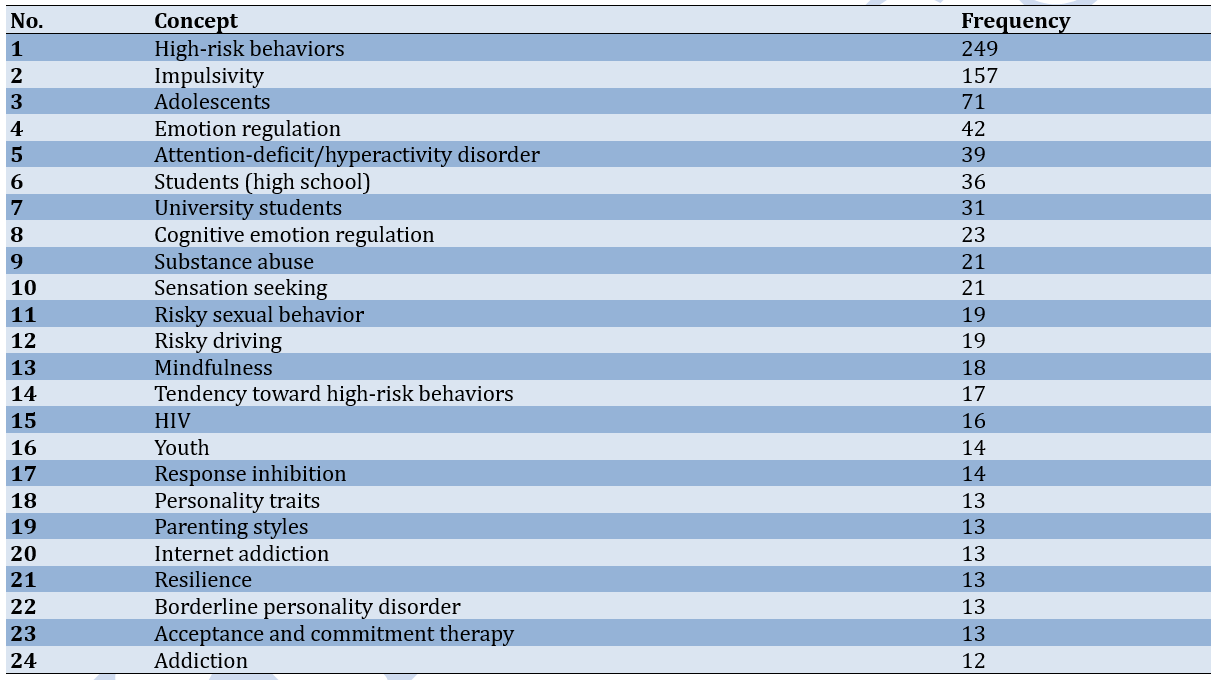
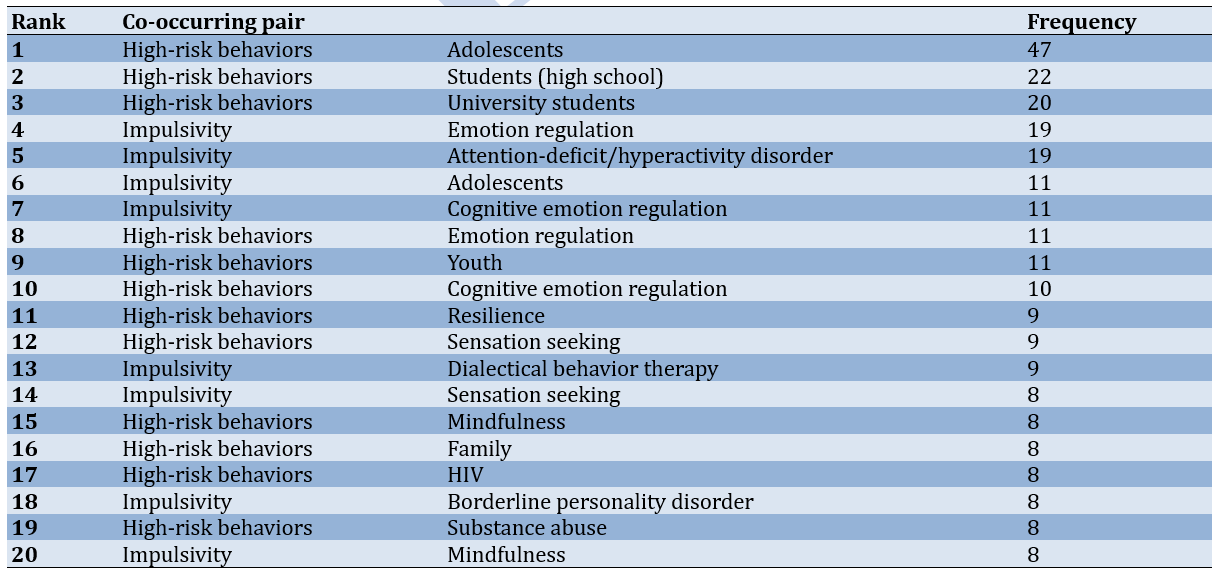
With a frequency of 249, ‘High-Risk Behaviors’ was the most frequent keyword, indicating its status as the central concept within this body of literature. The high frequency of this term reflects the significant attention that researchers have given to high-risk behaviors in the current societal context. In addition to the high-frequency concepts, the 20 most frequent co-occurring keyword pairs were identified during the study period. The pairs “High-Risk Behaviors-Adolescents,” “High-Risk Behaviors-Students (High School),” and “High-Risk Behaviors-University Students” exhibit the highest co-occurrence frequencies during this period. Overall, the concepts of ‘High-Risk Behaviors’ and ‘Impulsivity’ were frequently used in combination with many other concepts, highlighting their centrality within the research domain (Table 2).
Table 2. The twenty most frequent co-occurring keyword pairs
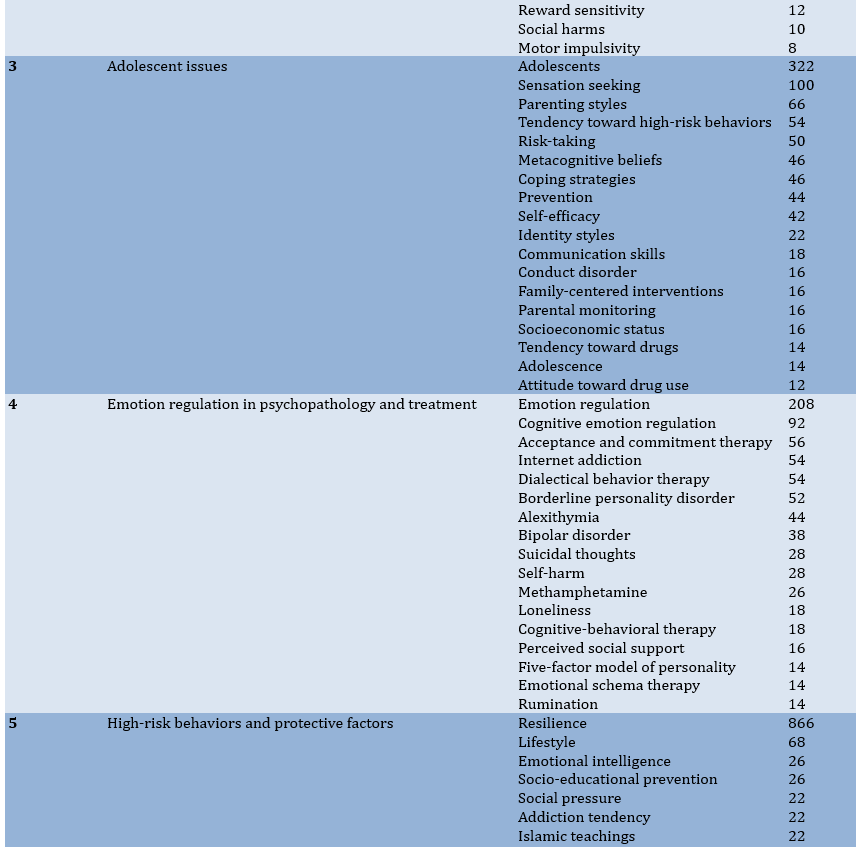
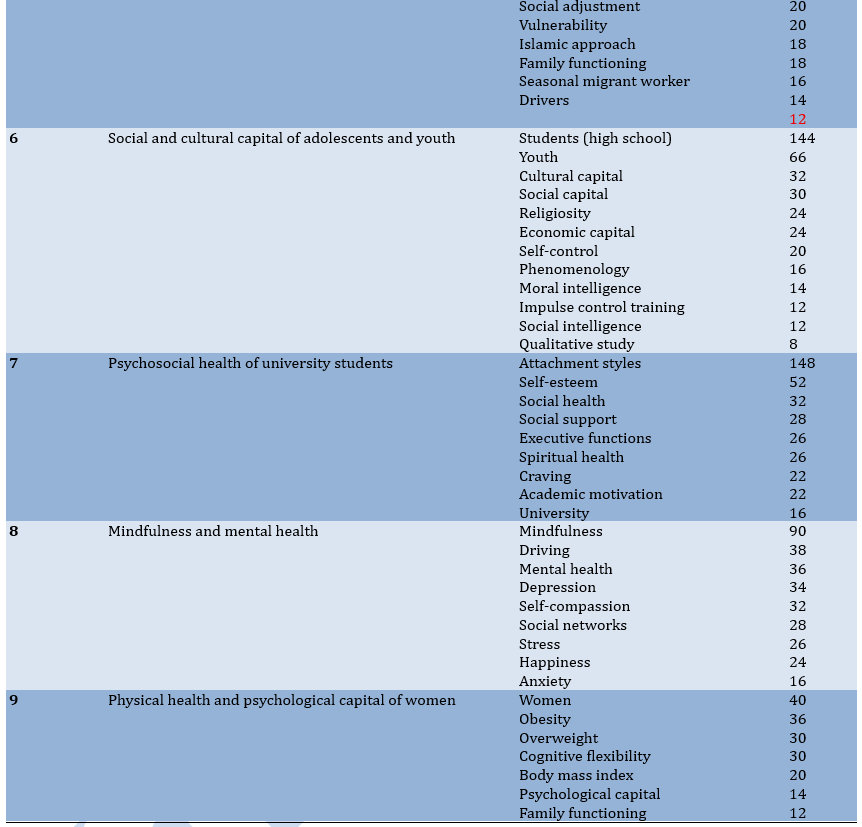
To identify the conceptual structure of the field, cluster analysis was performed using VOSviewer software. The concepts within the high-risk behaviors domain were grouped into nine distinct clusters. The co-word map revealed the following nine clusters: 1. Psychopathology of high-risk behaviors; 2. Impulsivity and related disorders; 3. Adolescent issues; 4. Emotion regulation in psychopathology and treatment; 5. High-risk behaviors and protective factors; 6. Social and cultural capital of adolescents and youth; 7. Psychosocial health of university students; 8. Mindfulness and mental health; and 9. Physical health and psychological capital of women (Figure 1).
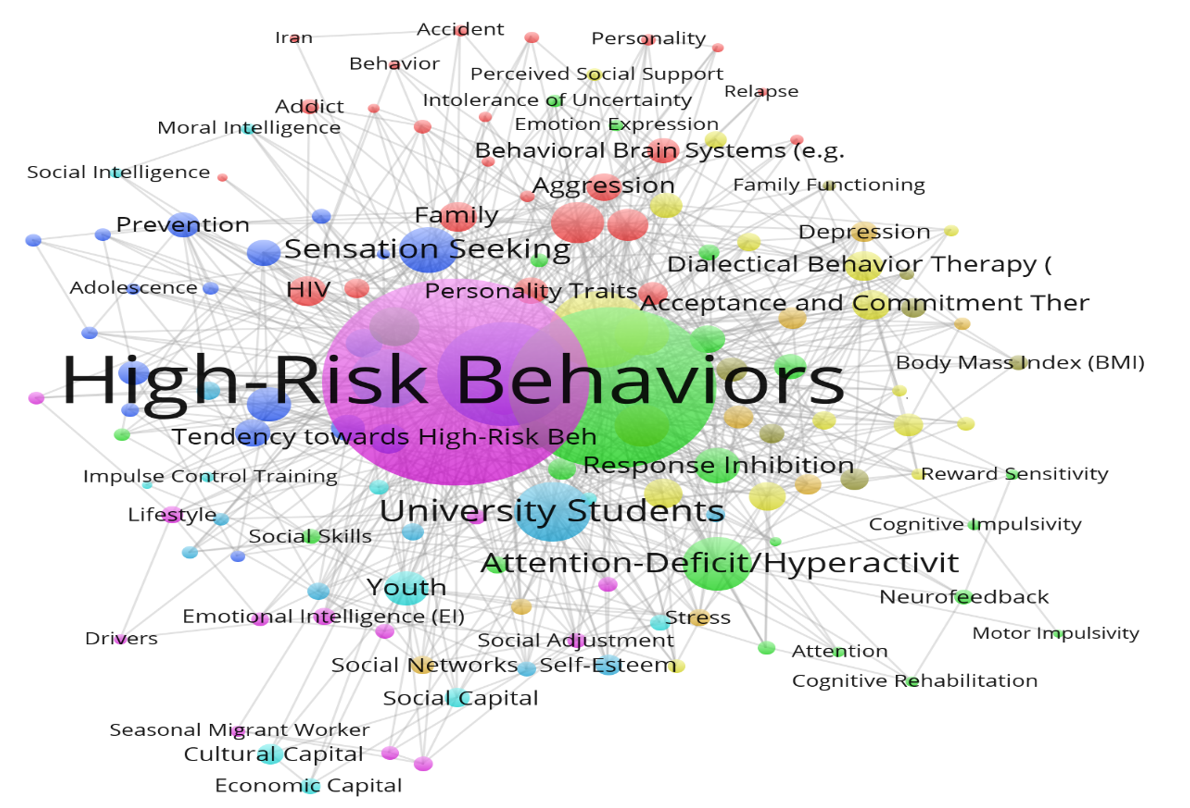
Figure 1. Co-word map of documents in high-risk behaviors
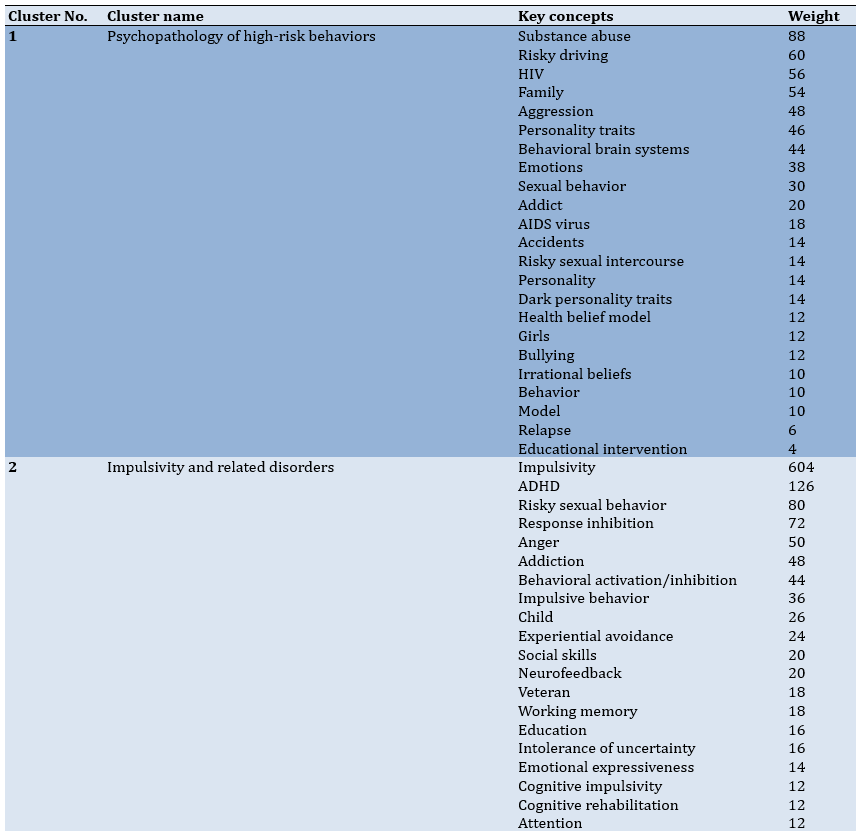
Concepts with higher weights represented the primary focal points within each thematic cluster. A content analysis of these clusters revealed the intellectual structure and core knowledge framework of the field. Overall, the research landscape of high-risk behaviors in Iran had a multifaceted structure. This structure began with the explanation of pathologies and psychological mechanisms, placed a special focus on the adolescent population, and ultimately extended to the examination of protective factors, therapeutic approaches, and social contexts (Table 3).
Table 3. Cluster names and key concepts in the high-risk behaviors domain
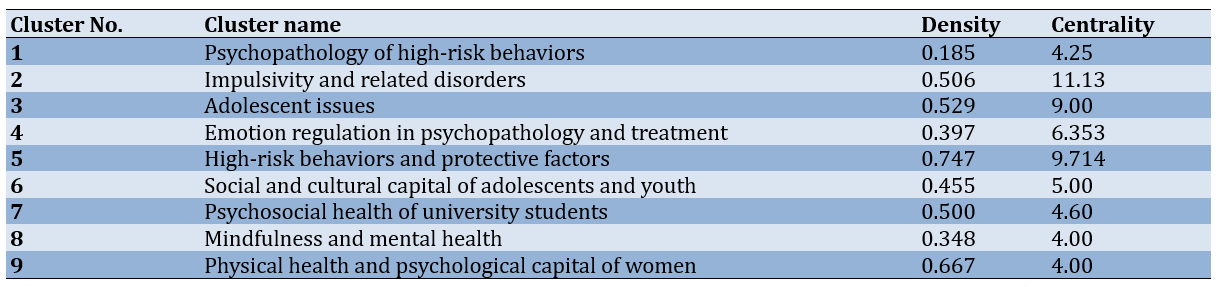
After generating a matrix for each cluster and importing it into UCINET software, the centrality and density scores for each cluster were determined, and the strategic diagram was plotted. Notably, the origin of the diagram was set at the mean centrality (6.45) and density (0.499) values of the clusters. Cluster 2 exhibited the highest centrality with a score of 11.13, while Cluster 5 had the highest density with a value of 0.747. This indicates a high level of connectivity within the co-occurrence networks of these two clusters. Specifically, Cluster 2 demonstrated the highest centrality, reflecting its strong influence on and connections with other topics, whereas Cluster 5 showed the strongest internal cohesion (density) among all clusters (Table 4).
Table 4. Density and centrality of clusters
The strategic diagram illustrated the internal cohesion and external interaction among the different thematic clusters. In this diagram, the horizontal axis represented centrality (interaction among clusters), while the vertical axis represented density (the strength of the internal links within a cluster). The strategic diagram is divided into four quadrants.
Quadrant 1 (upper-right): Clusters in this quadrant were both well-developed (dense) and central to the research domain. These were considered core themes that cover a substantial part of the network.
Quadrant 2 (upper-left): Clusters in this quadrant were also coherent (dense) but were less central, representing more specialized or niche areas of the research field.
Quadrant 3 (lower-left): This quadrant contains clusters that were less developed and peripheral, indicating either emerging or declining themes.
Quadrant 4 (lower-right): Finally, this quadrant included clusters that were central but not yet well-developed. These themes were essential but still maturing and had the potential to become core areas in the future.
The first quadrant contained “Impulsivity and Related Disorders” (Cluster 2), “Adolescent Issues” (Cluster 3), and “High-Risk Behaviors and Protective Factors” (Cluster 5), establishing them as the core themes for this period. These clusters were highly coherent (dense) and central to the research domain, covering a significant portion of the network.
Clusters in the second quadrant—“Psychosocial Health of University Students” (Cluster 7), “Physical Health and Psychological Capital of Women” (Cluster 9), and “Mindfulness and Mental Health” (Cluster 8)—were of secondary importance in terms of overall impact and centrality compared to the core themes. While these clusters are well-developed (dense), their peripheral position indicates that they represent more specialized or niche areas of research.
The third quadrant contained “Psychopathology of High-Risk Behaviors” (Cluster 1), “Emotion Regulation in Psychopathology and Treatment” (Cluster 4), and “Social and Cultural Capital of Adolescents and Youth” (Cluster 6). These clusters were characterized by low density and low centrality, representing emerging or declining themes within the network.
Finally, the fourth quadrant, which typically represents themes that were central but not yet mature (underdeveloped) and have the potential to become core areas, was found to be empty. No clusters were identified in this quadrant in the current analysis (Figure 2).
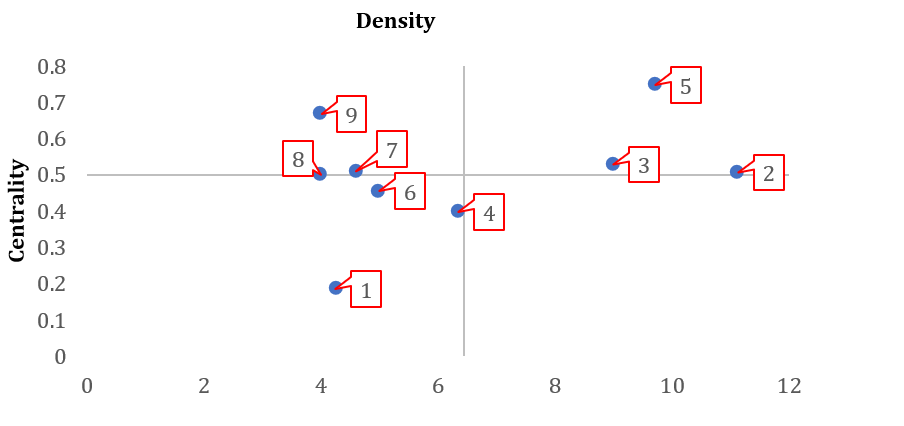
Figure 2. Strategic diagram of the high-risk behaviors
Discussion
This study aimed to identify the conceptual structure and dominant intellectual trends in high-risk behaviors in Iran over the past two decades. To achieve this, the analysis utilized a strategic diagram designed to illustrate the internal cohesion and external interaction among different thematic clusters. In this diagram, the horizontal axis represented centrality (the interaction among clusters), while the vertical axis represented density (the strength of the internal links within a cluster) [24]. The domain of high-risk behaviors possessed a mature, well-developed structure centered around a strong core; however, it simultaneously lacked emerging, robust interdisciplinary intellectual currents. Consequently, the diagram showed that knowledge in this domain in Iran has followed a trajectory of crystallization and deepening of key concepts. For future dynamism and evolution, this domain requires the development of new intellectual currents and the establishment of conceptual bridges between specialized areas and its central core.
The findings of this study align with the results of Iranian researchers’ studies, which have predominantly focused on adolescents [14, 17, 19], psychological mechanisms, such as emotion regulation and impulsivity [20], and protective factors, like family support and religious faith [18]. This trend is reflected in the first quadrant of the strategic diagram. The positioning of the adolescent issues (Cluster 3), impulsivity and related disorders (Cluster 2), and high-risk behaviors and protective factors (Cluster 5) clusters in this quadrant shows that these three axes have constituted the backbone and central core of research in this domain over the past two decades. The research background also references studies that have focused on specific populations, such as university students [18], as well as sociological topics, such as social and cultural capital [16]. The present study confirms these observations and delineates their structural positioning. The placement of the psychosocial health of university students cluster (Cluster 7) in the second quadrant indicates that this domain has evolved into a specialized and mature, yet non-central, topic. Furthermore, the positioning of the social and cultural capital of adolescents and youth cluster (Cluster 6) in the third quadrant suggests that, despite its presence in the literature, this approach has not yet developed into a coherent and central intellectual current within the scientific network and remains on the periphery.
In comparison to international research that addresses emerging and interdisciplinary domains—such as the application of artificial intelligence in risk driving [13], macroeconomic analyses [22], and the impact of public health crises [21]—these topics possess a cross-cutting and bridging nature. They would be expected to appear in the fourth quadrant of the strategic diagram. The absence of clusters in the fourth quadrant in the present study indicates that the innovative, interdisciplinary intellectual currents that are growing globally have not yet formed a strong, central current within the Iranian research corpus. This finding structurally illustrates the existing gap between domestic research and the frontiers of global knowledge.
Domains, such as the psychopathology of high-risk behaviors, novel therapeutic approaches (emotion regulation and mindfulness), and social and cultural capital, despite their importance, exhibited low coherence and centrality. It is recommended that future research deliberately concentrate on these domains. The vacancy in the fourth quadrant indicates both a gap and an opportunity for research. Researchers can draw inspiration from the global trends outlined in the literature review to explore areas such as the impact of emerging technologies and cyberspace on the development and prevention of high-risk behaviors among adolescents. Additionally, they may utilize big data to model the prevalence patterns of high-risk behaviors at the national level and evaluate the impact of macro-level policies—such as economic changes or national educational programs—on these behaviors. Furthermore, researchers are encouraged to investigate the effects of emerging crises, such as climatic and economic crises or future pandemics, on mental health and high-risk behaviors among youth.
Conclusion
The body of knowledge on high-risk behaviors in Iran has achieved structural maturity, characterized by a robust core focused on psychological mechanisms in adolescents.
Acknowledgments: None.
Ethical Permissions: This study involved no direct contact with human subjects; all data were extracted from the ISC citation database. Consequently, institutional ethics committee approval was not required.
Conflicts of Interests: The authors declare no competing financial or non-financial interests related to this work.
Authors' Contribution: Rahimi S (First Author), Introduction Writer/Methodologist/Main Researcher/Discussion Writer (50%); Soheili F (Second Author), Methodologist/Assistant Researcher/Discussion Writer/Statistical Analyst (25%); Jebraeili H (Third Author), Introduction Writer/Assistant Researcher/Discussion Writer (25%)
Funding/Support: None.
To understand the structure of a broad and fragmented scientific field, traditional thematic analyses alone are insufficient and require macro-level, data-driven approaches. In this context, co-word analysis serves as a powerful tool for visualizing the intellectual structure, identifying conceptual clusters, and mapping research trends within a scientific domain [1]. The effectiveness of this approach in mapping knowledge across various fields has been demonstrated, including areas such as knowledge engineering [2], resilient economics [3], national security [4], decision-making [5], and various literacy domains, including information literacy [6, 7], digital literacy [8], financial literacy [9], and literacy [10]. Specifically, in health-related research, this approach has been applied to analyze the field of pulsatile headaches [11] and in the social sciences for studies on higher education in Iran [12]. The survey by Ge et al. also exemplifies the use of this method to map knowledge in the specialized field of driving risk. They identified key thematic clusters and future research trends, such as human-machine synergy, artificial intelligence, intelligent driving, risk identification, and natural driving, as current hot research topics and future trends [13]. Thus, the present study also employed this approach to structurally analyze the domain of risk behaviors in Iran.
The literature on risk behaviors encompasses a wide range of studies that have examined this phenomenon from psychological, sociological, and environmental perspectives. Studies conducted in Iran have primarily focused on identifying the factors associated with risk behaviors within the country’s social and cultural context, revealing an evolutionary shift from examining external factors to internal mechanisms. Atashnafas et al. emphasize the key role of parenting styles [14], while Nateghi & Afshani demonstrate a direct relationship between social alienation and these behaviors [15]. Alborzi et al. highlight the importance of social and cultural capital in preventing risky sexual behaviors [16]. Other studies have shifted toward exploring deeper psychological mechanisms. Khatib et al. elaborate on the role of defense mechanisms and emotion regulation [17], Jebraeili & Felegari report religious faith as a protective factor among students [18], Moghaddam et al. explored the roles of anxiety sensitivity and self-acceptance [19], and finally, Alizadeh et al. report neuropsychological mechanisms such as brain/behavior systems and impulsivity as fundamental factors [20].
International studies, employing diverse methodologies, have also addressed the complex dimensions of this field. For example, Gao & Sun examined the mediating role of perceived risk and psychological insecurity during public health emergencies [21]. Ando et al., using an econometric approach, showed that childhood interventions can lead to a reduction in risk behaviors during adolescence [22]. Weng, using advanced statistical methods, demonstrate the causal impact of depression on the increase in health risk behaviors [23].
As the literature review indicates, both domestic and international studies have identified numerous factors, ranging from macro-level social and familial influences to micro-level psychological and neurobiological ones. However, almost all of these studies are thematic and case-based in nature, focusing on the relationships between specific parameters. What has been overlooked, however, is a macro-structural analysis of the body of knowledge produced in this domain in Iran. Currently, there is no comprehensive map that systematically and data-drivenly illustrates research trends, focal points, and gaps in this field. This study aimed to fill this knowledge gap by utilizing bibliometric tools to map the knowledge in the domain of risk behaviors in Iran.
Instrument and Methods
This descriptive study used quantitative content analysis and social network analysis. The research population comprised all documents containing the terms “high-risk behavior,” “impulsivity,” and “impulsive behavior” in their titles. The data were extracted from the Islamic World Science Citation Database (ISC). The retrieval was performed on May 28, 2025.
Data processing was conducted in several stages. Initially, plain-text files extracted from the Islamic World Science Citation Database were imported into BibExcel. Using this software and its natural language processing techniques, key terms (nouns or noun phrases) were extracted, yielding 2,248 concepts. At this stage, standardization and normalization of concepts were performed: Singular and plural forms were unified, acronyms were expanded, and terms with similar meanings were merged, resulting in 854 unique keywords.
In the second step, the standardized data were processed using specific BibExcel commands to generate a matrix. At this stage, a sample of data was selected for analysis; a minimum threshold frequency was established for terms to be included in the bibliometric map. Setting this cut-off threshold is recommended for effectively eliminating erroneous or insignificant terms. Consequently, a 134×134 matrix was constructed.
In the subsequent step, this matrix was transformed into a correlation matrix. Finally, this matrix was imported into VOSviewer, where concept clustering was performed using the K-means clustering method. In the final stage, separate matrices were created for each cluster identified in the previous phase. Using UCINET, centrality and density scores were calculated for each cluster. By entering the obtained values into Microsoft Excel, a strategic diagram was generated.
Findings
A total of 551 documents published with the term “high-risk behaviors” in their titles were identified. The first articles indexed in the ISC database appeared in 2005. The total number of unique concepts and keywords identified was 854. From the 551 documents analyzed, 2,248 keywords were identified. After the data cleaning and standardization process, 854 unique keywords remained. The terms ‘High-Risk Behaviors,’ ‘Impulsivity,’ and ‘Adolescents’ ranked first to third, with frequencies of 249, 157, and 71, respectively (Table 1).
Table 1. The twenty-four most frequent concepts in the high-risk behaviors
With a frequency of 249, ‘High-Risk Behaviors’ was the most frequent keyword, indicating its status as the central concept within this body of literature. The high frequency of this term reflects the significant attention that researchers have given to high-risk behaviors in the current societal context. In addition to the high-frequency concepts, the 20 most frequent co-occurring keyword pairs were identified during the study period. The pairs “High-Risk Behaviors-Adolescents,” “High-Risk Behaviors-Students (High School),” and “High-Risk Behaviors-University Students” exhibit the highest co-occurrence frequencies during this period. Overall, the concepts of ‘High-Risk Behaviors’ and ‘Impulsivity’ were frequently used in combination with many other concepts, highlighting their centrality within the research domain (Table 2).
Table 2. The twenty most frequent co-occurring keyword pairs
To identify the conceptual structure of the field, cluster analysis was performed using VOSviewer software. The concepts within the high-risk behaviors domain were grouped into nine distinct clusters. The co-word map revealed the following nine clusters: 1. Psychopathology of high-risk behaviors; 2. Impulsivity and related disorders; 3. Adolescent issues; 4. Emotion regulation in psychopathology and treatment; 5. High-risk behaviors and protective factors; 6. Social and cultural capital of adolescents and youth; 7. Psychosocial health of university students; 8. Mindfulness and mental health; and 9. Physical health and psychological capital of women (Figure 1).
Figure 1. Co-word map of documents in high-risk behaviors
Concepts with higher weights represented the primary focal points within each thematic cluster. A content analysis of these clusters revealed the intellectual structure and core knowledge framework of the field. Overall, the research landscape of high-risk behaviors in Iran had a multifaceted structure. This structure began with the explanation of pathologies and psychological mechanisms, placed a special focus on the adolescent population, and ultimately extended to the examination of protective factors, therapeutic approaches, and social contexts (Table 3).
Table 3. Cluster names and key concepts in the high-risk behaviors domain
After generating a matrix for each cluster and importing it into UCINET software, the centrality and density scores for each cluster were determined, and the strategic diagram was plotted. Notably, the origin of the diagram was set at the mean centrality (6.45) and density (0.499) values of the clusters. Cluster 2 exhibited the highest centrality with a score of 11.13, while Cluster 5 had the highest density with a value of 0.747. This indicates a high level of connectivity within the co-occurrence networks of these two clusters. Specifically, Cluster 2 demonstrated the highest centrality, reflecting its strong influence on and connections with other topics, whereas Cluster 5 showed the strongest internal cohesion (density) among all clusters (Table 4).
Table 4. Density and centrality of clusters
The strategic diagram illustrated the internal cohesion and external interaction among the different thematic clusters. In this diagram, the horizontal axis represented centrality (interaction among clusters), while the vertical axis represented density (the strength of the internal links within a cluster). The strategic diagram is divided into four quadrants.
Quadrant 1 (upper-right): Clusters in this quadrant were both well-developed (dense) and central to the research domain. These were considered core themes that cover a substantial part of the network.
Quadrant 2 (upper-left): Clusters in this quadrant were also coherent (dense) but were less central, representing more specialized or niche areas of the research field.
Quadrant 3 (lower-left): This quadrant contains clusters that were less developed and peripheral, indicating either emerging or declining themes.
Quadrant 4 (lower-right): Finally, this quadrant included clusters that were central but not yet well-developed. These themes were essential but still maturing and had the potential to become core areas in the future.
The first quadrant contained “Impulsivity and Related Disorders” (Cluster 2), “Adolescent Issues” (Cluster 3), and “High-Risk Behaviors and Protective Factors” (Cluster 5), establishing them as the core themes for this period. These clusters were highly coherent (dense) and central to the research domain, covering a significant portion of the network.
Clusters in the second quadrant—“Psychosocial Health of University Students” (Cluster 7), “Physical Health and Psychological Capital of Women” (Cluster 9), and “Mindfulness and Mental Health” (Cluster 8)—were of secondary importance in terms of overall impact and centrality compared to the core themes. While these clusters are well-developed (dense), their peripheral position indicates that they represent more specialized or niche areas of research.
The third quadrant contained “Psychopathology of High-Risk Behaviors” (Cluster 1), “Emotion Regulation in Psychopathology and Treatment” (Cluster 4), and “Social and Cultural Capital of Adolescents and Youth” (Cluster 6). These clusters were characterized by low density and low centrality, representing emerging or declining themes within the network.
Finally, the fourth quadrant, which typically represents themes that were central but not yet mature (underdeveloped) and have the potential to become core areas, was found to be empty. No clusters were identified in this quadrant in the current analysis (Figure 2).
Figure 2. Strategic diagram of the high-risk behaviors
Discussion
This study aimed to identify the conceptual structure and dominant intellectual trends in high-risk behaviors in Iran over the past two decades. To achieve this, the analysis utilized a strategic diagram designed to illustrate the internal cohesion and external interaction among different thematic clusters. In this diagram, the horizontal axis represented centrality (the interaction among clusters), while the vertical axis represented density (the strength of the internal links within a cluster) [24]. The domain of high-risk behaviors possessed a mature, well-developed structure centered around a strong core; however, it simultaneously lacked emerging, robust interdisciplinary intellectual currents. Consequently, the diagram showed that knowledge in this domain in Iran has followed a trajectory of crystallization and deepening of key concepts. For future dynamism and evolution, this domain requires the development of new intellectual currents and the establishment of conceptual bridges between specialized areas and its central core.
The findings of this study align with the results of Iranian researchers’ studies, which have predominantly focused on adolescents [14, 17, 19], psychological mechanisms, such as emotion regulation and impulsivity [20], and protective factors, like family support and religious faith [18]. This trend is reflected in the first quadrant of the strategic diagram. The positioning of the adolescent issues (Cluster 3), impulsivity and related disorders (Cluster 2), and high-risk behaviors and protective factors (Cluster 5) clusters in this quadrant shows that these three axes have constituted the backbone and central core of research in this domain over the past two decades. The research background also references studies that have focused on specific populations, such as university students [18], as well as sociological topics, such as social and cultural capital [16]. The present study confirms these observations and delineates their structural positioning. The placement of the psychosocial health of university students cluster (Cluster 7) in the second quadrant indicates that this domain has evolved into a specialized and mature, yet non-central, topic. Furthermore, the positioning of the social and cultural capital of adolescents and youth cluster (Cluster 6) in the third quadrant suggests that, despite its presence in the literature, this approach has not yet developed into a coherent and central intellectual current within the scientific network and remains on the periphery.
In comparison to international research that addresses emerging and interdisciplinary domains—such as the application of artificial intelligence in risk driving [13], macroeconomic analyses [22], and the impact of public health crises [21]—these topics possess a cross-cutting and bridging nature. They would be expected to appear in the fourth quadrant of the strategic diagram. The absence of clusters in the fourth quadrant in the present study indicates that the innovative, interdisciplinary intellectual currents that are growing globally have not yet formed a strong, central current within the Iranian research corpus. This finding structurally illustrates the existing gap between domestic research and the frontiers of global knowledge.
Domains, such as the psychopathology of high-risk behaviors, novel therapeutic approaches (emotion regulation and mindfulness), and social and cultural capital, despite their importance, exhibited low coherence and centrality. It is recommended that future research deliberately concentrate on these domains. The vacancy in the fourth quadrant indicates both a gap and an opportunity for research. Researchers can draw inspiration from the global trends outlined in the literature review to explore areas such as the impact of emerging technologies and cyberspace on the development and prevention of high-risk behaviors among adolescents. Additionally, they may utilize big data to model the prevalence patterns of high-risk behaviors at the national level and evaluate the impact of macro-level policies—such as economic changes or national educational programs—on these behaviors. Furthermore, researchers are encouraged to investigate the effects of emerging crises, such as climatic and economic crises or future pandemics, on mental health and high-risk behaviors among youth.
Conclusion
The body of knowledge on high-risk behaviors in Iran has achieved structural maturity, characterized by a robust core focused on psychological mechanisms in adolescents.
Acknowledgments: None.
Ethical Permissions: This study involved no direct contact with human subjects; all data were extracted from the ISC citation database. Consequently, institutional ethics committee approval was not required.
Conflicts of Interests: The authors declare no competing financial or non-financial interests related to this work.
Authors' Contribution: Rahimi S (First Author), Introduction Writer/Methodologist/Main Researcher/Discussion Writer (50%); Soheili F (Second Author), Methodologist/Assistant Researcher/Discussion Writer/Statistical Analyst (25%); Jebraeili H (Third Author), Introduction Writer/Assistant Researcher/Discussion Writer (25%)
Funding/Support: None.
| Rights and permissions | |
 |
This work is licensed under a Creative Commons Attribution-NonCommercial 4.0 International License. |