


Volume -
3 , - : 743-750 |
Back to browse issues page



Download citation:
BibTeX | RIS | EndNote | Medlars | ProCite | Reference Manager | RefWorks
Send citation to:


BibTeX | RIS | EndNote | Medlars | ProCite | Reference Manager | RefWorks
Send citation to:
Framework for designing a national model of depression information system in Iran. 3 https://doi.org/10.58209/hehp.13.4.743
URL: http://daneshafarand.org/article-1-83002-en.html
URL: http://daneshafarand.org/article-1-83002-en.html
| Abstract (HTML) (527 Views)
Full-Text: (34 Views)
Introduction
More than one billion people worldwide suffer from various types of mental disorders. Mental disorders cover a wide range and affect people’s thoughts, relationships, interests, and emotions. Depression is one of the most common mental disorders worldwide. Depression is recognized as a major global health issue because it affects a wide range of age groups [1-4]. Depression is often referred to as the “common cold” of mental health due to its prevalence and widespread impact on people’s lives. Depression affects more than 300 million people worldwide [5, 6].
This mental disorder is characterized by persistent sadness, loss of interest and pleasure, and a spectrum of emotional, cognitive, physical, and behavioral symptoms. Various factors contribute to the occurrence of depression, including demographic characteristics, socio-economic status, exposure to stressful events, personal and family history of mental disorders and drug use, and cultural and social contexts [7, 8].
Today, one of the significant concerns in global health is the growing prevalence of depression among adolescents and youth. This issue is associated with serious health consequences and may lead to decreased academic performance, increased drug use and abuse, decreased well-being, and increased social problems [9]. In severe cases, apart from these consequences, depression can lead to suicide, which is currently the second leading cause of death among people aged 15 to 29. Although depression is treatable and preventable, it is still not adequately managed and treated in many countries [3, 10, 11].
Although awareness of depression has increased over the last two decades, challenges related to its early recognition and effective management remain. Screening and timely diagnosis play an important role in improving treatment outcomes, reducing relapse, and improving the quality of life of patients. Collecting accurate data on the prevalence, risk factors, and treatment patterns of depression is essential for policy-making, planning, and designing effective mental health interventions [12, 13].
Despite increasing attention and public health efforts, depression is often not diagnosed until it becomes severe. The complexity of the causes that contribute to depression poses a major challenge in addressing its various stages. Depression has multiple and diverse factors resulting from genetic, environmental, psychological, and social factors. Therefore, adopting an interdisciplinary approach that can collect and manage large volumes of data is of great importance [14].
Cultural differences, values, family structures, and different social contexts play an important role in the occurrence and treatment of depression. Therefore, designing interventions that are adapted to the cultural context of each country is a key step in improving the effectiveness of depression interventions [15, 16].
The increasing growth of health data makes the use of information systems in healthcare essential to provide up-to-date and relevant information about the health needs of the covered population [17].
Since mental health is directly related to individual and social functioning and psychosocial impairments, the importance of designing and developing efficient and integrated information systems is a high priority for the health and medical care system of any country [18, 19]. Information systems facilitate access to data by collecting, recording, retrieving, and processing data, and improve decision-making [20].
Depression information systems can help policymakers, managers, and clinicians by collecting and managing information optimally to improve the quality of life of adolescents and youth, identify problems, make evidence-based decisions, and adopt coherent and correct policies in the treatment and management of depression [16, 21, 22].
Implementing an information management system will reduce time spent on manual tasks, increase accuracy, facilitate access to health data, and improve service effectiveness [23]. Overall, information systems have revolutionized healthcare, enabling better diagnosis, treatment decisions, care coordination, and quality improvement. By using an information system, healthcare providers can streamline workflows and ultimately improve the quality of patient care [24].
Registries are supportive information systems that are critical for organizing patient data, systematizing care delivery, and tracking patient health outcomes. To this end, Yang et al. [25] designed and clinically implemented a depression registry as part of a collaborative care intervention for depression. The primary goal of designing this registry was to identify and track patients with depression and monitor antidepressant treatment.
In an applied descriptive study, Asadi et al. [19] designed a national information management system for COVID-19 vaccination in 2023 to manage information related to vaccine receipt and its possible side effects. The validation of the national information system model for COVID-19 vaccination of pregnant women is examined in two stages using the Delphi technique. Finally, the final model is presented in two main groups, including structural components (responsible organization and databases, monitoring center, participating organizations and data sources) and information process (data set, data collection, quality control, data exchange, data processing, reporting).
Today, developed countries are increasingly using information systems for disease management, and their experiences can help improve such systems in low-income countries [26]. To this end, the present study, inspired by studies conducted in Denmark, the United States, China, India, and Indonesia, conducted a comparative study and thoroughly reviewed and analyzed the information systems of these countries.
Given the importance of information systems in the management and control of depression, and in improving planning and advancing related goals, designing and developing a depression information system to manage and organize data is an essential need. Therefore, this study aimed to provide a national model for a depression information system in Iranian adolescents and youth.
Materials and Methods
This applied study, conducted in 2025, used a mixed design by combining qualitative content analysis and expert validation. The study was conducted in three separate stages, including a literature review and comparative study, presenting the model, and validating the national model of the depression information system in adolescents and youth.
In the first stage, a comprehensive literature review was carried out in the PubMed, Scopus, and Web of Science databases to identify national or large-scale depression and mental health information systems. A comprehensive search strategy was developed using a combination of Medical Subject Headings (MeSH) and free-text terms related to depression and information systems. The main keywords included terms such as “depression”, “adolescent”, “youth”, “information system”, “health information system”, and “registry”. Relevant articles were retrieved using predefined keywords and inclusion/exclusion criteria. After screening titles, abstracts, and full texts, information systems that provided sufficiently detailed and transparent descriptions of their structure and processes were shortlisted. After reviewing and screening the literature, five countries—Denmark, the United States, China, India, and Indonesia—were selected for comparative analysis. The aforementioned five countries were selected for the comparative study based on several criteria, including the availability of comprehensive and transparent information regarding their information systems and their geographical representation across Asia, America, and Europe. They also represent a range of economic and health care system contexts, allowing for the extraction of adaptable components and best practices to develop a national information systems model for Iran. Then, the structural components and key processes of these information systems were extracted.
In the second stage, after reviewing information sources, conducting a comparative study in the selected countries, and considering the unique climatic, geographical, cultural, and social conditions of Iran, a proposed model was presented. This model was designed in two main parts, including the structural components and key processes of the depression information system in adolescents and youth. At this stage, no external participants were involved. The research team constructed the preliminary model based on the synthesized evidence.
In the third stage, the proposed model was validated through a survey of a panel of experts. A structured and closed questionnaire was developed based on the dimensions of the model identified in stage 2. The questionnaire included items related to each key structural and process component, with binary response options (“yes” or “no”) indicating agreement with the inclusion of each item in the model. An open-ended section at the end allowed participants to provide qualitative comments, corrections, or new suggestions. The designed questionnaire was administered to 60 experts, including 50 psychiatrists and psychologists, and 10 health information management experts. Experts were selected through purposive sampling based on their academic qualifications, at least 5 years of relevant professional experience, and previous work experience in clinical, research, or management areas related to mental health or health information systems. Experts assessed the relevance and practicality of each component of the model. Items that achieved broad agreement among experts were retained, while items that had conflicting feedback were modified based on their qualitative comments. After reviewing all feedback, an expert panel consisting of three psychiatrists/psychologists and three health information management specialists reviewed the revised model and ensured its conceptual integrity and practical applicability. Finally, the experts validated the model, which was presented as a final schematic diagram.
In order to comply with ethical standards, the identities and responses of the experts were kept confidential during the validation of the proposed model. In addition, they were assured that their participation in the validation stages was voluntary and they could withdraw from the study at any stage.
Data analysis was performed using SPSS 26
Findings
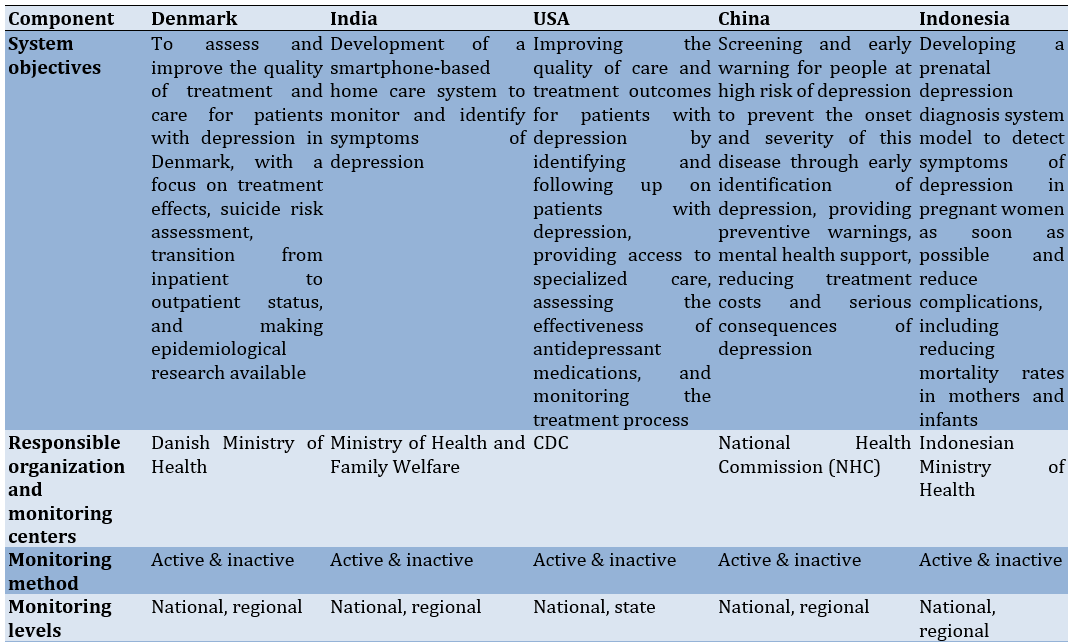
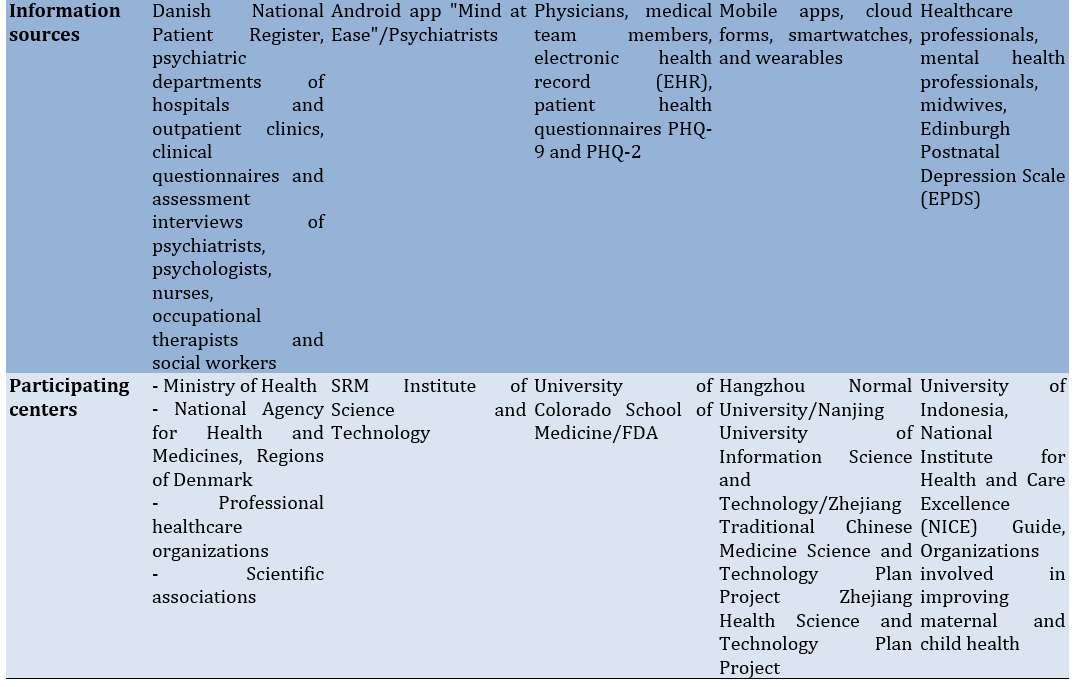
The depression information system in the selected countries was examined regarding structural components (Table 1).
Table 1. Structural components of the depression information system in selected countries
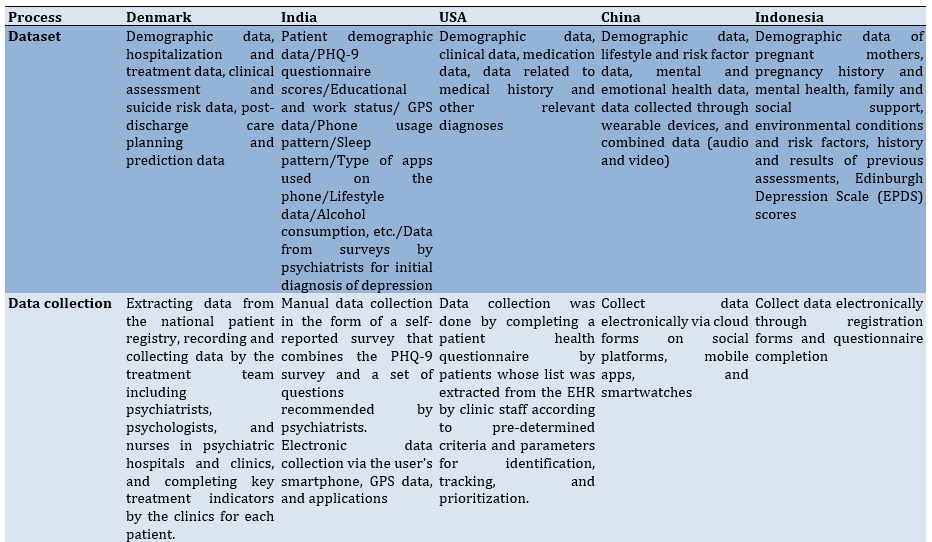
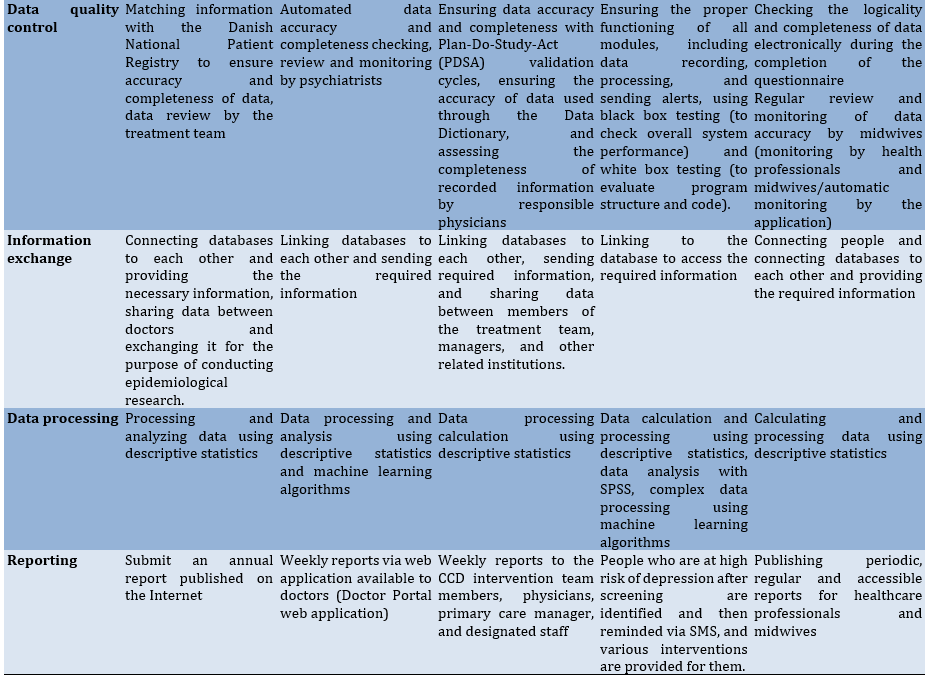
Key processes of the depression information system were also assessed (Table 2)
Table 2. Key processes of the depression information system in selected countries
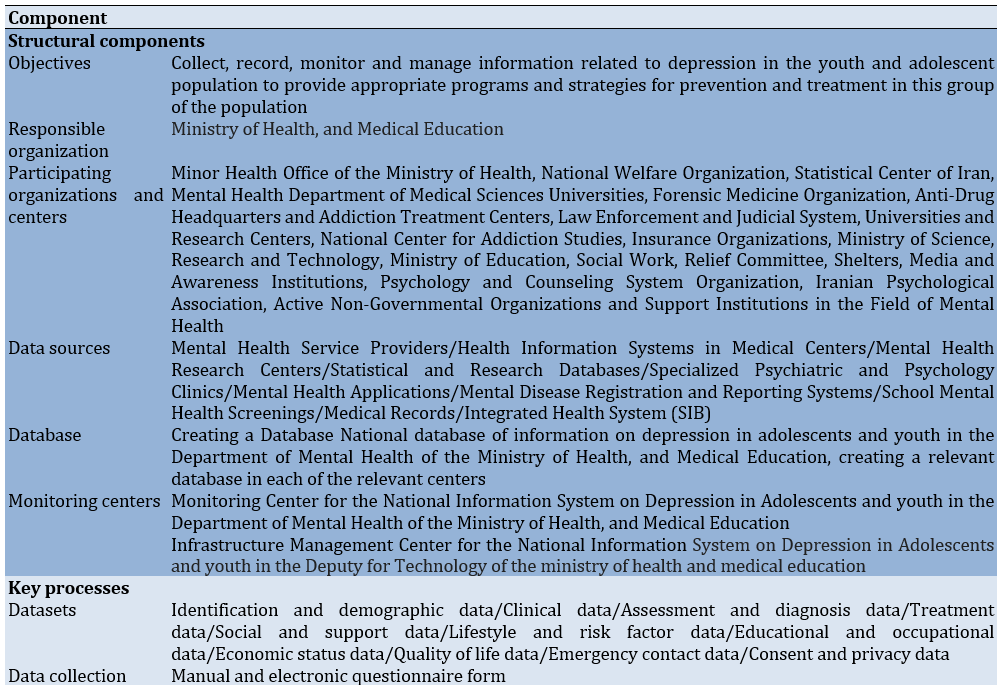
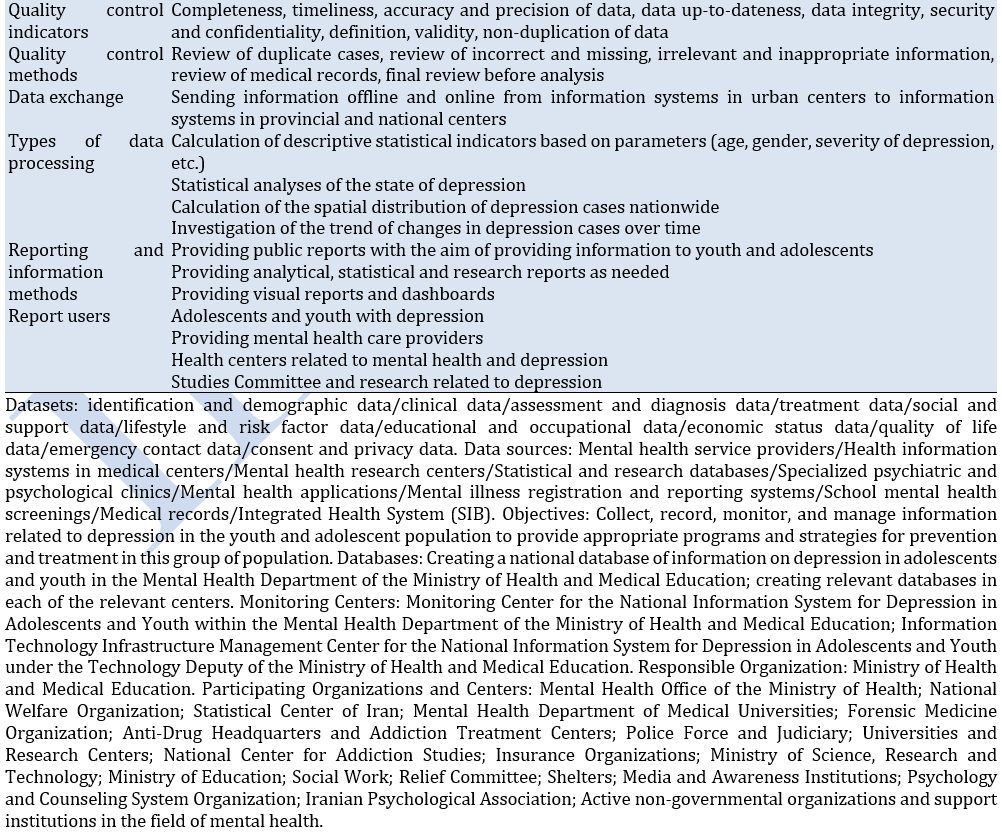
The proposed model of the information system for depression in adolescents and youth in Iran was divided into two main parts: the structural components and the key processes of the depression information system. The structural components section included the objectives, the responsible organization, participating organizations and centers, data sources, databases, monitoring centers, and key processes, including data sets, data collection, quality control indicators, quality control methods, data exchange, types of data processing, reporting and information methods, and report users (Table 3).
Table 3. Components of the proposed model for the national information system on depression in adolescents and youth for Iran
In the validation stage, after incorporating the experts’ suggestions obtained from the initial survey and forming an expert panel, all components of the proposed model were confirmed by unanimous agreement among the experts (Figure 1).
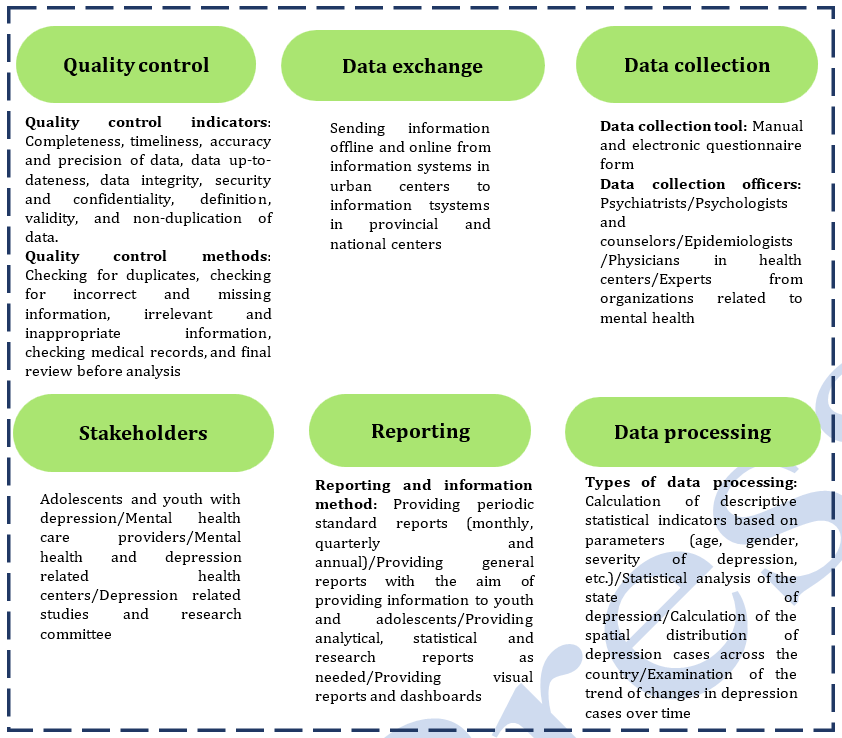
Figure 1. Final model of the national information system for depression in adolescents and youth in Iran.
Discussion
This study aimed to provide a national model for a depression information system in Iranian adolescents and youth. Creating a national information system for depression in adolescents and youth that includes comprehensive, accurate, and reliable data on this population is essential. Given that there is currently no national integrated information system in Iran for collecting, recording, monitoring, and managing information related to depression among adolescents and youth, in this study a national model of the depression information system in adolescents and youth for Iran was presented as a strategy to improve the state of depression in this age group by studying related systems in selected countries and the country’s needs.
The national model of the depression information system for adolescents and youth in Iran was divided into two main parts—structural components and key processes—after conducting comparative studies in selected countries (Denmark, the United States, China, India, and Indonesia) and based on the organizational structure of Iran’s health system and applying the opinions of relevant experts.
From a structural perspective, the first step in planning to design such a system was to determine the institution that owns and is the main custodian of the system. Considering experiences from different countries and the country’s conditions, in the proposed model of this study, the Mental Health Department of the Ministry of Health and Medical Education was designated as the main supervising and responsible organization for implementing the National Depression Information System in Adolescents and Youth for Iran.
Structurally, there are different monitoring systems and data sources in the countries studied, depending on the activities of participating organizations and centers for depression-related systems. In our proposed model, monitoring centers and databases were determined as follows: establishing a monitoring center for the National Depression Information System and Database in the Mental Health Department of the Ministry of Health and Medical Education, the Information Technology Infrastructure Management Center for the National Depression Information System in Adolescents and Youth in the Deputy for Technology of the Ministry of Health and Medical Education, and also establishing a relevant database in each of the relevant centers.
One of the key components considered in the processes section of the depression information system model is the minimum data set. Minimum data sets are a standard tool for continuous and quality data collection, ensuring accurate and correct access to health data [27, 28].
Effective and efficient data management, as well as information monitoring by information management systems, lead to the production of quality, accurate data and timely exchange of data with related organizations [26]. Poor quality data can lead to incorrect clinical decisions, reduced patient safety, and increased health care costs [29]. To ensure the quality of information, various methods of data quality control are provided in the proposed model, including checks for duplicate cases, checks of incorrect, missing, irrelevant, and inappropriate information, checks of medical records, and final review before analysis.
Data exchange in the studied countries is carried out by linking databases to each other and transmitting information. In the proposed model, online transmission of information from information systems in urban centers to information systems in provincial and national centers was also provided.
Given the rapid increase in data in the health sector, data analysis is of great importance. Data analysis helps to make more informed decisions by identifying patterns and trends, improves patient outcomes, and optimizes resources. It can also identify at-risk populations and contribute to the design of more effective interventions [30].
In the proposed model, data processing included calculating descriptive statistical indicators based on parameters, performing statistical analyses of the state of depression, calculating the spatial distribution of depression cases across the country, and examining the trend of changes in depression cases over time.
Reporting allows for comparison of data at different levels to inform decision-making and guide actions by physicians and health policymakers. Information systems enable accurate reporting and reduce reporting errors [31, 32]. Various reporting methods have been described in studies of selected countries. In the proposed national model of the depression information system, information can be presented in the form of general reports, visual analyses, and dashboards, and these formats were confirmed as reporting methods.
Therefore, the proposed model is a comprehensive and optimal tool for managing data related to depression in adolescents and youth, and the results of this model can pave the way for implementing a local depression information system for adolescents and youth in the country. Given that many low-income and less-developed countries are not covered by a depression information system, it is suggested that these countries take the lead by providing a national model for a depression information system as the first step in expanding universal coverage of information systems.
By implementing the national depression information system in adolescents and youth, systematic access to accurate data and statistics related to depression in this population group will be provided. This system can provide the necessary basis for effective decision-making by policymakers and health managers in the areas of resource allocation, planning preventive and therapeutic interventions, and monitoring the status of depression in adolescents and youth at the national level. In addition, creating a comprehensive database of data and information related to depression can serve as a scientific and reliable resource for researchers and research centers, and provide the basis for conducting specialized studies in clinical and epidemiological fields. Considering the high prevalence of depression in Iran and the need to design and develop such a system, the proposed model can provide an appropriate information infrastructure for the design and implementation of the National Depression Information System in Adolescents and Youth in Iran.
Conclusion
The proposed model provides an appropriate information infrastructure for the implementation of a national information system on depression in adolescents and youth in Iran.
Acknowledgments: The authors express their gratitude to Shahid Beheshti University of Medical Sciences.
Ethical Permissions: This study was reviewed and approved by the review board and ethics committee of Shahid Beheshti University of Medical Sciences (IR.SBMU.RETECH.REC.1404.019).
Conflicts of Interests: The authors declared no conflicts of interests.
Authors' Contribution: Poorhashemi SE (First Author), Introduction Writer/Main Researcher (40%); Asadi F (Second Author), Introduction Writer/Assistant Researcher (30%); Hosseini A (Third Author), Statistical Analyst/Discussion Writer (10%); Ramezanghorbani N (Fourth Author), Introduction Writer (10%); Daeechini AH (Fifth Author), Methodologist (10%)
Funding/Support: This study did not receive any financial support.
More than one billion people worldwide suffer from various types of mental disorders. Mental disorders cover a wide range and affect people’s thoughts, relationships, interests, and emotions. Depression is one of the most common mental disorders worldwide. Depression is recognized as a major global health issue because it affects a wide range of age groups [1-4]. Depression is often referred to as the “common cold” of mental health due to its prevalence and widespread impact on people’s lives. Depression affects more than 300 million people worldwide [5, 6].
This mental disorder is characterized by persistent sadness, loss of interest and pleasure, and a spectrum of emotional, cognitive, physical, and behavioral symptoms. Various factors contribute to the occurrence of depression, including demographic characteristics, socio-economic status, exposure to stressful events, personal and family history of mental disorders and drug use, and cultural and social contexts [7, 8].
Today, one of the significant concerns in global health is the growing prevalence of depression among adolescents and youth. This issue is associated with serious health consequences and may lead to decreased academic performance, increased drug use and abuse, decreased well-being, and increased social problems [9]. In severe cases, apart from these consequences, depression can lead to suicide, which is currently the second leading cause of death among people aged 15 to 29. Although depression is treatable and preventable, it is still not adequately managed and treated in many countries [3, 10, 11].
Although awareness of depression has increased over the last two decades, challenges related to its early recognition and effective management remain. Screening and timely diagnosis play an important role in improving treatment outcomes, reducing relapse, and improving the quality of life of patients. Collecting accurate data on the prevalence, risk factors, and treatment patterns of depression is essential for policy-making, planning, and designing effective mental health interventions [12, 13].
Despite increasing attention and public health efforts, depression is often not diagnosed until it becomes severe. The complexity of the causes that contribute to depression poses a major challenge in addressing its various stages. Depression has multiple and diverse factors resulting from genetic, environmental, psychological, and social factors. Therefore, adopting an interdisciplinary approach that can collect and manage large volumes of data is of great importance [14].
Cultural differences, values, family structures, and different social contexts play an important role in the occurrence and treatment of depression. Therefore, designing interventions that are adapted to the cultural context of each country is a key step in improving the effectiveness of depression interventions [15, 16].
The increasing growth of health data makes the use of information systems in healthcare essential to provide up-to-date and relevant information about the health needs of the covered population [17].
Since mental health is directly related to individual and social functioning and psychosocial impairments, the importance of designing and developing efficient and integrated information systems is a high priority for the health and medical care system of any country [18, 19]. Information systems facilitate access to data by collecting, recording, retrieving, and processing data, and improve decision-making [20].
Depression information systems can help policymakers, managers, and clinicians by collecting and managing information optimally to improve the quality of life of adolescents and youth, identify problems, make evidence-based decisions, and adopt coherent and correct policies in the treatment and management of depression [16, 21, 22].
Implementing an information management system will reduce time spent on manual tasks, increase accuracy, facilitate access to health data, and improve service effectiveness [23]. Overall, information systems have revolutionized healthcare, enabling better diagnosis, treatment decisions, care coordination, and quality improvement. By using an information system, healthcare providers can streamline workflows and ultimately improve the quality of patient care [24].
Registries are supportive information systems that are critical for organizing patient data, systematizing care delivery, and tracking patient health outcomes. To this end, Yang et al. [25] designed and clinically implemented a depression registry as part of a collaborative care intervention for depression. The primary goal of designing this registry was to identify and track patients with depression and monitor antidepressant treatment.
In an applied descriptive study, Asadi et al. [19] designed a national information management system for COVID-19 vaccination in 2023 to manage information related to vaccine receipt and its possible side effects. The validation of the national information system model for COVID-19 vaccination of pregnant women is examined in two stages using the Delphi technique. Finally, the final model is presented in two main groups, including structural components (responsible organization and databases, monitoring center, participating organizations and data sources) and information process (data set, data collection, quality control, data exchange, data processing, reporting).
Today, developed countries are increasingly using information systems for disease management, and their experiences can help improve such systems in low-income countries [26]. To this end, the present study, inspired by studies conducted in Denmark, the United States, China, India, and Indonesia, conducted a comparative study and thoroughly reviewed and analyzed the information systems of these countries.
Given the importance of information systems in the management and control of depression, and in improving planning and advancing related goals, designing and developing a depression information system to manage and organize data is an essential need. Therefore, this study aimed to provide a national model for a depression information system in Iranian adolescents and youth.
Materials and Methods
This applied study, conducted in 2025, used a mixed design by combining qualitative content analysis and expert validation. The study was conducted in three separate stages, including a literature review and comparative study, presenting the model, and validating the national model of the depression information system in adolescents and youth.
In the first stage, a comprehensive literature review was carried out in the PubMed, Scopus, and Web of Science databases to identify national or large-scale depression and mental health information systems. A comprehensive search strategy was developed using a combination of Medical Subject Headings (MeSH) and free-text terms related to depression and information systems. The main keywords included terms such as “depression”, “adolescent”, “youth”, “information system”, “health information system”, and “registry”. Relevant articles were retrieved using predefined keywords and inclusion/exclusion criteria. After screening titles, abstracts, and full texts, information systems that provided sufficiently detailed and transparent descriptions of their structure and processes were shortlisted. After reviewing and screening the literature, five countries—Denmark, the United States, China, India, and Indonesia—were selected for comparative analysis. The aforementioned five countries were selected for the comparative study based on several criteria, including the availability of comprehensive and transparent information regarding their information systems and their geographical representation across Asia, America, and Europe. They also represent a range of economic and health care system contexts, allowing for the extraction of adaptable components and best practices to develop a national information systems model for Iran. Then, the structural components and key processes of these information systems were extracted.
In the second stage, after reviewing information sources, conducting a comparative study in the selected countries, and considering the unique climatic, geographical, cultural, and social conditions of Iran, a proposed model was presented. This model was designed in two main parts, including the structural components and key processes of the depression information system in adolescents and youth. At this stage, no external participants were involved. The research team constructed the preliminary model based on the synthesized evidence.
In the third stage, the proposed model was validated through a survey of a panel of experts. A structured and closed questionnaire was developed based on the dimensions of the model identified in stage 2. The questionnaire included items related to each key structural and process component, with binary response options (“yes” or “no”) indicating agreement with the inclusion of each item in the model. An open-ended section at the end allowed participants to provide qualitative comments, corrections, or new suggestions. The designed questionnaire was administered to 60 experts, including 50 psychiatrists and psychologists, and 10 health information management experts. Experts were selected through purposive sampling based on their academic qualifications, at least 5 years of relevant professional experience, and previous work experience in clinical, research, or management areas related to mental health or health information systems. Experts assessed the relevance and practicality of each component of the model. Items that achieved broad agreement among experts were retained, while items that had conflicting feedback were modified based on their qualitative comments. After reviewing all feedback, an expert panel consisting of three psychiatrists/psychologists and three health information management specialists reviewed the revised model and ensured its conceptual integrity and practical applicability. Finally, the experts validated the model, which was presented as a final schematic diagram.
In order to comply with ethical standards, the identities and responses of the experts were kept confidential during the validation of the proposed model. In addition, they were assured that their participation in the validation stages was voluntary and they could withdraw from the study at any stage.
Data analysis was performed using SPSS 26
Findings
The depression information system in the selected countries was examined regarding structural components (Table 1).
Table 1. Structural components of the depression information system in selected countries
Key processes of the depression information system were also assessed (Table 2)
Table 2. Key processes of the depression information system in selected countries
The proposed model of the information system for depression in adolescents and youth in Iran was divided into two main parts: the structural components and the key processes of the depression information system. The structural components section included the objectives, the responsible organization, participating organizations and centers, data sources, databases, monitoring centers, and key processes, including data sets, data collection, quality control indicators, quality control methods, data exchange, types of data processing, reporting and information methods, and report users (Table 3).
Table 3. Components of the proposed model for the national information system on depression in adolescents and youth for Iran
In the validation stage, after incorporating the experts’ suggestions obtained from the initial survey and forming an expert panel, all components of the proposed model were confirmed by unanimous agreement among the experts (Figure 1).
Figure 1. Final model of the national information system for depression in adolescents and youth in Iran.
Discussion
This study aimed to provide a national model for a depression information system in Iranian adolescents and youth. Creating a national information system for depression in adolescents and youth that includes comprehensive, accurate, and reliable data on this population is essential. Given that there is currently no national integrated information system in Iran for collecting, recording, monitoring, and managing information related to depression among adolescents and youth, in this study a national model of the depression information system in adolescents and youth for Iran was presented as a strategy to improve the state of depression in this age group by studying related systems in selected countries and the country’s needs.
The national model of the depression information system for adolescents and youth in Iran was divided into two main parts—structural components and key processes—after conducting comparative studies in selected countries (Denmark, the United States, China, India, and Indonesia) and based on the organizational structure of Iran’s health system and applying the opinions of relevant experts.
From a structural perspective, the first step in planning to design such a system was to determine the institution that owns and is the main custodian of the system. Considering experiences from different countries and the country’s conditions, in the proposed model of this study, the Mental Health Department of the Ministry of Health and Medical Education was designated as the main supervising and responsible organization for implementing the National Depression Information System in Adolescents and Youth for Iran.
Structurally, there are different monitoring systems and data sources in the countries studied, depending on the activities of participating organizations and centers for depression-related systems. In our proposed model, monitoring centers and databases were determined as follows: establishing a monitoring center for the National Depression Information System and Database in the Mental Health Department of the Ministry of Health and Medical Education, the Information Technology Infrastructure Management Center for the National Depression Information System in Adolescents and Youth in the Deputy for Technology of the Ministry of Health and Medical Education, and also establishing a relevant database in each of the relevant centers.
One of the key components considered in the processes section of the depression information system model is the minimum data set. Minimum data sets are a standard tool for continuous and quality data collection, ensuring accurate and correct access to health data [27, 28].
Effective and efficient data management, as well as information monitoring by information management systems, lead to the production of quality, accurate data and timely exchange of data with related organizations [26]. Poor quality data can lead to incorrect clinical decisions, reduced patient safety, and increased health care costs [29]. To ensure the quality of information, various methods of data quality control are provided in the proposed model, including checks for duplicate cases, checks of incorrect, missing, irrelevant, and inappropriate information, checks of medical records, and final review before analysis.
Data exchange in the studied countries is carried out by linking databases to each other and transmitting information. In the proposed model, online transmission of information from information systems in urban centers to information systems in provincial and national centers was also provided.
Given the rapid increase in data in the health sector, data analysis is of great importance. Data analysis helps to make more informed decisions by identifying patterns and trends, improves patient outcomes, and optimizes resources. It can also identify at-risk populations and contribute to the design of more effective interventions [30].
In the proposed model, data processing included calculating descriptive statistical indicators based on parameters, performing statistical analyses of the state of depression, calculating the spatial distribution of depression cases across the country, and examining the trend of changes in depression cases over time.
Reporting allows for comparison of data at different levels to inform decision-making and guide actions by physicians and health policymakers. Information systems enable accurate reporting and reduce reporting errors [31, 32]. Various reporting methods have been described in studies of selected countries. In the proposed national model of the depression information system, information can be presented in the form of general reports, visual analyses, and dashboards, and these formats were confirmed as reporting methods.
Therefore, the proposed model is a comprehensive and optimal tool for managing data related to depression in adolescents and youth, and the results of this model can pave the way for implementing a local depression information system for adolescents and youth in the country. Given that many low-income and less-developed countries are not covered by a depression information system, it is suggested that these countries take the lead by providing a national model for a depression information system as the first step in expanding universal coverage of information systems.
By implementing the national depression information system in adolescents and youth, systematic access to accurate data and statistics related to depression in this population group will be provided. This system can provide the necessary basis for effective decision-making by policymakers and health managers in the areas of resource allocation, planning preventive and therapeutic interventions, and monitoring the status of depression in adolescents and youth at the national level. In addition, creating a comprehensive database of data and information related to depression can serve as a scientific and reliable resource for researchers and research centers, and provide the basis for conducting specialized studies in clinical and epidemiological fields. Considering the high prevalence of depression in Iran and the need to design and develop such a system, the proposed model can provide an appropriate information infrastructure for the design and implementation of the National Depression Information System in Adolescents and Youth in Iran.
Conclusion
The proposed model provides an appropriate information infrastructure for the implementation of a national information system on depression in adolescents and youth in Iran.
Acknowledgments: The authors express their gratitude to Shahid Beheshti University of Medical Sciences.
Ethical Permissions: This study was reviewed and approved by the review board and ethics committee of Shahid Beheshti University of Medical Sciences (IR.SBMU.RETECH.REC.1404.019).
Conflicts of Interests: The authors declared no conflicts of interests.
Authors' Contribution: Poorhashemi SE (First Author), Introduction Writer/Main Researcher (40%); Asadi F (Second Author), Introduction Writer/Assistant Researcher (30%); Hosseini A (Third Author), Statistical Analyst/Discussion Writer (10%); Ramezanghorbani N (Fourth Author), Introduction Writer (10%); Daeechini AH (Fifth Author), Methodologist (10%)
Funding/Support: This study did not receive any financial support.
Article Type: Original Research |
| Rights and permissions | |
 |
This work is licensed under a Creative Commons Attribution-NonCommercial 4.0 International License. |