


Volume -
3 , - : 121-125 |
Back to browse issues page


Download citation:
BibTeX | RIS | EndNote | Medlars | ProCite | Reference Manager | RefWorks
Send citation to:


BibTeX | RIS | EndNote | Medlars | ProCite | Reference Manager | RefWorks
Send citation to:
Protective Role of Menthone against Indomethacin-induced Gastric Ulcers in Rat Model. 3 https://doi.org/10.58209/gmjm.3.4.121
URL: http://daneshafarand.org/article-1-236-en.html
URL: http://daneshafarand.org/article-1-236-en.html
| Abstract (HTML) (1868 Views)
Full-Text: (632 Views)
Introduction
Gastric ulcers are benign lesions in the mucosal epithelium that depend on the high production of acids and aggressive pepsin activity [1]. It is estimated that it is one of the most common gastrointestinal disorders all over the world [2, 3]. The structure of the stomach mucosal barrier is protected by a balance between irritation and defensive factors [4]. The different factors, including non-steroid anti-inflammatory drugs, nutritional deficiencies, smoking, stress, etc., can provide conditions for gastric ulcers [5, 6].
The excessive production of neutrophils in the injury site increases concentrations of reactive oxygen species (ROS) and other mediators of inflammation, which causes oxidative damage [7]. The usual treatments have been used to treat gastric ulcers, including antacids, histamine H2 receptor antagonists, and proton pump preventers. These drugs included cimetidine, misoprostol, ranitidine, omeprazole, and esomeprazole, but the drugs have side effects. It has been reported that antiulcer compounds must prevent gastric secretion but may have multiple effects. An antiulcer drug must have antioxidant, anti-apoptotic, and anti-inflammatory properties [8].
Phenolic compounds are safe compounds that can have profit effects on gastric ulcers that could be attributed to their antioxidant and anti-inflammatory properties. Peppermint has been known to have gastric antiulcer effects that could be attributed to its compound. Peppermint compounds have been reported to have antioxidant and anti-inflammatory effects [9]. As one of the main compounds in peppermint, Menthone seems to have an anti-inflammation and antioxidant compound that helps improve gastric ulcers. This study evaluated the menthone as a novel compound for managing gastric ulcers in Indomethacin-induced gastric ulcers in rat models.
Materials and Methods
Materials
Sigma-Aldrich purchased menthone with a purity of >97%. Darou-Pakhsh Pharmaceutical Company (Alborz-Iran) purchased omeprazole. Indomethacin was also prepared by Caspian Taamin Pharmaceutical Company.
Animals
A total number of 72 Albino Wistar rats (6 weeks-age, 170±10g) were adopted for one week before the trial and kept based on animal welfare laws. All the animals were maintained at an optimal temperature (25±1ºC), and humidity (55±5%) and illumination period (12h light and 12h dark) were kept in the experimental period. Before the trial, all the rats were fasted for 16 hours and grouped in cages with increased floors of a wide mesh to prevent coprophagy. There was no anesthetic procedure before the oral administration. All the efforts were conducted to decrease animal injuries.
Induction of ulcers and grouping
Induction of gastric ulcers was conducted as reported by Sayanti et al. [10]. In summary, a single dose of indomethacin (30mg/kg body weight) was administrated per animal. Animals were divided into 3 groups: 1) Control group that received only distilled water, 2) Animals were treated with 40mg/kg bw omeprazole (Omeprazole) and 3) Animals were treated with 40mg/kg bw menthone (Menthone). Pre-treatment with Omeprazole and menthone lasted for 3 weeks before administration of indomethacin. The agents were applied once/day by an oral incubator. The different degrees of ulceration were considered 4 hours after indomethacin administration.
Isolation of stomach and collection of gastric juice
The stomach was isolated at the end of the trial, and gastric juice was collected 3 hours after induction of the ulcer. Rats were then killed by cervical dislocation
Following isolation of the stomach, it was opened, and gastric contents were separated in a centrifuge tube. Then, 5ml of distilled water was included and t centrifuged at 2500rpm for 15 minutes. The resulting supernatants were used to analyze the biochemical parameters. Macroscopic investigation and homogenization were conducted before cleaning the stomach.
Investigation of gastric secretion variables
Titration and Toepfer's reagent were used to investigate gastric acid output (volume). Pepsin activity, mucin concentration, and gastric pH were evaluated, as reported by previous studies [11, 12].
Quantification of ulceration
The degree of quantification of ulceration was conducted as reported by others [13]. A scale of 0-5 was considered, so 0=almost normal mucosa, 1=vascular congestions, 2=one or two lesions, 3 severe lesions, 4=very severe lesions, and 5=mucosa full of lesions.
Providing stomach homogenate and evaluation of antioxidant parameters
The prepared tissues were ground with liquid nitrogen in a mortar following ulcer induction. The tissue samples were homogenized, and the homogenized samples were centrifuged at 3000rpm for 10 minutes. The obtained supernatants were frozen at -20°C. The levels of superoxide dismutase (SOD) and malondialdehyde (MDA) were evaluated as reported by Marklund and Marklund [14] and Devasagayam and Tarachand [15].
Statistical analysis
The data were reported as mean±standard deviation and analyzed by one-way analysis of variance (ANOVA) procedure. Tukey post-hoc test was used to compare the groups. A level of p<0.05 was considered as significant. The figures were illustrated by Prism, version 7 (GraphPad Software, Inc., San Diego, CA, USA).
Findings
Ulcer index and ulcer inhibition
The ulcer index was significantly higher in the control group compared to other groups (p<0.05). Administration of Omeprazole and menthone could significantly decrease ulcer index (p<0.05). The best response was observed in the Omeprazole group (Figure 1). Regarding ulcer inhibition, the highest value was observed in the control group, menthone, and Omeprazole, respectively (p<0.05). The lowest ulcer inhibition was seen in the Omeprazole group (p<0.05), but menthone also had a significant effect (p<0.05; Figure 2).
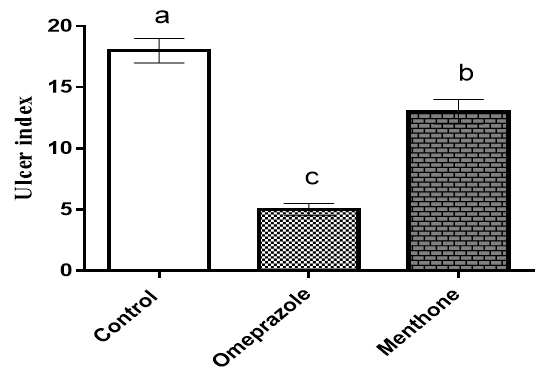
Figure 1. Effects of Menthone on ulcer index in the Indomethacin-induced gastric ulcers
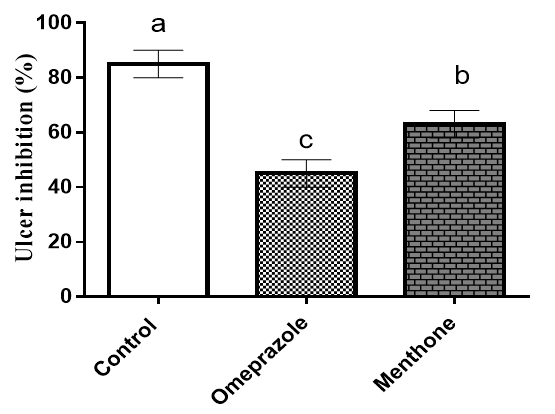
Figure 2. Effects of Menthone on ulcer index in the Indomethacin-induced gastric ulcers
Gastric volume and pH
Results showed that gastric volume and pH were significantly higher and smaller in the control group (p<0.05). Administration of Omeprazole and menthone reversed responses, so animals in Omeprazole and menthone groups showed lower and higher gastric volume and pH than control (p<0.05; Figure 3).
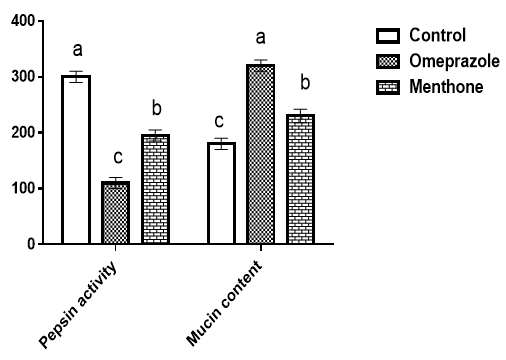
Figure 3. Effects of menthone on pepsin activity and mucin content (microgram/ml) in the Indomethacin-induced gastric ulcers
Antioxidant status
The MDA (Figure 4) concentration and SOD levels (Figure 5) were respectively higher and lower in the control group in comparison to other groups (p<0.05). Using Omeprazole and menthone decreased MDA levels and increased antioxidant enzyme levels (p<0.05).
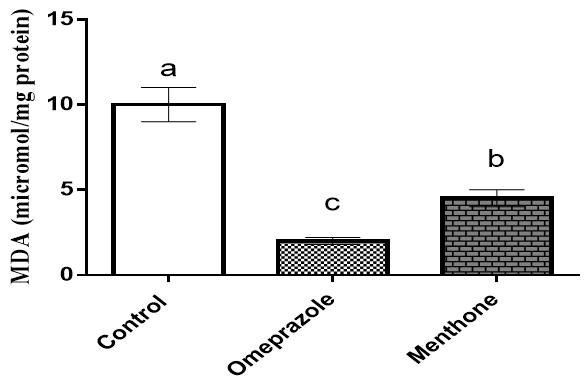
Figure 4. Effects of menthone on MDA in the Indomethacin-induced gastric ulcers
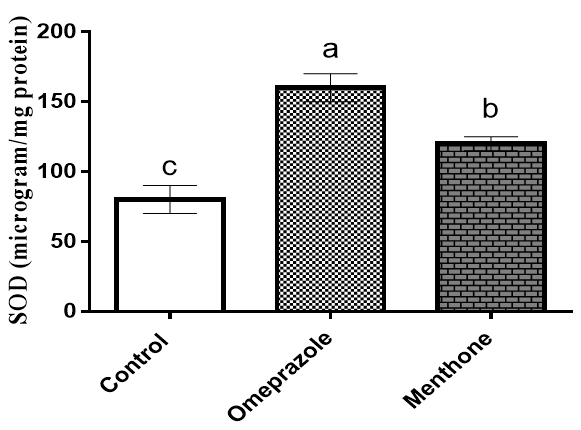
Figure 5. Effects of menthone on SOD in the Indomethacin-induced gastric ulcers
Discussion
In the current study, menthone could have positive effects on the alleviation of Indomethacin's effects. Phytotherapy has been considered for human health and also for the prevention of some diseases, such as gastric ulcers obtained from drug toxicity [16, 17]. The ability of phytonutrients has been accepted due to antioxidant properties that play major roles in managing toxicity-related disorders. Biochemical analysis for gastric secretions (pH and gastric volume) and mucosal integrity for the stomach has been used to evaluate the pharmacological agents [18].
The pH index provides an idea of the level of acidity and gastric secretion volume. It has been reported that there is a relationship between pH index and ulcer and gastric damage [17]. Gastric damage could be attributed to the production of oxidants in the gastric lumen. Previous studies have shown that Indomethacin negatively affects gastric secretions [18, 19]. As mentioned, oxidants could have negative effects on ulcers. It seems that menthone by antioxidant capacity could improve ulcer parameters. Our findings for antioxidant capacity confirm such a claim. Other mechanisms modulating this include buffering capacity for the neutralization of luminal acid and also protecting the effects against endogenous and exogenous toxins, i.e., indomethacin, which increases the rate of the local healing process [20]. In this study, increased pepsin activity corresponded with a decrease in mucin secretion; it means that pepsin activity decreases mucin secretion. It could be argued that menthone reduces pepsin activity and increases mucin secretion. It has been generally accepted that agents increasing gastric mucus could accelerate gastric ulcers. It has been accepted that an imbalance between oxidants and antioxidant stress causes cellular activities that result in different pathological conditions [21]. Increased concentration of MDA and decreased activity of SOD in the stomach of indomethacin-ulcerated rats cause to stimulate lipid peroxidation and overproduction of free radicals, which finally result in gastric damage. Antioxidant enzyme activities reduce with increased oxidants. As an index for lipid peroxidation, MDA has been considered one important index for the toxicity mechanism of indomethacin [22]. It has been reported that decreased antioxidant enzyme activity in ulcerated stomachs [23]. Our observations showed that menthone increased antioxidant activity and decreased MDA. In the current study, Omeprazole could improve ulcer parameters, and the best response was observed in the omeprazole group. Results showed that Omeprazole has powerful antioxidant properties that help to improve the ulcer. Another mechanism was attributed to its inhibiting effects on the proton pump [24, 25]. Menthone may act in a similar way that needs further investigation.
Conclusion
Menthone, a novel agent with antioxidant properties, could help improve gastric ulcers. It did not have the same ability as omeprazole but could partly improve ulcers.
Acknowledgments: None declared by the authors.
Ethical Permission: None declared by the authors.
Conflicts of Interests: The authors declared no conflict of interest
Funding/Support: This research received no specific grant from public, commercial, or not-for-profit funding agencies.
Gastric ulcers are benign lesions in the mucosal epithelium that depend on the high production of acids and aggressive pepsin activity [1]. It is estimated that it is one of the most common gastrointestinal disorders all over the world [2, 3]. The structure of the stomach mucosal barrier is protected by a balance between irritation and defensive factors [4]. The different factors, including non-steroid anti-inflammatory drugs, nutritional deficiencies, smoking, stress, etc., can provide conditions for gastric ulcers [5, 6].
The excessive production of neutrophils in the injury site increases concentrations of reactive oxygen species (ROS) and other mediators of inflammation, which causes oxidative damage [7]. The usual treatments have been used to treat gastric ulcers, including antacids, histamine H2 receptor antagonists, and proton pump preventers. These drugs included cimetidine, misoprostol, ranitidine, omeprazole, and esomeprazole, but the drugs have side effects. It has been reported that antiulcer compounds must prevent gastric secretion but may have multiple effects. An antiulcer drug must have antioxidant, anti-apoptotic, and anti-inflammatory properties [8].
Phenolic compounds are safe compounds that can have profit effects on gastric ulcers that could be attributed to their antioxidant and anti-inflammatory properties. Peppermint has been known to have gastric antiulcer effects that could be attributed to its compound. Peppermint compounds have been reported to have antioxidant and anti-inflammatory effects [9]. As one of the main compounds in peppermint, Menthone seems to have an anti-inflammation and antioxidant compound that helps improve gastric ulcers. This study evaluated the menthone as a novel compound for managing gastric ulcers in Indomethacin-induced gastric ulcers in rat models.
Materials and Methods
Materials
Sigma-Aldrich purchased menthone with a purity of >97%. Darou-Pakhsh Pharmaceutical Company (Alborz-Iran) purchased omeprazole. Indomethacin was also prepared by Caspian Taamin Pharmaceutical Company.
Animals
A total number of 72 Albino Wistar rats (6 weeks-age, 170±10g) were adopted for one week before the trial and kept based on animal welfare laws. All the animals were maintained at an optimal temperature (25±1ºC), and humidity (55±5%) and illumination period (12h light and 12h dark) were kept in the experimental period. Before the trial, all the rats were fasted for 16 hours and grouped in cages with increased floors of a wide mesh to prevent coprophagy. There was no anesthetic procedure before the oral administration. All the efforts were conducted to decrease animal injuries.
Induction of ulcers and grouping
Induction of gastric ulcers was conducted as reported by Sayanti et al. [10]. In summary, a single dose of indomethacin (30mg/kg body weight) was administrated per animal. Animals were divided into 3 groups: 1) Control group that received only distilled water, 2) Animals were treated with 40mg/kg bw omeprazole (Omeprazole) and 3) Animals were treated with 40mg/kg bw menthone (Menthone). Pre-treatment with Omeprazole and menthone lasted for 3 weeks before administration of indomethacin. The agents were applied once/day by an oral incubator. The different degrees of ulceration were considered 4 hours after indomethacin administration.
Isolation of stomach and collection of gastric juice
The stomach was isolated at the end of the trial, and gastric juice was collected 3 hours after induction of the ulcer. Rats were then killed by cervical dislocation
Following isolation of the stomach, it was opened, and gastric contents were separated in a centrifuge tube. Then, 5ml of distilled water was included and t centrifuged at 2500rpm for 15 minutes. The resulting supernatants were used to analyze the biochemical parameters. Macroscopic investigation and homogenization were conducted before cleaning the stomach.
Investigation of gastric secretion variables
Titration and Toepfer's reagent were used to investigate gastric acid output (volume). Pepsin activity, mucin concentration, and gastric pH were evaluated, as reported by previous studies [11, 12].
Quantification of ulceration
The degree of quantification of ulceration was conducted as reported by others [13]. A scale of 0-5 was considered, so 0=almost normal mucosa, 1=vascular congestions, 2=one or two lesions, 3 severe lesions, 4=very severe lesions, and 5=mucosa full of lesions.
Providing stomach homogenate and evaluation of antioxidant parameters
The prepared tissues were ground with liquid nitrogen in a mortar following ulcer induction. The tissue samples were homogenized, and the homogenized samples were centrifuged at 3000rpm for 10 minutes. The obtained supernatants were frozen at -20°C. The levels of superoxide dismutase (SOD) and malondialdehyde (MDA) were evaluated as reported by Marklund and Marklund [14] and Devasagayam and Tarachand [15].
Statistical analysis
The data were reported as mean±standard deviation and analyzed by one-way analysis of variance (ANOVA) procedure. Tukey post-hoc test was used to compare the groups. A level of p<0.05 was considered as significant. The figures were illustrated by Prism, version 7 (GraphPad Software, Inc., San Diego, CA, USA).
Findings
Ulcer index and ulcer inhibition
The ulcer index was significantly higher in the control group compared to other groups (p<0.05). Administration of Omeprazole and menthone could significantly decrease ulcer index (p<0.05). The best response was observed in the Omeprazole group (Figure 1). Regarding ulcer inhibition, the highest value was observed in the control group, menthone, and Omeprazole, respectively (p<0.05). The lowest ulcer inhibition was seen in the Omeprazole group (p<0.05), but menthone also had a significant effect (p<0.05; Figure 2).
Figure 1. Effects of Menthone on ulcer index in the Indomethacin-induced gastric ulcers
Figure 2. Effects of Menthone on ulcer index in the Indomethacin-induced gastric ulcers
Gastric volume and pH
Results showed that gastric volume and pH were significantly higher and smaller in the control group (p<0.05). Administration of Omeprazole and menthone reversed responses, so animals in Omeprazole and menthone groups showed lower and higher gastric volume and pH than control (p<0.05; Figure 3).
Figure 3. Effects of menthone on pepsin activity and mucin content (microgram/ml) in the Indomethacin-induced gastric ulcers
Antioxidant status
The MDA (Figure 4) concentration and SOD levels (Figure 5) were respectively higher and lower in the control group in comparison to other groups (p<0.05). Using Omeprazole and menthone decreased MDA levels and increased antioxidant enzyme levels (p<0.05).
Figure 4. Effects of menthone on MDA in the Indomethacin-induced gastric ulcers
Figure 5. Effects of menthone on SOD in the Indomethacin-induced gastric ulcers
Discussion
In the current study, menthone could have positive effects on the alleviation of Indomethacin's effects. Phytotherapy has been considered for human health and also for the prevention of some diseases, such as gastric ulcers obtained from drug toxicity [16, 17]. The ability of phytonutrients has been accepted due to antioxidant properties that play major roles in managing toxicity-related disorders. Biochemical analysis for gastric secretions (pH and gastric volume) and mucosal integrity for the stomach has been used to evaluate the pharmacological agents [18].
The pH index provides an idea of the level of acidity and gastric secretion volume. It has been reported that there is a relationship between pH index and ulcer and gastric damage [17]. Gastric damage could be attributed to the production of oxidants in the gastric lumen. Previous studies have shown that Indomethacin negatively affects gastric secretions [18, 19]. As mentioned, oxidants could have negative effects on ulcers. It seems that menthone by antioxidant capacity could improve ulcer parameters. Our findings for antioxidant capacity confirm such a claim. Other mechanisms modulating this include buffering capacity for the neutralization of luminal acid and also protecting the effects against endogenous and exogenous toxins, i.e., indomethacin, which increases the rate of the local healing process [20]. In this study, increased pepsin activity corresponded with a decrease in mucin secretion; it means that pepsin activity decreases mucin secretion. It could be argued that menthone reduces pepsin activity and increases mucin secretion. It has been generally accepted that agents increasing gastric mucus could accelerate gastric ulcers. It has been accepted that an imbalance between oxidants and antioxidant stress causes cellular activities that result in different pathological conditions [21]. Increased concentration of MDA and decreased activity of SOD in the stomach of indomethacin-ulcerated rats cause to stimulate lipid peroxidation and overproduction of free radicals, which finally result in gastric damage. Antioxidant enzyme activities reduce with increased oxidants. As an index for lipid peroxidation, MDA has been considered one important index for the toxicity mechanism of indomethacin [22]. It has been reported that decreased antioxidant enzyme activity in ulcerated stomachs [23]. Our observations showed that menthone increased antioxidant activity and decreased MDA. In the current study, Omeprazole could improve ulcer parameters, and the best response was observed in the omeprazole group. Results showed that Omeprazole has powerful antioxidant properties that help to improve the ulcer. Another mechanism was attributed to its inhibiting effects on the proton pump [24, 25]. Menthone may act in a similar way that needs further investigation.
Conclusion
Menthone, a novel agent with antioxidant properties, could help improve gastric ulcers. It did not have the same ability as omeprazole but could partly improve ulcers.
Acknowledgments: None declared by the authors.
Ethical Permission: None declared by the authors.
Conflicts of Interests: The authors declared no conflict of interest
Funding/Support: This research received no specific grant from public, commercial, or not-for-profit funding agencies.
Article Type: Original Research |
Subject:
Biotechnology
| Rights and permissions | |
 |
This work is licensed under a Creative Commons Attribution-NonCommercial 4.0 International License. |