Afarand Scholarly Publishing Institute
Search Afarand journals



BibTeX | RIS | EndNote | Medlars | ProCite | Reference Manager | RefWorks
Send citation to:


URL: http://daneshafarand.org/article-1-86684-en.html
Introduction
In recent years, the tourism industry has received special attention as one of the most important economic sectors in both developed and developing countries. With growing competition among tourism destinations to attract tourists, planners have focused on two main axes: first, enhancing tourist satisfaction and the quality of the tourism experience, and second, preserving the interests of host communities. Accordingly, tourism has been recognized worldwide as one of the strategic necessities of economic and social development, and countries draw on all their capacities and resources to make optimal use of this industry [Ghalibaf & Shabanifard, 2011]. In this regard, smart tourism, as a new generation of information and communication technology, has emerged with the aim of anticipating and responding to the individual needs of tourists, managing tourism resources optimally, sharing information and experiences publicly, and strengthening the coordination of social resources at tourism destinations [Dashtlali et al., 2020]. The core concept of smart tourism is its emphasis on responding to tourists’ needs through the integration of information and communication technologies in order to maximize their satisfaction [Wang & Xiang, 2012]. Moreover, smart tourism is a logical and more advanced development of traditional tourism [Derrick Huang et al., 2017]. This type of tourism is a comprehensive, sustainable, and long-term approach to the planning, development, operation, and marketing of tourism products and services [Zolfaghari & Heshmatnejad, 2022]. It can be stated that smart tourism is the outcome of the interaction between tourism destinations and stakeholder communities through dynamic platforms, knowledge-based flows, and advanced decision-support systems [Del Vecchio & Passiante, 2017]. The rapid development of new technologies such as smart systems, the Internet of Things, and cloud computing has changed the traditional view of tourism and requires countries to adopt new and smart models [Lamsfus et al., 2015; Xiang & Fesenmaier, 2017]. Therefore, by drawing on foresight and scenario design, the development of this industry can play an important role in promoting economic growth and improving quality of life [Taghvaei & Hosseinikhah, 2018]. Nevertheless, Iran has so far not presented strategic measures or a suitable model in the field of smart tourism [Dashtlali et al., 2020]. Implementing smart tourism requires providing key infrastructures and designing a strategic model, an issue that has received little attention in domestic research [Zangoui et al., 2020]. Isfahan, as a city with a long tourism, cultural, and historical background, is rapidly pursuing the development of smart tourism, yet it lacks a coherent and forward-looking management model. The absence of strategic planning has prevented the full use of existing capacities. Efficient management and planning based on futures studies can bring considerable cultural, social, and economic benefits to stakeholders. In this regard, the use of tourism scenario writing as a key tool for testing policies and developing strategies and innovations in this industry is essential.
Wang et al. state that smart technologies, by creating engaging experiences, significantly influence tourists’ satisfaction and behavior [Wang et al., 2020]. Mandic and Kennell emphasize that smart governance in tourism does not depend on technology alone but requires effective interaction among government, citizens, and stakeholders [Mandic & Kennell, 2021]. Tavitiyaman et al. regard smart tourism as a way of employing technologies such as ICT, cloud computing, and the Internet of Things to facilitate tourist interactions and to enhance the travel experience and the international competitiveness of the destination [Tavitiyaman et al., 2021]. Bulchand-Gidumal considers smartness an all-encompassing concept covering key dimensions such as mobility, sustainability, economic productivity, governance, and interaction between tourists and residents [Bulchand-Gidumal, 2022]. Liu and Wu state that smart route-finding models, by adapting to tourists’ needs and taking the entire travel process into account, create an optimal and purposeful experience [Liu & Wu, 2023]. Nieves-Pavón et al. consider social media a tool for strengthening destination loyalty, regarding the sharing of information and the creation of memorable, lasting experiences on social networks as key to building loyalty and a positive attitude toward the tourism destination [Nieves-Pavón et al., 2024]. Koo et al. introduce the perceived value of smart technologies in the tourism experience as a moderating factor that determines the strength and direction of these relationships [Koo et al., 2025]. Reisi Serteshenizi et al. emphasize that informativeness, interactivity, and accessibility have a positive and significant effect on users’ satisfaction with travel technologies [Reisi Serteshenizi et al., 2021]. Haghverdi Zadeh Dehliq et al. introduce six main axes—market, technology, economy, society, geopolitics, and environment—as the framework for urban smart tourism development [Haghverdi Zadeh Dehliq et al., 2023]. Ataei et al. emphasize that the sustainable development of smart tourism and the strengthening of value-creating factors have enhanced the economic growth of destinations [Ataei et al., 2024].
Given the above, the main aim of this research was to develop smart tourism scenarios for the Isfahan metropolis using the futures studies method.
Methodology
The present prospective study was conducted in the Isfahan metropolis in 2025 using a mixed quantitative and qualitative approach, and 15 experts in tourism, world tourism, and urban planning were purposively selected. To prepare the main inputs for developing the scenarios, an initial questionnaire derived from documentary studies was first given to the experts, and their opinions on the research topic were collected. The initial indicators and components were extracted from the experts’ opinions, and the results were summarized and returned to the experts. At this stage, after reviewing the feedback, the specialists were able to revise or complete their opinions, and in this way the views converged. The final questionnaire, comprising 6 main dimensions in the form of 35 items on a 5-point Likert scale, was sent to the experts, and the participants were asked to score the indicators. The influence of each variable on the other variables was assessed on a numerical scale from 0 to 3 (0: no influence; 1: weak influence; 2: moderate influence; 3: strong influence).
After the data were collected, they were analyzed using MicMac software (MICMAC 5.3). The way variables are scattered on the influence–dependence plane in MicMac shows whether the system is stable or unstable. In unstable structures, variables with simultaneously high influence and high dependence play a decisive role in future developments; in such cases, the scatter pattern usually appears as a diagonal, diamond-shaped band running from the southwest to the northeast of the plot. In contrast, stable systems contain two distinct groups of mainly influential and mainly dependent variables, which appear in an L-shaped pattern on the left side of the plot. This pattern indicates relative stability in the current and future state of the system. In the graphical analysis, the variables were classified according to their position in the four main zones of the influence–dependence plot. The first group consists of influential variables, located in the upper (left) zone of the plot, which mainly act as drivers of the system. The second group consists of two-way or bimodal variables, located in the upper (right) zone, which have both high influence and high dependence. The third group comprised independent variables, located in the lower (left) zone, which interact weakly with the other variables. Finally, the fourth group comprised dependent variables, located in the lower (right) zone of the plot, which are mostly affected by the other elements of the system.
The variables were identified according to their degree of influence and dependence and classified into four categories: influential, dependent, independent, and bimodal. The most influential variables and the bimodal variables were taken as the main inputs to Scenario Wizard software (Scenario Wizard 4.54). For each key sub-index, three possible states were designed, forming different conditions for the future of the smart tourism system of the Isfahan metropolis. These states covered a range of possible scenarios in the field of smart tourism and served as the starting points for scenario writing. Then, based on these states, a questionnaire with a cross-impact matrix structure was prepared and given to the experts. In this matrix, each state can act as a driver, facilitator, or constraint with respect to the other states. The intensity of these relationships was determined on a numerical scale ranging from −3 to +3. The aim of this stage was to examine the causal relationships among the states. The logic of the software is based on the cross-impact matrix and the evaluation of causal relationships among (influential and dependent) factors, and it has no bias toward generating scenarios at particular levels of the spectrum (from desirable to critical); hence, the resulting scenarios may include any level of stability or instability.
Findings
Factors affecting smart tourism in the Isfahan metropolis were identified as 35 sub-indices, 15 indicators, and 6 dimensions (Table 1).
Table 1) Factors affecting smart tourism in the Isfahan metropolis
| Dimension | Indicator | Sub-index | Symbol |
|---|---|---|---|
| Smart destinations | Infrastructure | 1. Availability of high-speed internet | A1 |
| 2. Smart transportation | A2 | ||
| 3. Safety and security | A3 | ||
| 4. Online payment of costs and prices | A4 | ||
| 5. Smart access to traffic and crowding conditions | A5 | ||
| 6. Smart access to parking service status | A6 | ||
| Accommodation and catering centers | 1. Technology and online services in accommodation centers such as hotels, guesthouses, eco-lodges, and suites | B1 | |
| 2. Technology and up-to-date services in eateries such as cafés, restaurants, traditional cookshops, and fast-food outlets | B2 | ||
| Attractions | Smart services at historical, cultural, religious, and natural attractions and recreational centers | C | |
| New technologies | Artificial intelligence | 1. Prediction of flight, hotel, ticket, and other rates given price variability | D1 |
| 2. Online support services and responses to travel bookings | D2 | ||
| Internet of Things (IoT) | 1. Automatic door-lock applications, electric curtains, and other digital equipment in accommodation centers | E1 | |
| 2. Geolocation or GPS through applications, programs, and smart mobile phones | E2 | ||
| 3. Internet-connected sensors for adjusting light and temperature in accommodation rooms | E3 | ||
| Cloud computing and cloud service systems | 1. Online booking of accommodation centers, tourist attractions, tickets, and other tourism services | F1 | |
| 2. Tourism websites, platforms, and applications | F2 | ||
| Smart management | Upgrading the level of technology | Investment and planning in financing smart tourism projects | G |
| Culture-building and training | 1. Training skilled human resources to provide smart tourism services | H1 | |
| 2. Training tourists to benefit from the advantages of smart tourism | H2 | ||
| Support and backing | Support for smart tourism businesses | I | |
| Sharing smart experiences | Tourists | 1. Sharing experiences through photos, selfies, videos, and text on social media | J1 |
| 2. Surveys of other tourists | J2 | ||
| Travel agencies and tours | 1. Sharing tours’ visits to tourist attractions on websites and social media | K1 | |
| 2. Sharing and introducing souvenirs, gifts, and magnets of tourist attractions | K2 | ||
| Residents | 1. Sharing personal experiences of visiting lesser-known places | L1 | |
| 2. Participation in online rating or review systems | L2 | ||
| Smart marketing | Content production | 1. Tourism centers, accommodation centers, travel agencies and tours | M1 |
| 2. Tourism bloggers | M2 | ||
| Advertising | 1. Virtual social networks and websites | N1 | |
| 2. Brand advertising | N2 | ||
| 3. Urban management | N3 | ||
| Local community | Smart interaction and communication | 1. Local online support | O1 |
| 2. Sharing economy | O2 | ||
| Creativity and innovation in introducing cultural identity | 1. Tangible heritage | P1 | |
| 2. Intangible heritage | P2 |
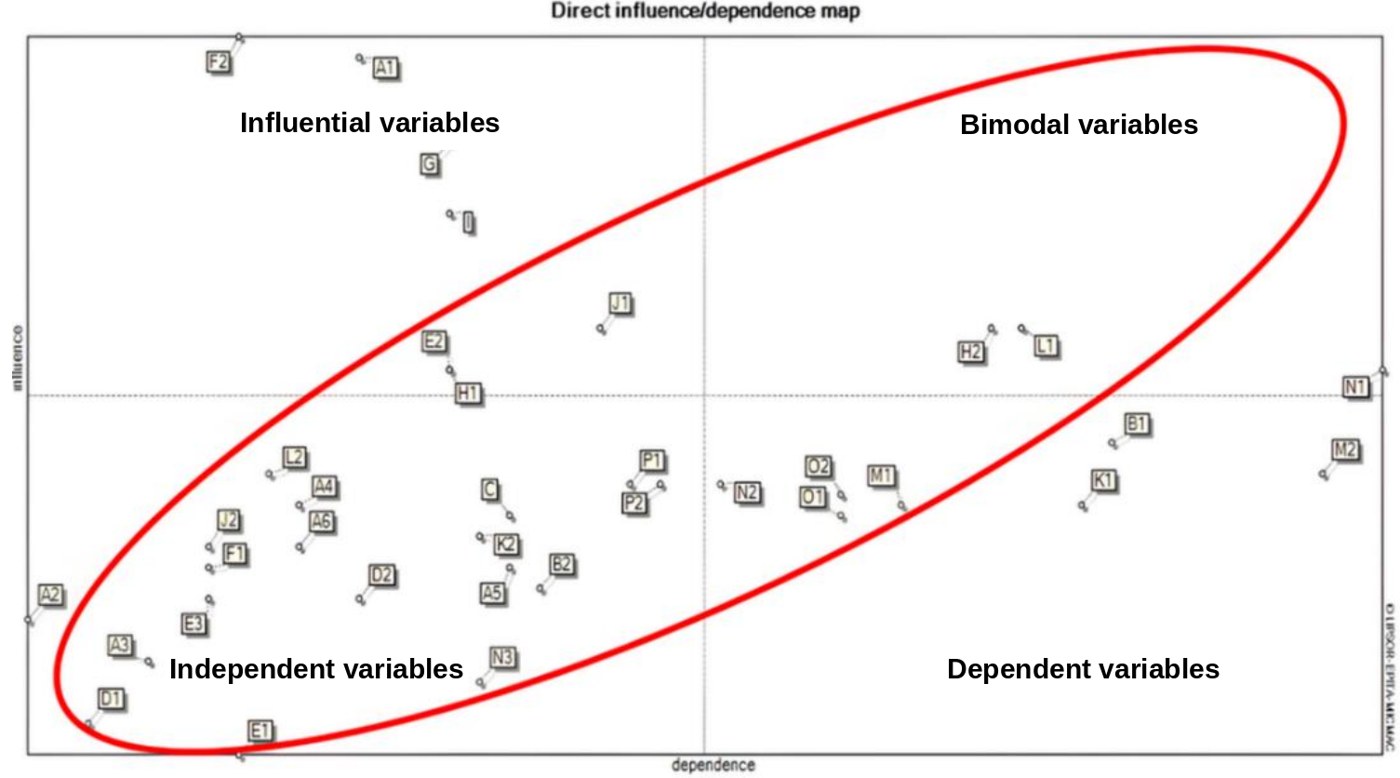
Figure 1) Scatter of variables on the influence and dependence axes
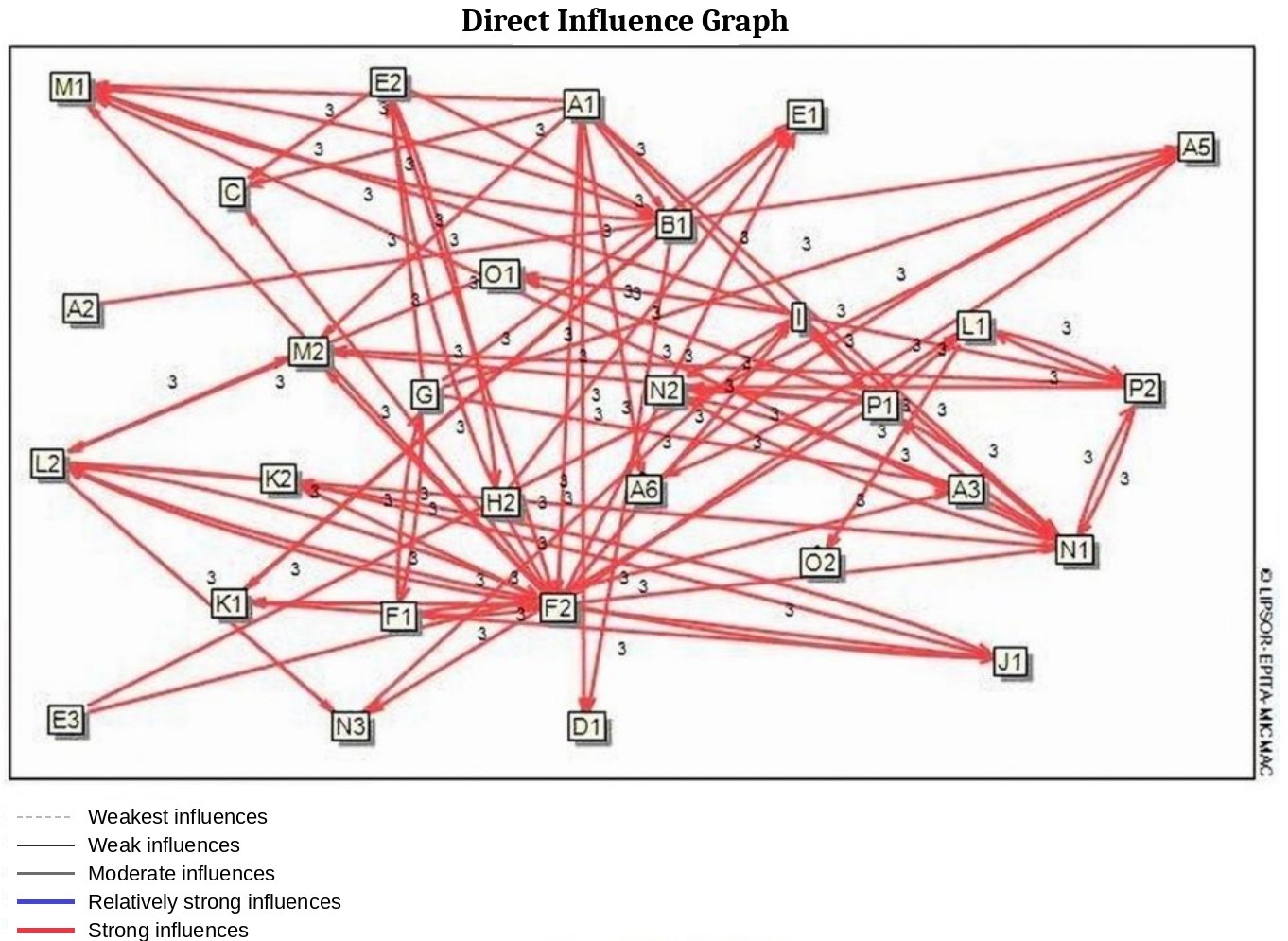
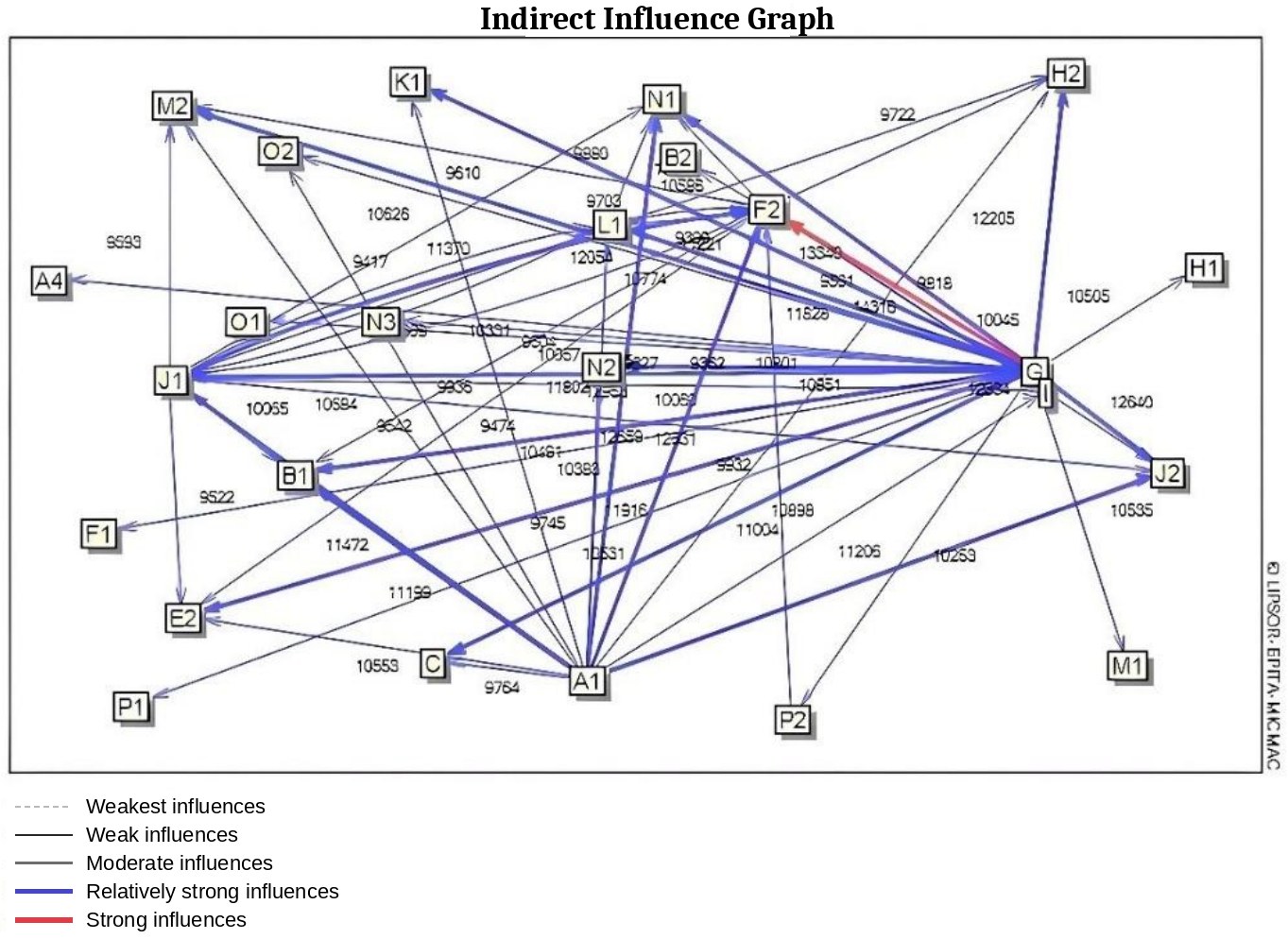
Figure 2) Direct (a) and indirect (b) relationships and influences among the sub-indices
Table 2) Scores and ranks (in parentheses) of the key sub-indices with the highest direct and indirect influence on smart tourism in the Isfahan metropolis
| Sub-index | Direct | Indirect |
|---|---|---|
| Tourism websites, platforms, and applications | 581 (1) | 379 (4) |
| Availability of high-speed internet | 572 (2) | 422 (2) |
| Investment and planning in financing smart tourism projects | 514 (3) | 477 (1) |
| Support for smart tourism businesses | 463 (4) | 301 (6) |
| Training tourists to benefit from the advantages of smart tourism | 383 (5) | 310 (7) |
| Sharing tourists’ experiences through photos, selfies, videos, and text on social media | 383 (6) | 380 (3) |
| Sharing the local community’s personal experiences of visiting lesser-known places | 383 (7) | 354 (5) |
| Geolocation or GPS through applications, programs, and smart mobile phones | 354 (8) | 273 (8) |
| Training skilled human resources to provide smart tourism services | 354 (9) | 282 (9) |
| Advertising on virtual social networks and websites | 354 (10) | 302 (10) |
Table 3) Key factors, states, and probable scenarios of smart tourism in the Isfahan metropolis
| Key sub-indices | Possible states | State | Symbol |
|---|---|---|---|
| Tourism websites, platforms, and applications | Full integration of tourism websites, platforms, and applications and their active role in the smart travel experience | Desirable | A1 |
| Limited growth of tourism websites, platforms, and applications accompanied by technical and managerial challenges | Relatively desirable | A2 | |
| Deficient or inactive functioning of tourism websites, platforms, and applications and declining user trust | Critical | A3 | |
| Availability of high-speed internet | Universal, stable, and high-capacity access to high-speed internet in the smart tourism infrastructure | Desirable | B1 |
| Intermittent and uneven access to high-speed internet with infrastructural and regional challenges | Relatively desirable | B2 | |
| Digital divide and severe instability in access to high-speed internet at tourist sites | Critical | B3 | |
| Investment and planning in financing smart tourism projects | Targeted investment and strategic financial planning with new models and multilateral cooperation in smart tourism projects | Desirable | C1 |
| Scattered investment and incomplete planning with limited financing and incomplete development of smart tourism infrastructure | Relatively desirable | C2 | |
| Declining efficiency of financial planning, failure in investment management, structural disruption, and suspension of smart tourism projects | Critical | C3 | |
| Support for smart tourism businesses | Establishment of comprehensive support frameworks and incentive policies to strengthen the ecosystem of smart tourism businesses through multilateral cooperation | Desirable | D1 |
| Limited and scattered support with poor coordination among institutions and a moderate effect on the development of smart tourism businesses | Relatively desirable | D2 | |
| Lack of effective support policies, inefficient resource allocation, and the weakening and exit of smart tourism businesses from the market | Critical | D3 | |
| Training tourists to benefit from the advantages of smart tourism | Design and implementation of comprehensive training programs focused on smart technologies and on improving tourists’ digital literacy to increase participation and satisfaction | Desirable | E1 |
| Limited, non-integrated training programs with incomplete access and partial use of smart facilities by tourists | Relatively desirable | E2 | |
| Lack of targeted training, ineffective information dissemination, reduced interaction of tourists with smart technologies, and a decline in the quality of the tourism experience | Critical | E3 | |
| Sharing tourists’ experiences through photos, selfies, videos, and text on social media | Creation of interactive platforms with smart algorithms to facilitate and strengthen the sharing of tourists’ experiences and increase its impact on digital marketing | Desirable | F1 |
| Scattered, low-interaction sharing activities with weak analysis of the generated data and limited use of social feedback | Relatively desirable | F2 | |
| Lack of appropriate technological infrastructure and insufficient support policies, a decline in the quality and quantity of tourist-generated content, and a loss of appeal of smart tourism | Critical | F3 | |
| Sharing the local community’s personal experiences of visiting lesser-known places | Development of interactive platforms based on smart technologies to promote local narratives and attract more tourists to lesser-known places with the active participation of the local community | Desirable | G1 |
| Limited and scattered sharing of local experiences with weak data integration and insufficient technological infrastructure to support the expansion of alternative tourism | Relatively desirable | G2 | |
| Lack of effective technological and social support, reduced motivation of the local community to share experiences, and slower sustainable tourism development in lesser-known areas | Critical | G3 | |
| Geolocation or GPS through applications, programs, and smart mobile phones | Integration of GPS technologies with smart applications and advanced algorithms to increase positioning accuracy and improve tourists’ experience in tourism spaces | Desirable | H1 |
| Limited and incomplete use of GPS technology in applications, with moderate accuracy and reduced efficiency in providing location services to tourists | Relatively desirable | H2 | |
| Deficiencies in technological infrastructure and technical problems in applications, positioning errors, and reduced user satisfaction in smart tourism | Critical | H3 | |
| Training skilled human resources to provide smart tourism services | Specialized and continuous training programs using new technologies to develop specialized human resources in smart tourism services | Desirable | I1 |
| Training skilled human resources to provide smart tourism services (cont.) | Limited and scattered training courses with insufficient coverage of technological skills and smart tourism services | Relatively desirable | I2 |
| Lack of targeted training, failure to update skills, inefficiency of human resources, and a decline in the quality of smart tourism services | Critical | I3 | |
| Advertising on virtual social networks and websites | Optimal use of targeted digital advertising algorithms on social networks and websites to attract more smart tourists | Desirable | J1 |
| Scattered advertising with limited data analysis and moderate effectiveness in attracting the attention of target audiences | Relatively desirable | J2 | |
| Weak digital advertising strategy and lack of coordination, waste of resources, and reduced effectiveness of smart tourism advertising | Critical | J3 |
Table 4) Detailed status of the key sub-indices in the scenarios of the three groups
| Key sub-indices | Group 1 | Group 2 | Group 3 |
|---|---|---|---|
| Tourism websites, platforms, and applications | Desirable | Static | Critical |
| Availability of high-speed internet | Desirable | Static | Critical |
| Investment and planning in financing smart tourism projects | Desirable | Critical | Critical |
| Support for smart tourism businesses | Static | Static | Critical |
| Training tourists to benefit from the advantages of smart tourism | Desirable | Static | Critical |
| Sharing tourists’ experiences through photos, selfies, videos, and text on social media | Desirable | Desirable | Static |
| Sharing the local community’s personal experiences of visiting lesser-known places | Desirable | Static | Critical |
| Geolocation or GPS through applications, programs, and smart mobile phones | Desirable | Static | Critical |
| Training skilled human resources to provide smart tourism services | Desirable | Static | Critical |
| Advertising on virtual social networks and websites | Desirable | Desirable | Static |
Table 5) Distribution of absolute and relative frequencies and coefficients of states in the three scenarios
| Criterion | Group 1 | Group 2 | Group 3 | |
|---|---|---|---|---|
| Number of states | Desirable | 9 | 2 | 0 |
| by type | Static | 1 | 7 | 2 |
| Critical | 0 | 1 | 8 | |
| Coefficients | 3 | 27 | 6 | 0 |
| of states | 1 | 1 | 7 | 2 |
| −3 | 0 | −3 | −24 | |
| Desirable | Desirable score | 27 | 6 | 0 |
| status | Ideal score | 30 | 30 | 30 |
| Desirability (%) | 90% | 20% | 0 | |
| Critical | Critical score | 0 | −3 | −24 |
| status | Maximum critical score | −30 | −30 | −30 |
| Critical conditions (%) | 0 | 10% | 80% | |
A 35×35 matrix was designed to examine the mutual relationships among the sub-indices, and the cross-impact assessment was carried out in two independent stages, yielding 438 zeros, 282 twos, and 156 threes, with a fill rate of 64.24%. The scatter pattern of the variables related to smart tourism in the Isfahan metropolis was unstable (Figure 1).
Figures 2a and 2b reflect the direct and indirect relationships among the indicators in the analysis carried out by the experts.
Ten influential sub-indices (with the highest level of influence) and bimodal sub-indices (with the potential to play a key role in the system structure), which recurred in both the direct and indirect effects analyses, were identified (Table 2).
Thirty possible states were developed on the basis of the key sub-indices to provide the groundwork for the scenario analyses (Table 3).
Based on the possible states, scenario combinations were extracted and classified into three groups:
Strong scenarios (3 cases): These scenarios had the highest degree of consistency and the highest probability of realization in the process of smart tourism development.
Scenarios with the greatest inconsistency (17 cases): These scenarios showed the lowest internal coherence and represented conflicting states among the influential factors.
Weak or low-validity scenarios (423 cases): Owing to their high dispersion and low consistency, these scenarios were mostly of statistical value and could not be operationalized.
Among the strong scenarios, the first scenario represented completely desirable and optimal conditions, the second reflected an intermediate and relatively desirable state, and the third represented a critical and challenging situation. In the final analysis, in order to reach a balanced approach, 17 scenarios (with a consistency of 1) were also selected as logical and noteworthy states to cover the gap between very strong and very weak scenarios. Finally, the three extracted strong scenarios were independently reviewed and analyzed in detail (Table 4).
Based on their conceptual overlap, the strong scenarios were classified into three main groups: desirable (11 states), static (10 states), and critical (9 states). The desirable scenarios depicted favorable and promising conditions for the future of smart tourism in Isfahan. These scenarios represented the best possible states, and no critical state was observed in them. All key factors in this category showed a positive trend, and only one static state was identified. In terms of frequency, this category also had the largest number of desirable states compared with the other scenario categories. Overall, the scenarios in this category presented a favorable picture of the future of smart tourism in the Isfahan metropolis. The static scenarios showed static states, with differences and distinctive features among the desirable, static, and critical conditions. In this group, the number of static states was greater than in the other groups. Comparing the percentage frequency of desirable and critical conditions in this group with that of the other groups showed that smart tourism in the Isfahan metropolis is in an almost static state. The critical scenarios showed a critical situation, with differences and distinctive factors between the static and critical conditions. This group contained the largest number of critical states compared with the other groups, and only two key factors were in a static condition. This scenario had no positive points or desirable key factors; therefore, its outlook indicated a passive state of smart tourism in the Isfahan metropolis (Table 5).
Discussion
The present study focused on identifying the most effective determinants of the advancement of smart tourism in the Isfahan metropolis and on analyzing the probable scenarios related to it. The key drivers of smart tourism in Isfahan comprise 10 main factors: tourism websites, platforms, and applications; access to high-speed internet; investment and planning for financing smart tourism projects; support for smart tourism businesses; training tourists to benefit from the advantages of smart tourism; sharing tourists’ experiences through photos, videos, selfies, and text on social media; sharing the local community’s personal experiences of visiting lesser-known places; the use of geolocation (GPS) through applications and smart mobile phones; training skilled human resources to provide smart tourism services; and advertising on virtual social networks and websites.
The highest direct effect, with a score of 581, belonged to “tourism websites, platforms, and applications”, which indicates their key position in service intermediation, information access, and facilitating direct interactions with tourists. In contrast, “advertising on virtual social networks and websites”, with a score of 354, had the lowest direct effect, which may be due to the unstructured and scattered nature of online advertising; its impact therefore appears in a decentralized form. In terms of indirect effects, “investment and planning in financing smart tourism projects”, with a score of 477, ranked highest, whereas “geolocation via GPS and mobile applications”, with a score of 273, had the lowest indirect effect. Overall, technological and financial infrastructures act as strategic drivers of smart tourism development, while other components such as information services, advertising, and location-based tools appear mostly at the operational and supporting level.
Accordingly, it can be said that variables that intervene directly in the tourist experience, such as “tourism websites, platforms, and applications”, have the greatest influence because of their intermediary role and their ability to provide instant services. These platforms not only enable the booking and purchase of services but also act as a gateway for two-way interaction between service providers and tourists, facilitating trust-building. Their structured nature, capacity for personalization, and continuous updating of content are among the key factors enhancing their direct influence.
In the realm of indirect effects, “investment and planning in financing smart tourism projects” plays a pivotal role in creating a sustainable foundation for the development of new tourism technologies. Financial resources, as the driving force, make possible the development of digital infrastructure, the design and implementation of smart systems, and even the training and empowerment of human resources. In other words, without strong financial backing, even the most effective technologies will not be able to persist and expand within the tourism ecosystem. At the same time, the relatively low position of “geolocation via GPS and mobile applications” in terms of indirect effects may stem from the consolidation and universal adoption of these technologies. Although these tools still play a role in facilitating travel, their novelty and competitive advantage have declined compared with emerging technologies. In fact, their presence has become a taken-for-granted part of the travel experience and is no longer regarded as a differentiating factor in smart tourism development.
It should be noted that no research on smart tourism with a foresight approach has so far been conducted in Isfahan, and the present study is the first to adopt this approach. A review of domestic and international studies shows that no comprehensive and integrated framework for explaining the dimensions of smart tourism has yet been presented, and each researcher, according to their own approach and research objectives, has identified and defined particular consequences, effects, and dimensions of this concept. Accordingly, the present study has attempted, by focusing on the nature of the subject, to identify and analyze the most important and influential related dimensions. Moreover, given the novelty of this field in the scientific arena, it can be acknowledged that it has not yet been studied extensively. In Ghafourian’s study, the analysis of effective variables and the development of possible scenarios showed that indicators such as information and communication technology infrastructure, interaction with tourists, training, awareness-raising, stakeholder participation, cross-sectoral cooperation, resource management, and sustainable development are among the main components of smart tourism, which is consistent with a number of the indicators identified in the present study [Ghafourian, 2023]. Tribe and Mkono pointed out that excessive use of technology in tourism can diminish authentic experiences and human interactions. Although that study did not present specific indicators, the concepts it raised, including the use of technology, tourist experiences, and human communication, are consistent with the findings of the present study [Tribe & Mkono, 2017]. Park and Kim likewise did not present specific indicators in this regard; however, the linguistic discrepancies between travelers and online recommender systems point to the need to use artificial intelligence for natural language processing and for matching information to users’ needs. The findings of the present study regarding the application of new technologies and artificial intelligence are in line with their results [Park & Kim, 2017]. Jovičić also did not present specific indicators for smart tourism; nevertheless, he emphasizes that this concept is fundamentally different from traditional tourism. This approach focuses on the use of digital technologies, the active participation of stakeholders, and the existence of efficient information infrastructures. Hence, the findings of the present study regarding technology, participation, and infrastructure are consistent with Jovičić’s results [Jovičić, 2019]. Li et al. did not directly present specific indicators, but an analysis of the concepts and models of their study shows that, in terms of interaction among stakeholders and the existence of smart digital infrastructures, its results are in line with the present study [Li et al., 2020]. In the study by Koukabi and Barmayehvar, the concepts raised in developing smart tourism indicators, especially in the areas of digital infrastructure, digital interactions, and stakeholder participation, are consistent with the results of the present study [Koukabi & Barmayehvar, 2020]. Shen et al. also did not present specific indicators for smart tourism; however, the framework proposed in their study, including personalization of the tourism experience, improved management of attractions, digital interaction with tourists, and the use of smart technologies, is in line with the findings of the present study [Shen et al., 2020]. In the study by Salahi Kajour et al., factors were identified that are consistent with the results of the present study, including smart cloud services, the Internet of Things, internet services for end users, smart search, content marketing, and artificial intelligence [Salahi Kajour et al., 2020]. Bidkhori et al. introduced a set of components in their study, some of which, such as information and communication technology infrastructure, smart destination management, stakeholder participation, and tourism culture and education, correspond to the results of the present study [Bidkhori et al., 2022].
The results of this research should be interpreted within the framework of several important limitations. First, most of the data rely on the subjective judgments of experts; although the multi-stage feedback and consensus processes have largely helped to reduce bias, the possibility of individual and group interpretations cannot be ruled out completely. Second, the methods and software used inevitably represent the complex and dynamic relationships of the smart tourism system in the form of simplified models and cannot capture all nonlinear interactions and time lags. Finally, the time constraints of the research and limited access to objective and up-to-date data mean that the presented scenarios should be regarded not as definitive predictions but as a picture of probable futures under the specific temporal and spatial conditions of this study. Taking into account all the issues discussed, the following specialized and technical recommendations are proposed to improve the position of smart tourism in the Isfahan metropolis and to prevent critical scenarios from occurring:
- Expanding high-speed internet and 5G coverage in tourist areas to improve tourists’ digital experience.
- Designing a comprehensive smart tourism platform with location, booking, guide, translation, and personalized recommendation services.
- Using augmented reality (AR) technology for interactive visits to historical and cultural sites.
- Employing precise positioning systems (GPS, Beacon, NFC) to guide tourists smartly.
- Training specialized human resources for digital tourism through specialized training courses and cooperation with universities.
- Creating incentives for sharing tourists’ experiences through campaigns and digital rewards.
- Setting up Instagram-friendly spots (Insta-Spots) at scenic sites to attract user-generated content.
- Providing financial and technical support to smart tourism startups and businesses through facilities and innovation spaces.
- Training tourists to use smart services through instructional videos and QR codes at sites.
- Targeted advertising on social networks with the help of data analytics and smart recommendation algorithms.
Conclusion
Three probable scenarios with the highest potential for occurring in the course of smart tourism development in Isfahan were identified. The first scenario represents the optimal and progressive state of the smart tourism system, showing the best conditions across key performance indicators. The second scenario describes an average state with relatively favorable conditions, while the third scenario represents a critical and challenging situation for the future of smart tourism in Isfahan.
Acknowledgments: The authors sincerely thank the participants for their valuable cooperation in completing the questionnaires.
Ethical Permissions: Given the nature of the research, ethical approval was not required.
Conflicts of Interests: No conflicts of interest were reported.
Authors’ Contribution: Nabati Shahrezaei FZ (First Author), Methodologist/Main Researcher (40%); Saberi H (Second Author), Main Researcher/Statistical Analyst/Discussion Writer (40%); Khademolhosseiny A (Third Author), Assistant Researcher (10%); Gandomkar A (Fourth Author), Assistant Researcher (10%)
Funding/Support: This article is extracted from the first author’s PhD dissertation, supervised by the second and third authors and advised by the fourth author, at Islamic Azad University, Najafabad Branch.
References
- Ataei M, Sharifi Renani H, Ghobadi S (2024). The effect of smart tourism sustainable development on the economic growth in selected tourist destinations. Journal of Urban Studies on Space and Place. 8(30):49-62.
- Bidkhori A, Borhani Nia M, Khoshab A (2022). Identification of effective components on smart tourism in Mashhad. Geographic Sciences. 18(38):59-84. [Persian]
- Bulchand-Gidumal J (2022). Post-COVID-19 recovery of island tourism using a smart tourism destination framework. Journal of Destination Marketing & Management. 23:100689.
- Dashtlali Z, Aligholi M, Nourbakhsh K (2020). Practical pattern of smart tourism in urban areas case study: Esfahan City. Journal of Urban Tourism. 7(2):127-141. [Persian]
- Del Vecchio P, Passiante G (2017). Is tourism a driver for smart specialization? Evidence from Apulia, an Italian region with a tourism vocation. Journal of Destination Marketing and Management. 6(3):163-165.
- Derrick Huang C, Goo C, Nam K, Yoo CW (2017). Smart tourism technologies in travel planning: The role of exploration and exploitation. Information & Management. 54(6):757-770.
- Ghafourian M (2023). Strategies for realizing smart tourism in Mashhad city with scenario writing approach. Urban Futurology. 3(1):1-29. [Persian]
- Ghalibaf M, Shabanifard M (2011). Assessment and prioritization of urban tourist attractions for developing urban tourism based on multivariate decision criteria (a case study of Sanandaj). Geographical Research. 26(2):147-172. [Persian]
- Haghverdi Zadeh Dehliq A, Zarei Gh, Asgarnejad Nouri B, Rahimi Kolur H (2023). Urban smart tourism development model based on marketing ecosystem: The case study of Tabriz city. Journal of Urban Tourism. 10(3):127-146. [Persian]
- Jovičić DZ (2019). From the traditional understanding of tourism destination to the smart tourism destination. Current Issues in Tourism. 22(3):276-282.
- Koo I, Zaman U, Ha H, Nawaz S (2025). Assessing the interplay of trust dynamics, personalization, ethical AI practices, and tourist behavior in the adoption of AI-driven smart tourism technologies. Journal of Open Innovation: Technology, Market, and Complexity. 11(1):100455.
- Koukabi L, Barmayehvar B (2020). Co-creation of smart tourism space through digital interactions: Presenting a conceptual model of the cyberpark. Urban Tourism. 7(1):51-67. [Persian]
- Lamsfus C, Martin D, Alzua-Sorzabal A, Torres-Manzanera E (2015). Smart tourism destinations: An extended conception of smart cities focusing on human mobility. In: Information and communication technologies in tourism 2015. Cham: Springer. p. 363-375.
- Li C, Wang S, Li X, Zhao F, Yu R (2020). Distributed perception and model inference with intelligent connected vehicles in smart cities. Ad Hoc Networks. 103:102152.
- Liu Sh, Wu H (2023). Analysis of the application of path finding system based on efficiency improvement in smart tourism. Intelligent Systems with Applications. 20:200265.
- Mandic A, Kennell J (2021). Smart governance for heritage tourism destinations: Contextual factors and destination management organization perspectives. Tourism Management Perspectives. 39:100862.
- Nieves-Pavón S, López-Mosquera N, Jiménez-Naranjo H (2024). The role emotions play in loyalty and WOM intention in a Smart Tourism Destination Management. Cities. 145:104681.
- Park S, Kim DY (2017). Assessing language discrepancies between travelers and online travel recommendation systems: Application of the Jaccard distance score to web data mining. Technological Forecasting and Social Change. 123:381-388.
- Reisi Serteshenizi H, Konjkav Monfared AR, Hosseini E (2021). Investigating the effect of smart tourism technologies’ select factors on the satisfaction of using technology in travel: A case study of Yazd visitors. Quarterly Journal of Social Studies in Tourism. 10(19):21-46. [Persian]
- Salahi Kajour A, Razavi SMH, Amirnejad S, Mohammadi N, Taghipourian MJ (2020). Investigating the factors affecting smart tourism in the hybrid technique-based sports industry. Tourism Planning and Development. 9(34):101-120. [Persian]
- Shen S, Sotiriadis M, Zhang Y (2020). The influence of smart technologies on customer journey in tourist attractions within the smart tourism management framework. Sustainability. 12(10):4157.
- Taghvaei M, Hosseinikhah H (2018). Tourism development planning based on futures studies and scenario case study: Yasouj. Tourism Planning and Development. 6(23):8-30. [Persian]
- Tavitiyaman P, Qu H, Lancy Tsang W, Rachel Lam Ch (2021). The influence of smart tourism applications on perceived destination image and behavioral intention: The moderating role of information search behavior. Journal of Hospitality and Tourism Management. 46:476-487.
- Tribe J, Mkono M (2017). Not such smart tourism? The concept of e-lienation. Annals of Tourism Research. 66:105-115.
- Wang D, Xiang Z (2012). The new landscape of travel: A comprehensive analysis of smartphone apps. In: Information and communication technologies in tourism 2012. Vienna: Springer. p. 308-319.
- Wang J, Xie Ch, Huanga Q, Morrisonc AM (2020). Smart tourism destination experiences: The mediating impact of arousal levels. Tourism Management Perspectives. 35:100707.
- Xiang Z, Fesenmaier DR (2017). Analytics in smart tourism design: Concepts and methods. Cham: Springer.
- Zangoui F, Kharrazi Mohammadvandi Azar Z, Salehi Sedqiani J (2020). Identifying the components of smart tourism industry in Iran. Business Intelligence Management Studies. 8(32):239-272. [Persian]
- Zolfaghari M, Heshmatnejad A (2022). New and smart technologies in the tourism industry, challenges and opportunities. Proceedings of the 3rd International Conference on Management, Tourism and Technology. Penang: CIVILICA. p. 1-6. [Persian]
| Rights and permissions | |
 |
This work is licensed under a Creative Commons Attribution-NonCommercial 4.0 International License. |